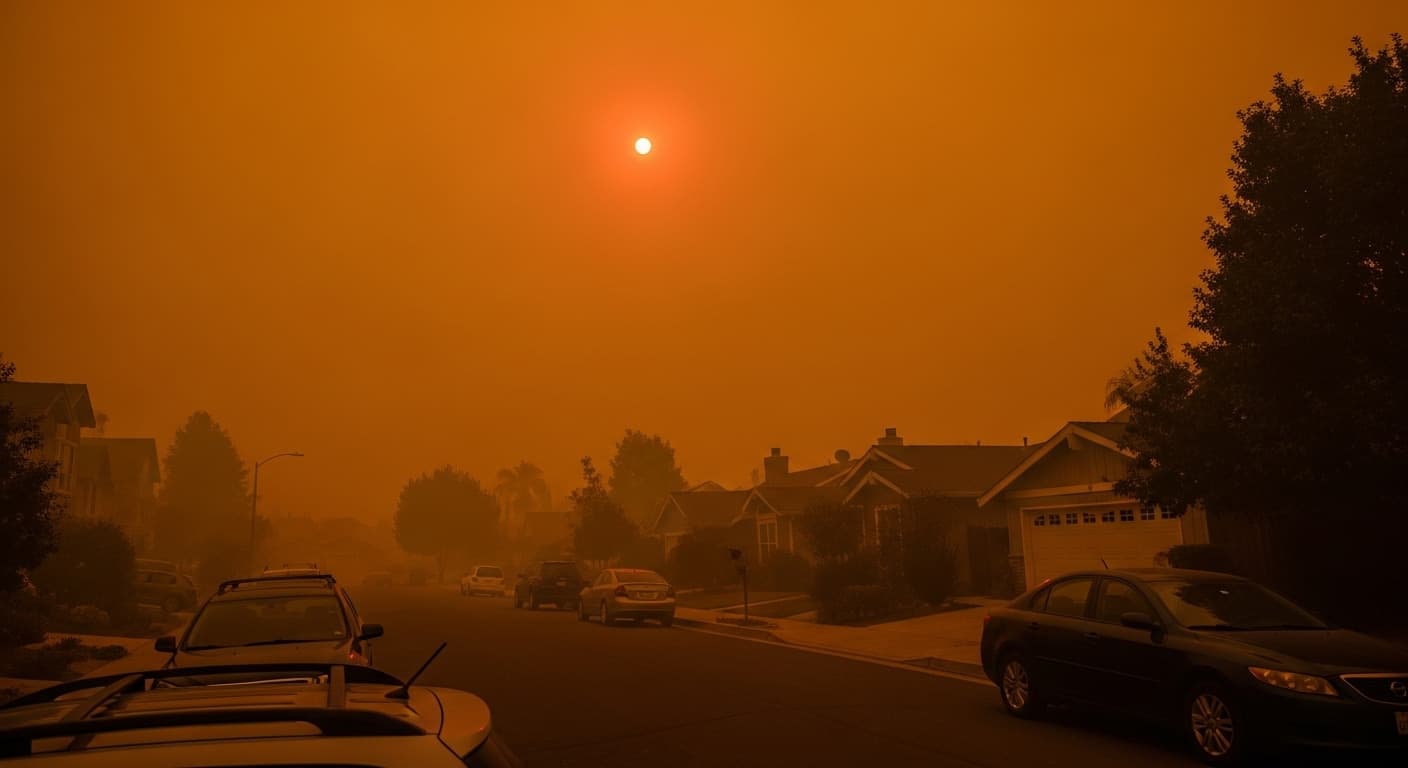
The 2026 Wildfire Smoke Event: What the Air Quality Data Shows
In July 2026, Canadian wildfire smoke put ~120 million people across 16 US states under air quality alerts, with some local AQI readings above the 500 "hazardous" ceiling. A plain-data explainer of how bad it was, what the AQI numbers mean, and what agencies say about breathing through smoke.
In mid-July 2026, smoke from hundreds of Canadian wildfires pushed air quality to unhealthy — and in places hazardous — levels across a broad band of the United States. At the peak, more than 100 million people across 16 states were under air quality alerts, and several major cities briefly ranked among the most polluted on Earth. This is a plain-data explainer: how bad the event actually was, what the AQI numbers mean, and what public-health agencies say about breathing through smoke.
How bad was the July 2026 wildfire smoke event?
By July 15–18, 2026, dense smoke from active fires in Ontario and northeastern Minnesota had settled to ground level across the Midwest and Northeast. Air quality alerts covered a corridor stretching from Minnesota through the Great Lakes to New England, with Chicago, Detroit, New York and Washington, D.C. all recording readings in the unhealthy-to-hazardous range. According to news coverage of the event, nearly 900 wildfires were burning in Canada at the time, with more than 180 in Ontario alone.
The US Air Quality Index runs from 0 to 500, where 301–500 is already labeled "Hazardous." During this event, some local monitors in the smoke corridor reported peak AQI values well above 500 — a level the standard scale does not even chart. When you hear "beyond the index," that is what it means.
What is AQI, and what do the numbers actually mean?
The Air Quality Index (AQI) is the EPA’s standardized 0–500 scale for reporting daily air pollution. Higher numbers mean more pollution and greater health concern. The categories, and the EPA’s general activity guidance, break down like this:
| AQI | Category | What the EPA generally advises |
|---|---|---|
| 0–50 | Good | Air quality is satisfactory; little or no risk. |
| 51–100 | Moderate | Unusually sensitive people should consider limiting prolonged outdoor exertion. |
| 101–150 | Unhealthy for Sensitive Groups | Sensitive groups (children, older adults, heart/lung conditions) should reduce prolonged outdoor exertion. |
| 151–200 | Unhealthy | Everyone may begin to experience effects; sensitive groups more seriously. |
| 201–300 | Very Unhealthy | Health alert: everyone may experience more serious effects. |
| 301–500 | Hazardous | Emergency conditions; the entire population is more likely to be affected. |
The practical takeaway: at 151 and above, the EPA’s guidance stops being about "sensitive groups" and starts applying to everyone. Knowing your local number is the first, free decision — before any product. You can check your live, ZIP-level reading with our free air quality tool, which pulls directly from the EPA’s AirNow network, or read our deeper explainer on how to read the AQI.
Why is wildfire smoke specifically a concern to breathe?
The pollutant that drives wildfire-smoke health warnings is PM2.5 — fine particulate matter 2.5 micrometers across or smaller, roughly 30 times thinner than a human hair. According to the EPA, particles this small can bypass the body’s natural defenses and travel deep into the lungs, which is why PM2.5 is the metric agencies watch most closely during smoke events. Wildfire smoke is overwhelmingly PM2.5, which is what separates it from ordinary haze.
PM2.5 particles are small enough to stay suspended in the air for long periods and to penetrate deep into the respiratory tract. That is also why loose face coverings do little against them, and why filtration and fit — not just "wearing something" — are what public-health agencies emphasize during smoke events.
For a fuller breakdown, see our guide to PM2.5, the invisible threat.
Is wildfire smoke becoming a seasonal pattern?
For most of the last decade, "mask season" in North America meant winter — the respiratory-illness months from roughly November to March. The data of recent years points to a second, summer peak. Major cross-border smoke events reached large US population centers in 2023 and again in 2025, and the July 2026 event continued the pattern. The result is an air-quality calendar with two distinct pressure points rather than one.
| Season | Rough window | Primary driver | Predictability |
|---|---|---|---|
| Winter | Nov – Mar | Respiratory-illness season | High — tracks known seasonal curves |
| Summer | Jul – Oct | Wildfire smoke (PM2.5) | Lower magnitude, but 2–7 day smoke forecasts exist |
The two seasons behave differently. Winter’s respiratory season builds gradually and follows patterns you can anticipate weeks ahead. A wildfire smoke event is acute and exogenous — it can arrive in days, driven by fires and wind hundreds of miles away. For anyone planning around air quality — a household, a school, a facilities manager — that difference is the whole point: one you can schedule for, the other you prepare a buffer for.
What kind of mask actually helps against wildfire smoke?
During smoke events, US public-health agencies point to well-fitting respirators rated for fine-particulate filtration — a NIOSH-approved N95, or a respirator verified to a recognized filtration standard — rather than loose cloth or surgical-style face coverings. Two things determine whether a mask helps: the filtration media (can it capture particles at the PM2.5 size?) and the fit (does air pass through the filter, or leak around the edges?). A high-filtration mask with a poor seal underperforms a modest mask that fits well.
Check your local AQI first with our free air quality tool. If the number warrants a mask, look for a recognized filtration standard on the label — NIOSH N95, or ASTM F3502 — and prioritize a snug seal over brand or price.
To understand what those labels actually certify, see our explainer on how mask certifications are tested and our comparison of ASTM F3502 vs. N95 vs. KN95. For a smoke-specific shortlist, see our wildfire smoke mask buying guide. AirPop’s Light SE, for example, is a KN95-style respirator verified to ASTM F3502 — the filtration standard referenced above.
What should organizations and facilities do?
Smoke events do not only affect individuals. Schools, offices, warehouses, outdoor-work sites and municipal facilities in affected regions face sudden, simultaneous demand for respiratory protection — often faster than normal ordering cycles can cover. Because a smoke event can arrive within days, the practical lever for organizations is a pre-positioned buffer of certified masks plus a plan for who gets them, rather than scrambling at peak. Our guide on bulk respiratory protection for schools and organizations covers the planning side, and our bulk orders page covers procurement.
AirPop has spent a decade — the company was founded in 2015 — engineering respiratory protection around exactly these two variables, fit and filtration. But the most important step in any air-quality event is the free one: know your number, then decide.
Related Article
Understanding PM2.5: The Invisible Threat
What fine particulate matter is, why it matters, and how it enters the body.
Related Article
Best Masks for Wildfire Smoke: 2026 Buying Guide
A smoke-specific shortlist and what to look for on the label.
Related Article
AQI Explained: How to Read the Air Quality Index
A deeper walkthrough of the numbers, categories, and what to do at each level.
Über den Autor
Jett FuCo-Founder & CEO, AirPop
Cross-border entrepreneur and co-founder of AirPop. Leads global operations, retail expansion across 35+ markets, and B2B distribution partnerships with Target, Amazon, and Best Buy.
Check Your Air Quality — Free
Enter your ZIP for a live EPA AirNow AQI reading plus plain-language guidance. No signup. Built by AirPop, engineering respiratory protection since 2015.
Check Your Air Quality — FreeVerwandte Artikel
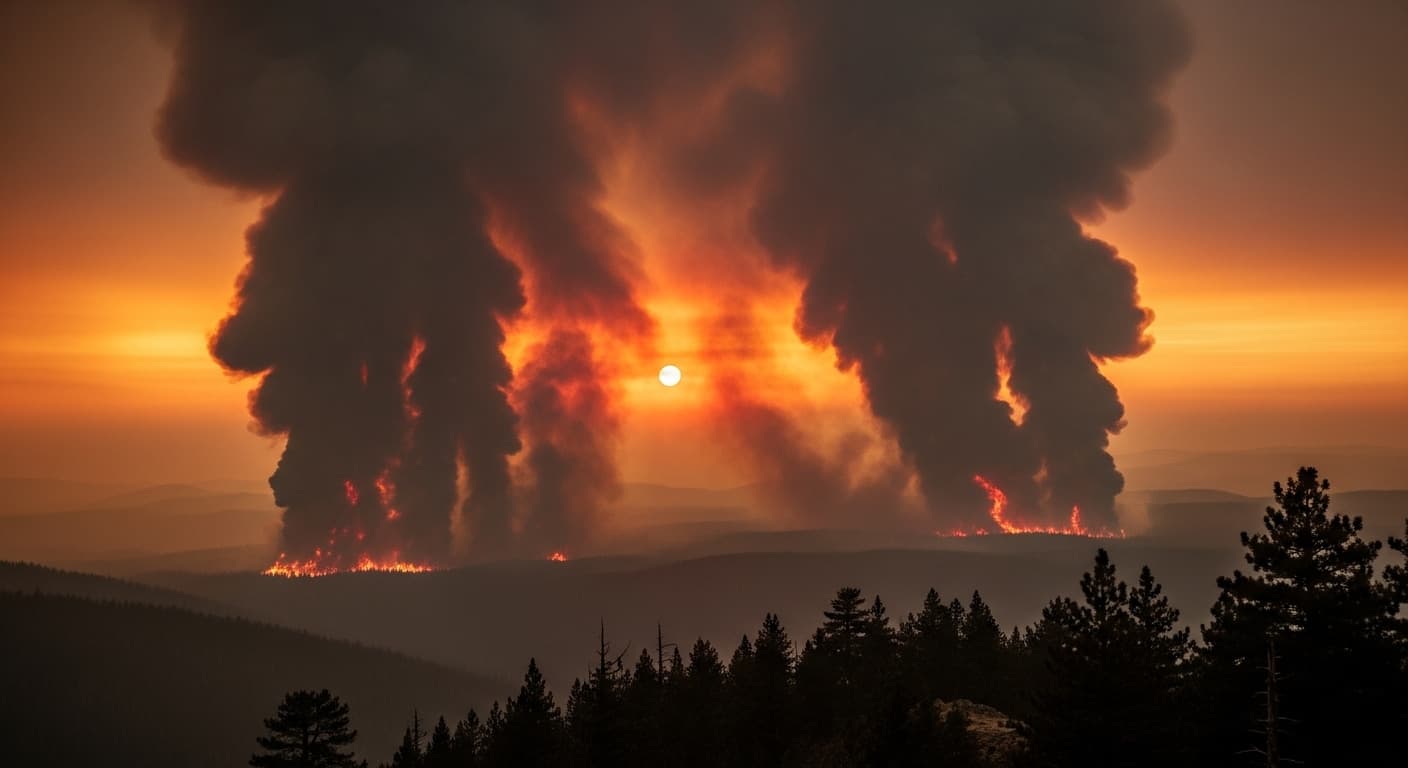
Waldbrandsaison 2026: Warum Atemschutz wichtiger ist denn je
Da die Waldbrandsaison länger und intensiver wird, war das Verständnis von PM2.5-Schutz noch nie so wichtig. Hier ist, was Sie wissen müssen.
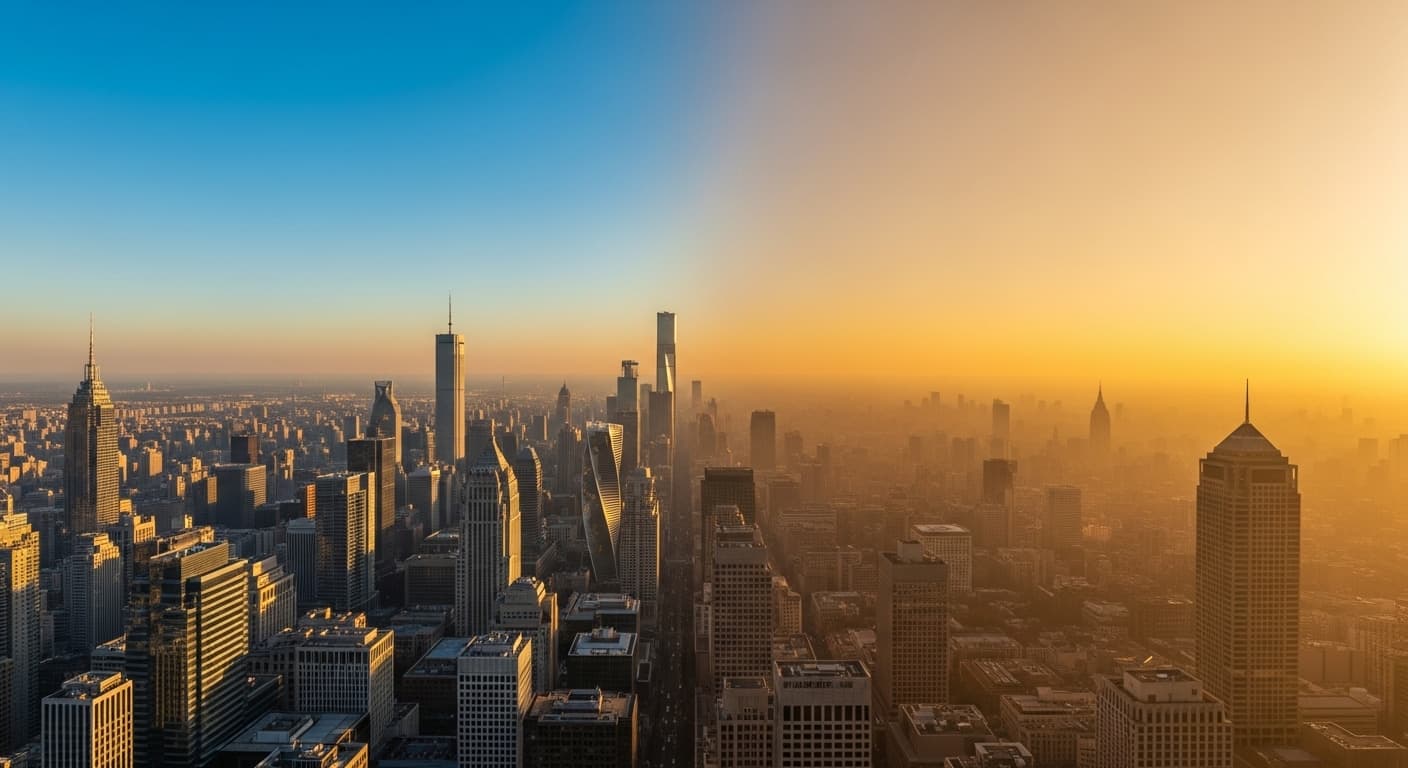
AQI erklärt: Wie Sie den Luftqualitätsindex lesen und danach handeln
Der Luftqualitätsindex ist Ihre erste Verteidigungslinie gegen schädliche Verschmutzung — aber nur, wenn Sie wissen, wie man ihn liest. Dieser Leitfaden erklärt AQI-Stufen, Farbcodes und die Maßnahmen, die Sie auf jeder Stufe ergreifen sollten.
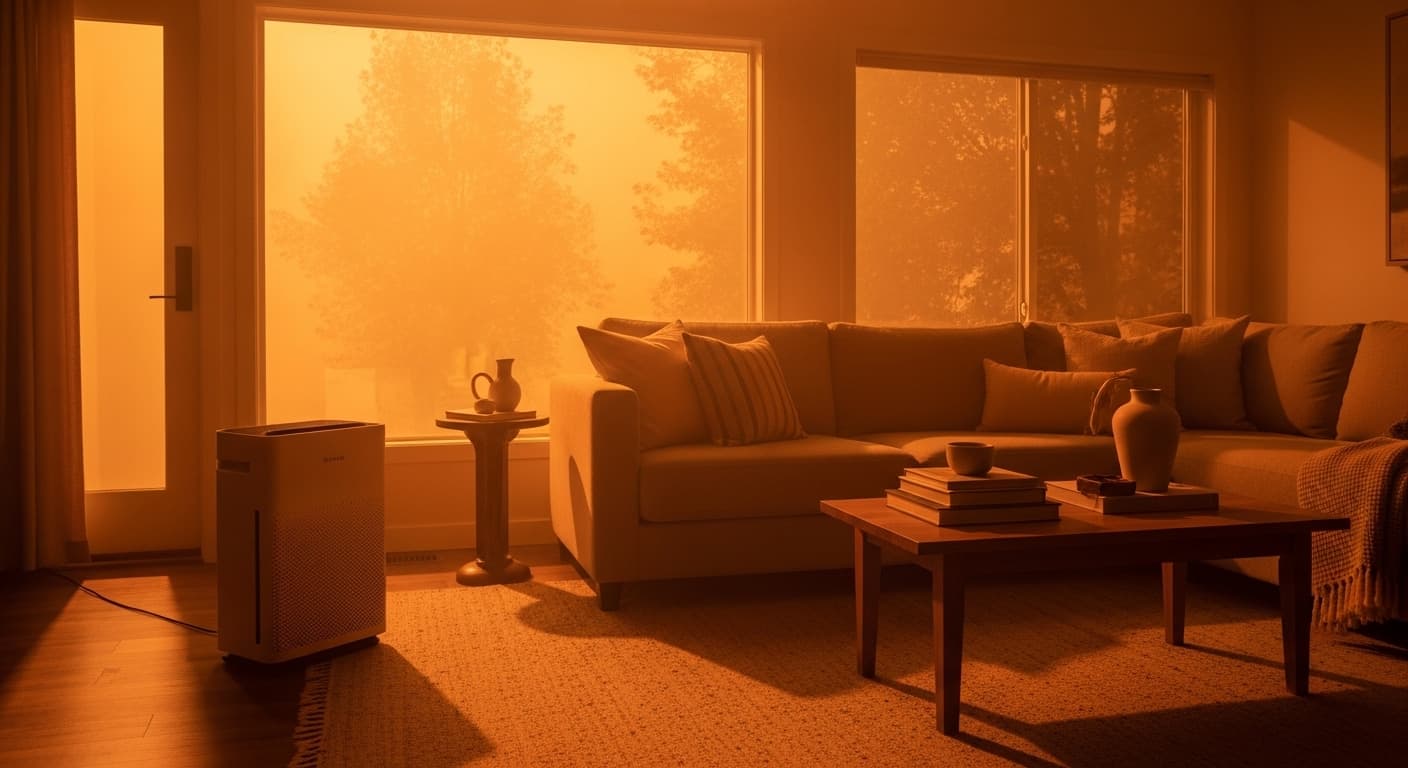
Wildfire Smoke Indoors: How to Protect Your Home When the AQI Spikes
Indoor PM2.5 can reach 50-70% of outdoor levels during wildfire smoke events without mitigation. Sealing your home, upgrading HVAC filters to MERV 13+, and running HEPA purifiers can reduce indoor smoke exposure by 60-80%. Here is the complete layered protection strategy.