
The Complete Guide to Sleep Breathing: Mouth Tape, Nasal Strips, and How They Work Together
An estimated 61% of adults breathe through their mouth during sleep at least some of the time. The effect people report most consistently is waking with a dry mouth. Mouth tape and nasal strips address different parts of that pathway — neither treats a medical condition.
An estimated 61% of adults breathe through their mouth during sleep at least some of the time, according to research published in the journal Healthcare. The difference people report most consistently is waking with a dry mouth and throat, since air taken in through the mouth skips the filtering, warming and humidifying that the nasal passages do. Two products address different parts of that pathway: mouth tape, which encourages the lips to stay closed, and nasal strips, which mechanically widen the nasal airway. Neither treats a medical condition, and the research on taping specifically remains limited — this guide covers how each one works, who they suit, and who should not use them.
A sleep breathing system combines two complementary approaches: mouth tape to encourage lip closure and nasal strips to open the nasal valve. Rather than choosing one or the other, using both together creates a complete airway support strategy — reducing oral airway reliance while making nasal breathing easier.
What Happens When You Breathe Through Your Mouth at Night?
During sleep, the jaw relaxes and the mouth falls open. When air bypasses the nasal passages and enters directly through the mouth, several things change. The oral cavity dries out as saliva evaporates, creating conditions where bacteria thrive. Dentists have long recognized this connection — a study in the Journal of Oral Rehabilitation found that mouth breathing during sleep lowers oral pH to levels associated with enamel erosion and increased cavity risk.
Beyond oral health, mouth breathing changes how the upper airway behaves. The tongue drops backward, the soft palate vibrates, and the throat narrows. This is the mechanical basis of snoring — air forced through a narrowed passage creates turbulence and tissue vibration. The National Sleep Foundation estimates that 44% of men and 28% of women snore regularly, and mouth breathing is a primary contributing factor.
- Dry mouth and throat on waking — the most commonly reported difference
- Morning bad breath, which follows from the same dryness
- Air that bypasses the nose, so it arrives less filtered, less humidified and cooler than air routed through the nasal passages
- A subjective sense of having slept less soundly, though how much of that is attributable to breathing route is not well established
How Does Mouth Tape Work?
Mouth tape is a simple concept: a strip of gentle adhesive applied across or over the lips before sleep to encourage the mouth to stay closed. The goal is not to force the mouth shut — purpose-built sleep tape uses porous materials or vented designs that allow air to pass through in an emergency. Instead, the tape provides a gentle physical cue that trains the body to default to nasal breathing during sleep.
The adhesive matters. Products designed for sleep use a pressure-sensitive adhesive calibrated to bond gently to skin, without the aggressive tack of a general-purpose tape. A well-chosen sleep adhesive removes cleanly without pulling at skin or leaving residue. Shape matters too. Designs with a central breathing vent or slit provide a safety margin, allowing some airflow even with the tape in place.
The most common concern about mouth tape is the idea of being unable to breathe. Purpose-built sleep tape addresses this with vented designs, gentle adhesive that releases under pressure, and porous materials. It is not the same as putting industrial tape over your mouth. That said, anyone with untreated sleep apnea, significant nasal obstruction, or active sinus congestion should consult a healthcare provider before trying mouth tape.
How Do Nasal Strips Work?
Nasal strips are flexible adhesive strips worn across the bridge of the nose. Inside each strip is a spring-like band that gently lifts and opens the nasal valve — the narrowest point of the nasal airway, located just inside the nostril. The nasal valve accounts for roughly 50% of total airway resistance during normal breathing, so even a small increase in its cross-sectional area produces a measurable improvement in airflow.
Clinical research supports the mechanism. A study published in the American Journal of Rhinology found that external nasal dilator strips reduced nasal airway resistance by approximately 30% in healthy subjects. For people whose snoring originates from nasal obstruction rather than the soft palate or throat, nasal strips can meaningfully reduce snoring intensity. They also support exercise recovery and sleep quality by reducing the effort required for each breath.
Why Do Mouth Tape and Nasal Strips Work Better Together?
Each product addresses a different part of the breathing pathway. Mouth tape encourages the oral airway to stay closed. Nasal strips make the nasal airway wider. Used separately, each solves half the equation. Together, they create a complete system: the nasal pathway is opened while the oral pathway is gently sealed.
| Approach | What It Addresses | Limitation When Used Alone |
|---|---|---|
| Mouth tape only | Encourages lip closure, promotes nasal breathing | If nasal passages are narrow or congested, breathing effort increases |
| Nasal strips only | Opens nasal valve, reduces nasal resistance | Mouth can still fall open during sleep, bypassing the nasal airway |
| Both together | Opens nasal airway AND encourages lip closure | Addresses both pathways simultaneously — the complete approach |
Think of it like this: nasal strips make it easier to breathe through your nose, and mouth tape makes it more likely that you will. One reduces resistance, the other reduces the tendency to bypass the nose entirely. The combination addresses the two most common reasons people mouth breathe at night — nasal resistance and jaw relaxation — in a single, non-invasive system.
What Does the Science Say About Nasal Breathing During Sleep?
The case for nasal breathing extends beyond comfort. The nasal passages perform several functions that the mouth cannot replicate. Air entering through the nose is warmed to body temperature, humidified to nearly 100% relative humidity, and filtered by the turbinates — bony structures lined with mucous membrane that trap particles and pathogens before they reach the lungs.
Nitric Oxide: The Nasal Advantage
Perhaps the most significant difference is nitric oxide (NO) production. The paranasal sinuses produce nitric oxide, a molecule that acts as a vasodilator — it widens blood vessels and improves oxygen transfer in the lungs. A landmark study published in the American Journal of Respiratory and Critical Care Medicine found that nasal breathing delivers significantly more nitric oxide to the lower airways than mouth breathing. This was a key finding highlighted in James Nestor's book "Breath: The New Science of a Lost Art," which brought nasal breathing science to a mainstream audience.
Humidity and Airway Protection
When you breathe through your mouth, cold, dry, unfiltered air reaches the throat and lungs directly. The nasal passages condition each breath — adding moisture and warmth — before it reaches the lower airways. This conditioning process protects airway tissue from drying out and reduces the inflammatory response that contributes to nighttime coughing and throat irritation.
- Nasal breathing warms and humidifies air before it reaches the lungs
- The nose filters particles, allergens, and pathogens through turbinate structures
- Paranasal sinuses produce nitric oxide, which is absent from the mouth-breathing route
- Nasal breathing activates the parasympathetic nervous system, promoting deeper rest
- Consistent nasal breathing during sleep supports oral health by maintaining saliva flow
Who Should Consider Sleep Breathing Products?
Sleep breathing products are not a medical treatment. They are tools that support a more natural breathing pattern during sleep. The people who tend to benefit most share a few common experiences.
- Waking up with a dry mouth or sore throat most mornings
- A partner who reports snoring — or evidence from a sleep tracking app
- Feeling unrested despite getting seven or more hours of sleep
- Nasal congestion that makes breathing through the nose feel effortful at night
- Dental professionals who have noted signs of mouth breathing (dry gums, enamel wear)
- Athletes who already train nasal breathing during exercise and want the same routing at night
Mouth tape and nasal strips are not appropriate for everyone. People with diagnosed sleep apnea (moderate to severe), significant nasal obstruction or deviated septum, chronic sinus conditions, or who are at risk of nausea or vomiting should talk to a doctor before using mouth tape. Children should not use mouth tape without medical guidance. If you suspect you have sleep apnea — characterized by loud snoring, gasping, or observed breathing pauses — seek a sleep study before trying any over-the-counter products.
How to Get Started: A Week-by-Week Guide
Starting with mouth tape can feel unusual. A gradual approach helps your body adjust and builds confidence before committing to a full night.
- 1Week 1 — Daytime practice. Wear mouth tape for 30 to 60 minutes while reading or watching television. This builds familiarity with the sensation without the stakes of sleep.
- 2Week 2 — Add nasal strips. Start wearing a nasal strip at night alongside your regular sleep routine. Notice whether you feel a difference in nasal airflow. This step requires no behavior change — just apply and sleep.
- 3Week 3 — Nap test. Try mouth tape during a daytime nap (20 to 30 minutes). This is a short, low-commitment way to test overnight use.
- 4Week 4 — Full night. Combine mouth tape and nasal strips for a complete night of sleep. If you use a sleep tracker, compare your sleep scores before and after.
What Makes a Good Sleep Breathing Product?
Not all mouth tape and nasal strips are engineered equally. The adhesive, the material, and the design all affect comfort, safety, and effectiveness. Here is what to look for when evaluating options.
| Feature | What to Look For | Why It Matters |
|---|---|---|
| Adhesive | Tuned for gentle removal | A moderate hold lifts away cleanly; aggressive adhesives are the usual cause of lip-line irritation |
| Breathing vent | Central slit or porous material | Provides a safety margin — allows emergency airflow even with the tape applied |
| Material | Breathable fabric | Prevents moisture buildup and skin irritation during extended overnight wear |
| Shape | Contoured to lip anatomy | Better adhesion and comfort than rectangular strips — stays in place through sleep movements |
| Strip spring force | Firm enough to dilate, gentle enough to wear | Nasal strips need sufficient mechanical force to open the nasal valve without causing discomfort or skin marks |
The AirPop Sleep System: Restore and Flow
AirPop is developing a complete sleep breathing system built on the same respiratory science and engineering heritage behind the AirPop Light SE — trusted in over 1,200 Target stores and 35 global markets. AirPop Restore is mouth tape engineered with a skin-compatible adhesive and a vented design for safe, comfortable overnight use. AirPop Flow is a nasal strip that mechanically opens the nasal valve to support natural airflow. Together, they form a system designed to support consistent nasal breathing throughout the night.
AirPop Restore (mouth tape) and AirPop Flow (nasal strips) are currently in development. Join the waitlist at getairpop.com/sleep to be notified when they launch. Designed by the team behind 18 patents in respiratory protection, with the same attention to materials, fit, and breathability that made AirPop the premium choice in 1,200+ Target stores.
Related Article
Daily Habits for Better Respiratory Health
Science-backed daily practices that support respiratory health — from air quality awareness to breathing techniques.
Related Article
Breathing and Exercise: A Respiratory Guide
How breathing patterns affect exercise performance, and what research says about nasal vs. mouth breathing during physical activity.
Related Article
Air Quality and Children: A Parent's Guide
Why children are more vulnerable to air quality issues, and practical steps parents can take to protect respiratory health.
关于作者
Jett FuCo-Founder & CEO, AirPop
Cross-border entrepreneur and co-founder of AirPop. Leads global operations, retail expansion across 35+ markets, and B2B distribution partnerships with Target, Amazon, and Best Buy.
Join the Sleep Waitlist
AirPop Restore (mouth tape) + AirPop Flow (nasal strips) — engineered by the brand trusted in 1,200+ Target stores.
Join the Sleep Waitlist相关文章

Is Mouth Taping Safe? What the 2025 Systematic Review Actually Shows
Safety is the number-one barrier to trying mouth tape. A 2025 PLOS One systematic review of 10 clinical studies found no serious adverse events, though evidence remains early. Here is what the research actually shows about risks, contraindications, and safe design.

Why Age 7 Is the Dividing Line for Kids and Masks
EPA warns that respirators are not sized for young children — but pediatric environmental health specialists draw a practical line at age 7. Here is why fit fails on smaller faces, why older kids can often wear adult-small sizes, and what parents of younger children should do instead during wildfire smoke.
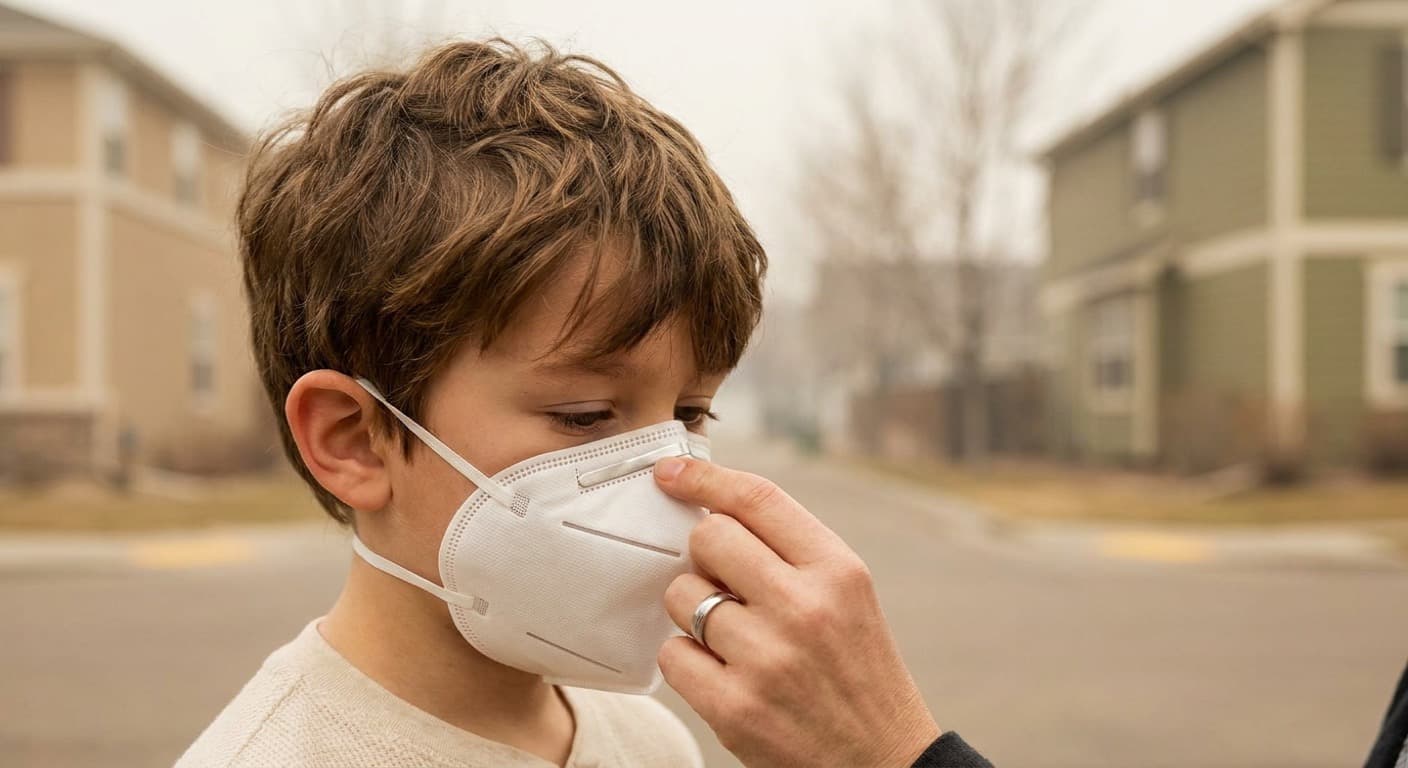
Can Kids Wear KN95 Masks? What the Guidance Actually Says
It depends on two things: age and fit. Children 7 and older can often wear a small adult-sized KN95 effectively — under 7, a reliable seal is unlikely with any filtering mask. What KN95 (GB2626) certification covers, what official guidance says, and how to seal-check a mask on your child.