Best Masks for Wildfire Smoke in 2026: A Complete Buying Guide
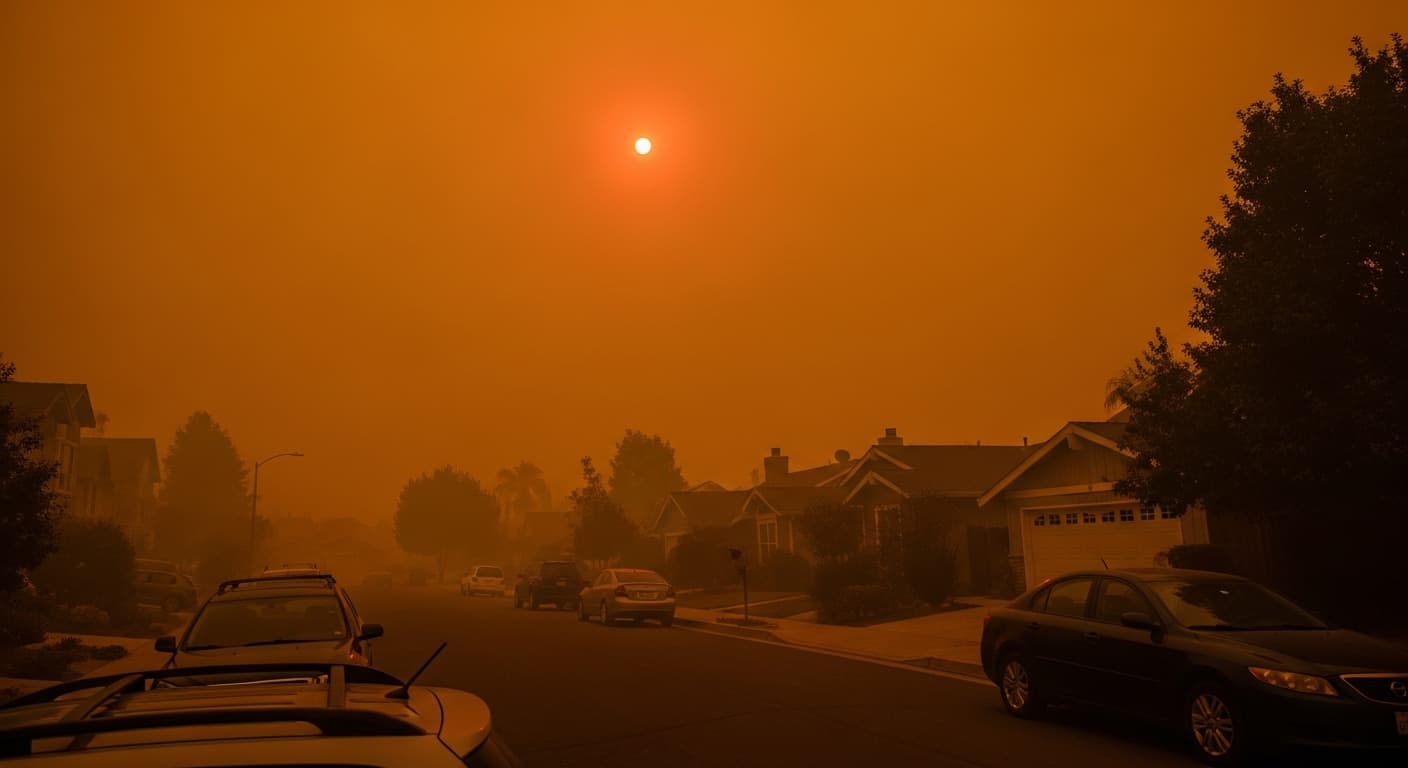
Wildfire PM2.5 is 10x more harmful than urban pollution (Nature Communications). This guide ranks which masks actually filter the 200+ toxic compounds in wildfire smoke — and which fall short.
Wildfire smoke is not ordinary air pollution. It is a complex mixture of fine particulate matter, volatile organic compounds, carbon monoxide, and dozens of toxic chemicals released when vegetation, structures, and synthetic materials burn. The PM2.5 particles in wildfire smoke are up to 10 times more harmful than equivalent concentrations from urban sources like vehicle exhaust — because wildfire particulates carry a more toxic chemical payload and penetrate deeper into the respiratory system. Choosing the right mask for wildfire smoke protection requires understanding what makes wildfire particulates uniquely dangerous and what mask features actually address those dangers.
Enter your ZIP code in our free air quality tool to see the live AQI near you, pulled from EPA AirNow, with plain-language guidance for children, sensitive groups, and outdoor workers.
Research published in Nature Communications found that wildfire PM2.5 is approximately 10 times more harmful to human respiratory health per microgram than equivalent urban PM2.5 concentrations. Standard cloth masks and surgical masks provide virtually no protection against these ultra-fine particles.
Why Is Wildfire Smoke So Dangerous?
When forests, grasslands, and structures burn, they release particles spanning a wide size range, but the most dangerous are those smaller than 2.5 micrometers (PM2.5). These particles are small enough to bypass your nose and throat's natural filtration and penetrate deep into the lungs, where they can cross into the bloodstream. Wildfire PM2.5 carries a particularly toxic cocktail: polycyclic aromatic hydrocarbons (PAHs), heavy metals, and organic compounds that trigger inflammation, oxidative stress, and long-term respiratory damage. Short-term exposure can cause immediate symptoms — coughing, wheezing, eye irritation, and headaches. Long-term or repeated exposure is linked to cardiovascular disease, reduced lung function, and increased cancer risk.
What Mask Features Actually Protect Against Wildfire Smoke?
Not all masks are created equal when it comes to wildfire smoke protection. The critical features are sub-micron particulate filtration, effective facial seal, manageable breathing resistance, and durability for extended wear during multi-day smoke events. Here is what to look for and why each feature matters.
1. Sub-Micron Filtration Efficiency (95% or Higher)
The most critical specification is filtration efficiency at sub-micron particle sizes. Wildfire PM2.5 includes a significant fraction of particles well below 1 micrometer, the size range where health damage is greatest and where cheap masks fail completely. Look for masks tested and certified to filter at least 95% of sub-micron particles. Certifications that verify this include ASTM F3502-21 (read the tested figure on the report), NIOSH N95, KN95 (GB2626-2019), KF94, and FFP2. Avoid masks that only claim "PM2.5 protection" without a recognized certification. These marketing claims are unverified and often meaningless.
2. Effective Facial Seal
A mask's filtration rating is irrelevant if smoky air bypasses the filter through gaps around the nose, cheeks, and chin. This is where most masks fail in real-world wildfire conditions. Flat-fold disposable masks are particularly prone to gap leakage because their 2D design cannot conform to the 3D contours of a human face. Look for masks with structured 3D designs that maintain their shape against the face, adjustable nose bridges, and multiple points of adjustability. The best indicator of seal quality is third-party fit testing or certification to standards like ASTM F3502 that evaluate real-world fit, not just filter media performance. Finally, consider breathing resistance and comfort for extended wear: wildfire smoke events can last days or weeks, and a mask that becomes unbearable after 30 minutes provides no protection during the other 23.5 hours. ASTM F3502 sets maximum breathing resistance limits specifically to ensure masks are wearable for extended periods.
Certifications to Look For (and Red Flags to Avoid)
- ASTM F3502-21 — grades filtration efficiency and air flow resistance on the whole mask, for consumer use
- NIOSH N95 — gold standard for occupational respiratory protection in the US
- KN95 (GB2626-2019) — Chinese standard with 95% filtration, verify with third-party testing
- KF94 — Korean standard, reliable testing and enforcement
- FFP2/FFP3 (EN 149) — European standards, FFP2 is roughly equivalent to N95
Avoid any mask that claims "PM2.5 protection" without a recognized certification. During the 2020 wildfire season, the CDC found that approximately 60% of KN95 masks imported to the US failed to meet their claimed filtration standards. Buy from established brands with verifiable third-party test results, not marketplace sellers with unverifiable claims.
Reusable vs. Disposable: Which Is Better for Wildfire Season?
For multi-day wildfire smoke events, reusable masks with replaceable filters offer significant advantages over disposables. A quality reusable mask maintains its structural integrity and seal over weeks of use. You simply replace the filter when it becomes saturated. Disposable N95s lose their seal and filtration effectiveness after approximately 8-12 hours of cumulative use, meaning a two-week smoke event could require 20-30 disposable masks per person. The math favors reusable: one AirPop mask with a pack of replacement filters provides equivalent protection to dozens of disposables at a fraction of the cost and environmental impact.
How to Use Your Mask Effectively During Wildfire Events
- 1Put on your mask BEFORE going outside, even brief unprotected exposure to heavy smoke can trigger respiratory symptoms
- 2Check the seal every time — press the mask against your face and exhale sharply; if you feel air escaping around the edges, readjust
- 3Replace filters according to manufacturer guidelines — heavily loaded filters increase breathing resistance and decrease protection
- 4Monitor AQI continuously during smoke events, whenAQI exceeds 150 (Unhealthy), limit outdoor time even with mask protection
- 5Store masks in sealed bags between uses to prevent filter contamination and maintain filter life
- 6Have backup masks ready. If your primary mask becomes damaged or saturated, you need an immediate replacement
AirPop masks are tested to filter more than 97% of sub-micron particles while maintaining low breathing resistance for all-day comfort. The 3D knit structure provides superior facial seal compared to flat-fold designs, and the replaceable filter system means one mask lasts an entire wildfire season. Certified to ASTM F3502-21 (Intertek).
Related Article
Wildfire Season 2026
How climate change is extending wildfire season and what it means for respiratory health across North America.
Related Article
Reusable vs Disposable Masks in 2026
A comprehensive comparison of protection, cost, comfort, and environmental impact.
Related Article
Wildfire Smoke Indoors: How to Protect Your Home
HEPA purifiers, HVAC upgrades, and sealing strategies — what to do when staying indoors is not enough on its own.
Related Article
2026 Wildfire Season Forecast
NIFC data, drought maps, and health impact research — what above-normal fire potential means for your family and organization.
About the author
Jett FuCo-Founder & CEO, AirPop
Cross-border entrepreneur and co-founder of AirPop. Leads global operations, retail expansion across 35+ markets, and B2B distribution partnerships with Target, Amazon, and Best Buy.
See AirPop Filtration
>97% particle filtration with 2x the breathability of standard N95s.
See AirPop FiltrationRelated Articles

N95 vs KN95: Which One Should You Actually Wear?
N95 and KN95 set the same filtration bar — at least 95% at the most-penetrating particle size. The difference is which country certified the mask, and far more consequentially, how it attaches to your head. Headbands pull evenly from behind; ear loops pull from two side points and are more prone to gapping. Here is what separates the two standards, how to spot a counterfeit KN95, and where ASTM F3502-21 fits.

Reusable vs Disposable Masks in 2026: The Complete Comparison
Reusable masks now match N95 filtration at under $2 per use — saving families $120+ per flu season. Full 2026 data on cost, performance, and why 129 billion disposable masks per month is unsustainable.

How to Choose the Right AirPop Mask for Your Lifestyle
Whether you commute through city traffic, run outdoors, or simply want cleaner air at the grocery store, there is an AirPop mask designed for your routine. Here is how to find the perfect match.