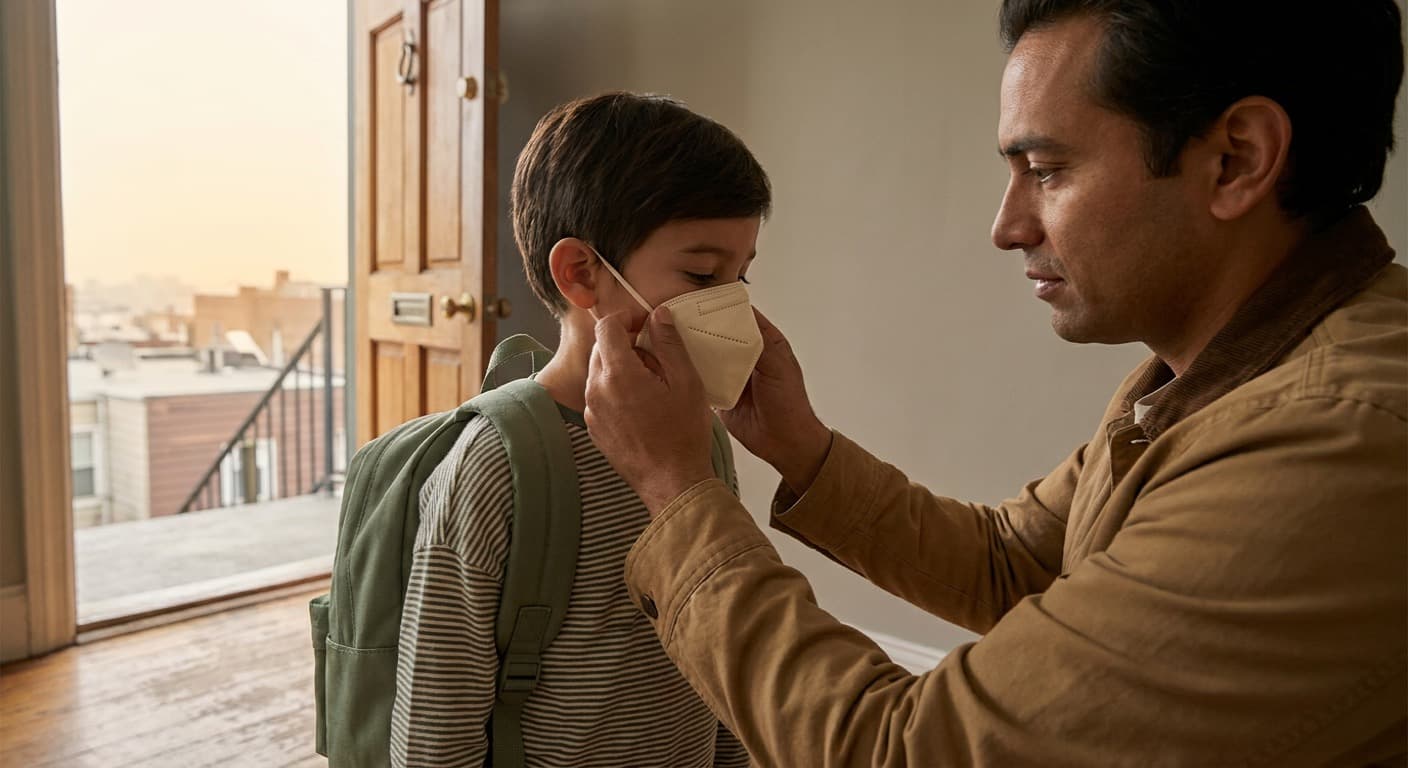
Why Age 7 Is the Dividing Line for Kids and Masks
EPA warns that respirators are not sized for young children — but pediatric environmental health specialists draw a practical line at age 7. Here is why fit fails on smaller faces, why older kids can often wear adult-small sizes, and what parents of younger children should do instead during wildfire smoke.
Here is the uncomfortable truth every parent in a wildfire-smoke city eventually runs into: according to EPA, NIOSH Approved respirators do not come in sizes suitable for young children. No mask — however well made — protects a child if smoky air leaks in around the edges. But pediatric environmental health specialists have drawn a practical line that most parents have never heard of. According to guidance from the Pediatric Environmental Health Specialty Units (PEHSU), a child age 7 or older will likely fit an adult small respirator, while for children between ages 2 and 7 a well-fitting respirator is unlikely to exist at all. That single number — age 7 — changes what a sensible smoke plan looks like for your family.
According to the Western States PEHSU: if your child is age 7 or older, their face will likely fit an adult small N95-style respirator. Between ages 2 and 7, it is less likely you will find a respirator that fits well — and children under age 2 should not wear masks at all.
Why Does Mask Fit Fail for Children Under 7?
Filtration and fit are two different problems. Filter media that captures 95%+ of fine particles is a solved manufacturing problem. Fit is not — because a mask only filters the air that actually passes through it. EPA's wildfire smoke fact sheet puts it plainly: leakage around the edge of the mask causes unfiltered air to enter and be inhaled. A young child's face is simply too small and too differently proportioned for masks engineered around adult facial dimensions. The nose bridge sits too high, the chin cup extends too far, and the resulting gaps at the nose, cheeks, and chin become the path of least resistance for every breath.
There is a second failure mode that has nothing to do with geometry. According to EPA, if a respirator does not fit properly or is uncomfortable, a child might take it off when it is needed most, or wear it incorrectly — pulled below the nose, dangling off one ear. A mask a child will not keep on provides no protection at all. This behavioral reality is why official guidance treats comfort and a child's ability to communicate discomfort as safety requirements, not nice-to-haves.
According to EPA: children ages 2 years and older can wear respirators; however, NIOSH Approved respirators do NOT come in sizes suitable for young children. EPA advises choosing a size that fits over the child's nose and under the chin, does not impair vision, is comfortable — and monitoring the child while it is worn.
What Does the PEHSU Age Guidance Actually Say?
The Pediatric Environmental Health Specialty Units — a network of pediatric environmental medicine experts supported by the American Academy of Pediatrics and the Agency for Toxic Substances and Disease Registry — publish the most specific age-based mask guidance available for wildfire smoke. It breaks down into three bands:
| Age | PEHSU Guidance | What It Means for Parents |
|---|---|---|
| Under 2 | Do not use masks at all | Reduce exposure instead: clean indoor air, limit time outside during smoke events |
| 2 to 7 | A well-fitting respirator is unlikely to exist; child-size medical masks may fit but filter far less | Masks are not the answer at this age — exposure reduction is the plan |
| 7 and older | Face will likely fit an adult small respirator | A properly sized, fit-checked mask becomes a realistic tool |
PEHSU is careful to note that N95 respirators are not made specifically for children in the US and have not been tested for broad use in children — the age-7 line is about facial dimensions, not a certification. It marks the age at which an adult small or extra small mask has a realistic chance of sealing to a child's face. Fit still has to be verified on your child's actual face, which is why the fit-check below matters more than anything printed on the packaging.
PEHSU's guidance also includes a number worth internalizing. Imagine 1,000 smoke particles in the air around your child. With no mask, they breathe in all 1,000. With a well-sealed N95-style respirator, about 100. With a loose-fitting medical mask, 700 to 800. Fit is not a marginal variable — it is the difference between a mask that works and one that only looks like it works.
What Should Parents of Kids Under 7 Do Instead?
If your child is under 7, the honest answer is that masks are not your primary tool — exposure reduction is. PEHSU's guidance is unambiguous: when there is smoke outside, the best place for a child to be is an indoor space with good air quality. That is not a consolation prize. Clean indoor air protects a young child more reliably than any mask that does not seal.
- Create one clean-air room. Close windows and doors, and run a portable HEPA air cleaner sized for the room. EPA's AirNow guide to reducing smoke exposure covers the setup step by step.
- Time outdoor activity around the smoke. AQI often swings dramatically within a single day during fire events — check the live AQI for your ZIP code and move outside time to the cleanest window.
- Cut activity intensity when smoke lingers. Faster breathing means more smoke inhaled, which is why guidance says kids should skip extra outdoor sports during smoke events — even with a mask on.
- Use public clean-air spaces when home air is poor — libraries, community centers, and malls with filtered HVAC. Many wildfire-prone counties publish official clean-air shelter locations during major smoke events.
- Skip cloth masks for smoke. According to PEHSU, cloth face coverings usually do not reduce exposure to wildfire smoke — more on that in our guide to cloth masks and wildfire smoke.
How Do You Fit-Check a Mask on a Child 7 or Older?
Once your child is old enough for an adult small to plausibly fit, the job shifts from finding a mask to verifying the seal. PEHSU describes a simple two-part check parents can do at home in under a minute:
- 1Put the mask on your child and adjust the nose piece and straps so it covers from the bridge of the nose to under the chin, with no gaps at the cheeks.
- 2Cup your hands around the edges of the mask on your child's face without pressing it flat.
- 3Have your child blow out hard — like blowing out birthday candles — and feel for air leaking around the edges. Leaks at the nose or cheeks mean the seal has failed.
- 4Then have your child take a deep breath in. You should see the mask pull toward their face, and feel no air flowing in around the edges.
- 5Re-check the seal every time the mask goes on, and retire any mask that is dirty, torn, wet, or crumpled.
If the mask fails at the nose or cheeks, try a different size or a different shape before giving up — flat-fold designs and structured 3D designs sit very differently on smaller faces. Our mask fit and seal guide walks through additional at-home seal tests, including the glasses-fog check, that work well for older children.
PEHSU guidance is explicit: a child should not take on extra outdoor activities like sports just because they are wearing a mask. Masks help a child breathe less smoke — they still breathe some, especially when active. For game-day decisions, see our guide to youth sports when AQI passes 150.
When Should an Older Child Actually Wear a Mask?
PEHSU suggests considering a mask when the AQI climbs above 101, when smoke is causing coughing, or when a smoke event drags on for more than a few days. The practical playbook for a smoke day: check the current AQI for your ZIP code in the morning, keep younger children in filtered indoor air, and send older kids out with a fit-checked mask only for the trips that can't be moved. For the full picture of how smoke affects developing lungs, start with our parent's guide to air quality and children.
AirPop's Youth & Petite sizing exists precisely because the difference between a mask that seals and one that leaks is measured in millimeters. The contoured design conforms to smaller facial contours with a 360° flexible seal and adjustable nose piece, delivers KN95 (GB2626)-level filtration — tested to capture at least 95% of airborne particles down to 0.3 μm — and keeps breathing resistance low enough that an older child will actually keep it on.
Related Article
Can Kids Wear KN95 Masks?
What KN95 (GB2626) certification does and does not cover, and what official guidance actually says about kids and KN95s.
Related Article
Air Quality and Children: A Parent's Guide
Why children are more vulnerable to air pollution, and the full toolkit for protecting developing lungs.
Related Article
How to Test Your Mask's Fit and Seal
Five at-home seal tests that take under two minutes — no special equipment required.
关于作者
Jett FuCo-Founder & CEO, AirPop
Cross-border entrepreneur and co-founder of AirPop. Leads global operations, retail expansion across 35+ markets, and B2B distribution partnerships with Target, Amazon, and Best Buy.
Check Your Air Quality Now
Free live AQI by ZIP code, with guidance for children and sensitive groups.
Check Your Air Quality Now相关文章
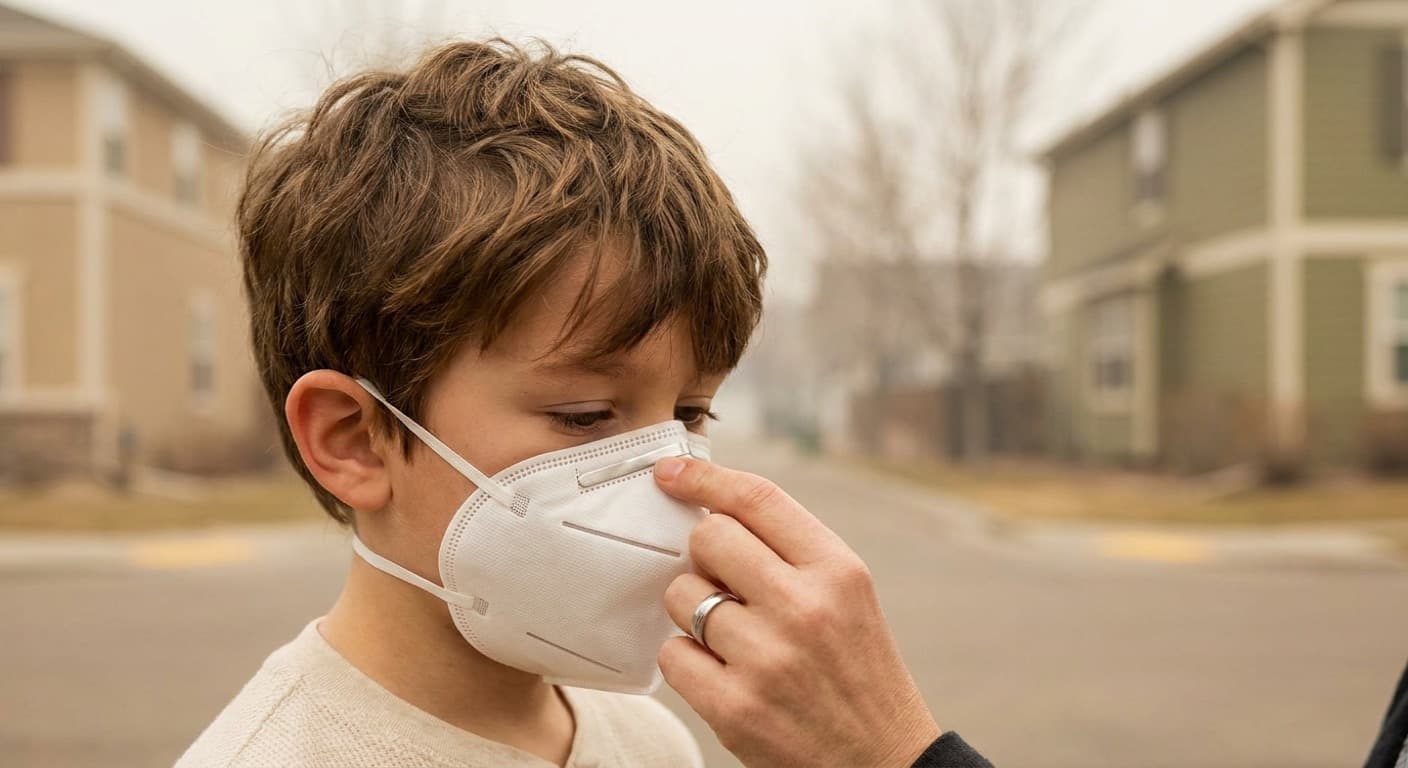
Can Kids Wear KN95 Masks? What the Guidance Actually Says
It depends on two things: age and fit. Children 7 and older can often wear a small adult-sized KN95 effectively — under 7, a reliable seal is unlikely with any filtering mask. What KN95 (GB2626) certification covers, what official guidance says, and how to seal-check a mask on your child.

Do Cloth Masks Work for Wildfire Smoke?
The official answer from EPA and PEHSU is no — cloth masks and bandanas do not filter wildfire PM2.5. Here is the particle-size physics behind that answer, what filtration standards like ASTM F3502-21 and KN95 (GB2626) actually mean, and when a well-fitting mask makes sense for children 7 and older.
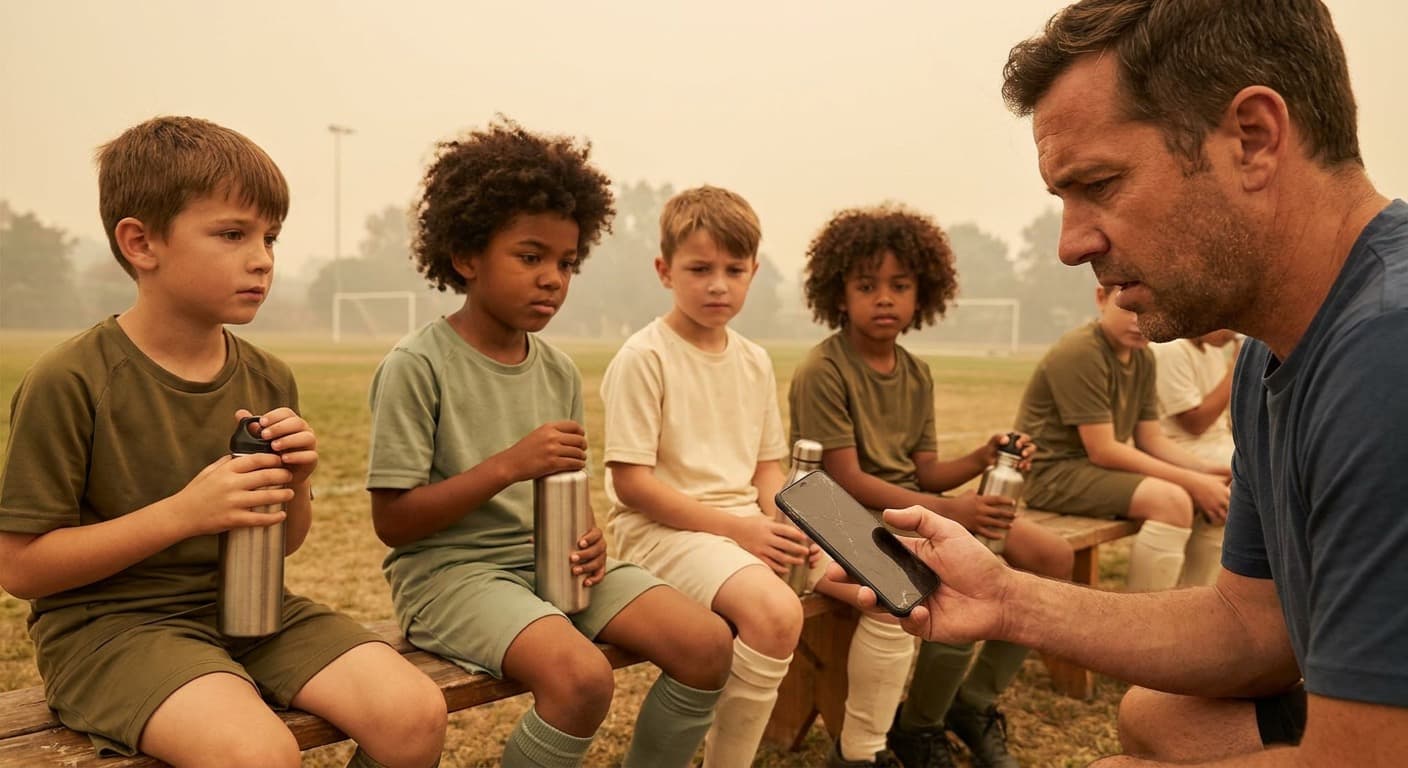
AQI 150 and Your Kid's Soccer Practice: A Parent's Decision Guide
AQI 150 sits at the boundary between "Unhealthy for Sensitive Groups" and "Unhealthy" — and children are a sensitive group. This guide maps EPA and AirNow activity guidance to the decisions parents actually face: play, shorten, move indoors, or reschedule.