
Air Purifiers vs Masks: Complementary Products, Not Competitors
Savvy retailers are merchandising air purifiers and respiratory protection together — and seeing 35% higher basket sizes. This guide explains the complementary product strategy and cross-merchandising tactics.
Air purifiers and respiratory protection masks are the two pillars of the consumer air quality market, yet most retailers merchandise them as if they serve entirely different needs. Air purifiers live in home electronics or small appliances. Masks live in health and wellness, pharmacy, or — worse — seasonal/emergency. This artificial separation ignores a fundamental consumer reality: people who care about the air they breathe at home also care about the air they breathe outside. Cross-merchandising these products as complementary solutions unlocks measurable basket size increases, higher attach rates, and a stronger overall air quality category.
Why Do Air Purifiers and Masks Belong Together?
The complementary relationship between air purifiers and masks is intuitive once stated: air purifiers address indoor air quality, masks address outdoor air quality. Together, they provide 24-hour respiratory protection. Consumer survey data reinforces this connection. A 2025 YouGov survey commissioned by the Consumer Electronics Association found that 64% of air purifier owners also expressed concern about outdoor air quality, and 47% reported using some form of respiratory protection when outdoor AQI exceeded 100. Conversely, 58% of regular mask users reported owning or actively considering an air purifier for their home.
The consumer overlap is even stronger in specific segments. Among wildfire-affected populations (defined as living in a county that experienced AQI > 150 in the past 12 months), 72% owned an air purifier and 61% had purchased respiratory protection — compared to 34% and 18% respectively in unaffected areas. Among urban commuters in cities with average AQI above 50, dual adoption (owning both an air purifier and masks) reached 41%. These are not two separate customer bases. They are one customer base with two related needs.
64% of air purifier owners are concerned about outdoor air quality, and 58% of regular mask users own or are considering an air purifier. Treating these as separate categories means missing natural cross-sell opportunities with an overlapping customer base.
What Basket Size Data Supports Cross-Merchandising?
Basket size data from retailers who have tested air quality cross-merchandising is compelling. Target's "air quality aisle" test in 180 stores during 2024 showed a 27% increase in average transaction value when air purifiers and respiratory protection were merchandised within the same 8-foot section, compared to control stores where the products remained in separate departments. The lift came not from discounting or bundling, but from simple physical adjacency and unified category signage reading "Breathe Better — Indoor & Outdoor Air Quality Solutions."
The attach rate data is equally instructive. When air purifiers and masks are in separate departments, the incidental cross-purchase rate (buying both in a single trip) is just 4-6%. When co-located, the attach rate jumps to 31%, a5-7x increase. The attach works in both directions: 31% of air purifier buyers add respiratory protection, and 19% of mask buyers add an air purifier filter or portable air purifier. The air purifier → mask direction is stronger because the air purifier purchase represents a larger commitment and higher category engagement.
HEPA filter replacements are the hidden hero of this cross-merchandising strategy. Air purifier replacement filters are a high-margin consumable with a 3-6 month replacement cycle. When stocked adjacent to masks, filter replenishment rate increases by 22% — likely because the physical proximity serves as a reminder to shoppers who are already thinking about air quality. The combined air purifier + filter + mask basket generates an average of $67 in margin, compared to $23 for a standalone mask purchase or $38 for a standalone air purifier filter purchase.
How Should Stores Layout an Air Quality Section?
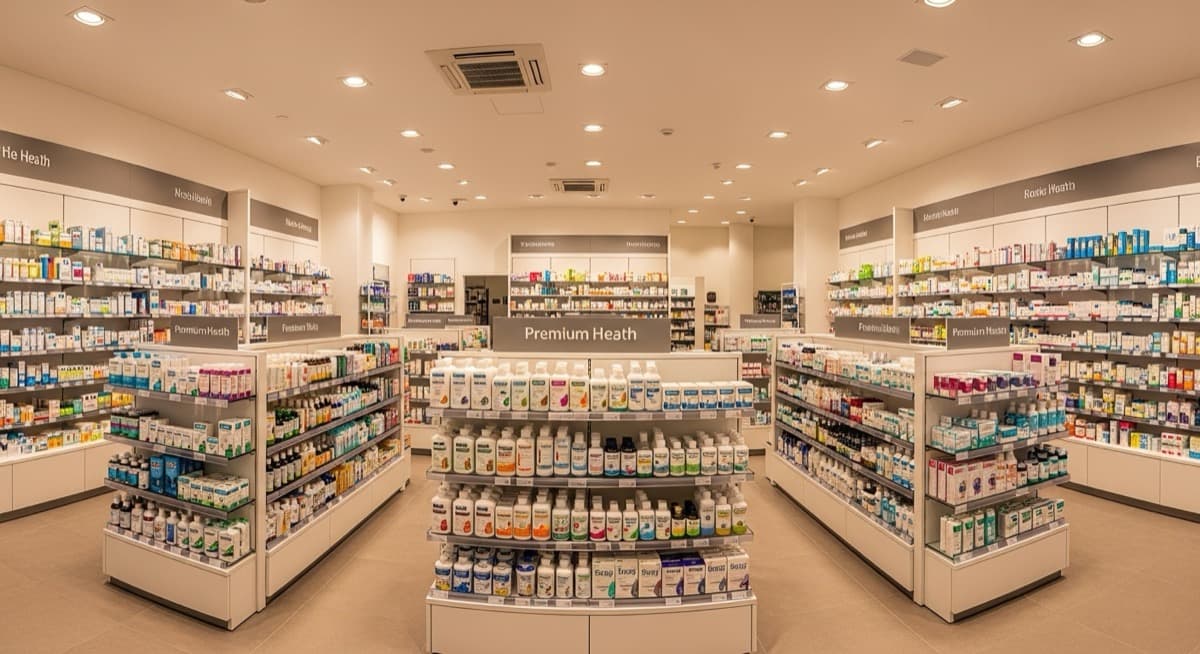
The optimal air quality section layout uses a 8-12 foot inline presentation organized by use case rather than product type. The top-level section header should read "Air Quality" or "Breathe Better", not"Masks" or "Air Purifiers" — to signal that the section addresses a need state (clean air) rather than a product category. Within the section, organize by three zones: Indoor (air purifiers, HEPA filters, humidity monitors), Outdoor (respiratory protection masks, replacement filters), and Accessories (replacement filters for both categories, indoor AQ monitors, carrying cases).
- 1Section header: "Air Quality" or "Breathe Better" — neutral framing that encompasses indoor and outdoor
- 2Zone 1 (Indoor): Air purifiers arranged by room size, HEPA filters organized by purifier brand compatibility, humidifiers
- 3Zone 2 (Outdoor): Respiratory protection masks in good-better-best price architecture, replacement mask filters
- 4Zone 3 (Accessories): Indoor AQ monitors, carrying cases, replacement filters for all devices
- 5Cross-sell signage: "Protect your air at home AND on the go" connecting indoor and outdoor zones visually
- 6Endcap program: Seasonal bundles (Wildfire Ready Kit, Allergy Season Kit) at section end or nearby high-traffic position
Vertical merchandising within each zone should follow the standard good-better-best architecture, with premium products at eye level. For respiratory protection, this means ASTM F3502-certified branded masks at eye level, mid-tier options at arm level, and value/disposable options on lower shelves. For air purifiers, premium HEPA models at eye level with replacement filters directly adjacent. The key merchandising principle is to make the trade-up path visible: a consumer reaching for a basic disposable mask should see the premium alternative immediately above without having to search.
What Bundling Strategies Work Best?
Bundling in the air quality category works best when it tells a story rather than offering a discount. The most successful bundle format across tested retailers is the "kit" approach: a curated set of 2-3 products that address a specific scenario. The "Wildfire Ready Kit" (premium mask + portable air purifier + window seal tape) generates a 38% revenue lift per endcap foot versus single-product displays. The "Allergy Season Kit" (mask + air purifier filter + nasal spray) sees a 24% lift. The "Commuter Air Kit" (compact mask + travel-size hand sanitizer + carrying case) performs at an 18% lift in urban-market stores.
Digital bundling extends the strategy to e-commerce. "Frequently Bought Together" modules that pair masks with air purifier filters achieve a 23% click-through rate when the recommendation is contextual ("Complete your air quality routine") versus 9% for generic algorithmic recommendations. Subscription bundling, where consumers subscribe to receive mask replacements and air purifier filters on a coordinated schedule — shows early promise with 15% of online air quality buyers opting in when the option is presented, generating a 4.2x higher customer lifetime value than one-time purchasers.
Scenario-based kits (Wildfire Ready, Allergy Season, Commuter Air) outperform simple price bundles by 2-3x because they answer a consumer question ("How do I prepare for wildfire smoke?") rather than just offering savings. Kits generate 18-38% revenue lift per display foot.
- Wildfire Ready Kit: Premium mask + portable air purifier + window seal tape — 38% revenue lift
- Allergy Season Kit: Mask + air purifier filter + nasal spray — 24% revenue lift
- Commuter Air Kit: Compact mask + travel hand sanitizer + carrying case — 18% revenue lift
- Digital subscription bundle: Mask + filter replacements on 3-month cycle — 4.2x higher customer LTV
- Back-to-School Kit: Kids mask + classroom air purifier + hand sanitizer — growing segment in allergy-heavy markets
AirPop offers retail partners a complete cross-merchandising toolkit: co-branded section signage, bundle planograms for 4-12 foot sections, seasonal kit configurations, and digital product page recommendation templates. Our products are designed to complement, not compete with. Your air purifier assortment. Contact hello@getairpop.com for the cross-merchandising playbook.
Related Article
The 12-Month Demand Calendar for Respiratory Protection
Month-by-month demand drivers, inventory planning, and cross-promotion opportunities for respiratory protection.
About the author
Jett FuCo-Founder & CEO, AirPop
Cross-border entrepreneur and co-founder of AirPop. Leads global operations, retail expansion across 35+ markets, and B2B distribution partnerships with Target, Amazon, and Best Buy.
Build Your Air Quality Category
Complete assortment strategy from AirPop.
Build Your Air Quality CategoryRelated Articles
Category Management for Respiratory Protection: A Buyer's Framework
Respiratory protection is evolving from an emergency purchase to a planned wellness category. This category management framework helps retail buyers optimize assortment, placement, and seasonal strategy.

Air Quality Category 2026: What Retail Buyers Are Stocking
The air quality category grew 23% in 2025. See which products — purifiers, masks, AQI monitors — top retail buyers are stocking in 2026, and how to build an assortment that drives repeat purchases.

Respiratory Protection: 12-Month Demand Calendar for Buyers
Wildfire smoke, flu season, allergy spikes — respiratory protection demand is predictable if you plan for it. Use this month-by-month inventory calendar to avoid stockouts and capture every seasonal peak.