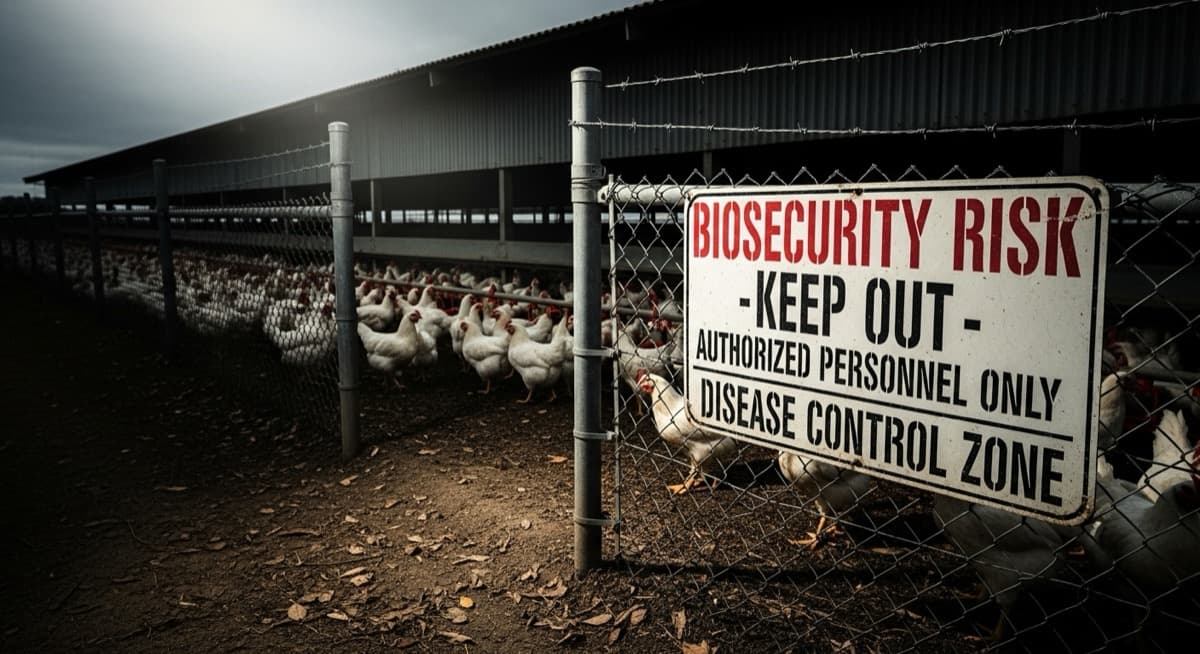
Do Masks Protect Against Bird Flu? What Actually Works in 2026
Not all masks filter the same way, and the difference is testable. N95, certified KN95, and ASTM F3502-21 masks filter at least 95% of airborne particles at 0.3 microns — but only if they seal against the face. Here is what the certifications actually measure, and what the CDC says about H5N1 exposure.
Bird flu, specifically the H5N1 strain — has been circulating in animal populations for decades. But 2025-2026 has marked a turning point. With confirmed human cases climbing past 70 in the United States alone and the virus demonstrating new mammalian adaptation pathways, public health officials are taking the threat more seriously than at any point since 2003. Whether H5N1 escalates into sustained human-to-human transmission or remains a contained zoonotic threat, the window for personal preparedness is now, not after the first confirmed cluster of human-to-human transmission.
Supply chains for respiratory protection collapsed within 72 hours in early 2020 when global demand spiked. By the time the WHO elevated its global health alert to the highest level on March 11, 2020, N95 masks were backordered for months. Preparedness means purchasing before demand spikes, when quality options are available and prices are rational.
What Is H5N1 Bird Flu and Why Is 2026 Different?
H5N1 is a highly pathogenic avian influenza virus that primarily infects birds but can jump to mammals, including humans — through close contact with infected animals or contaminated environments. Unlike seasonal flu, which mutates gradually and produces relatively mild illness in most people, H5N1 has a historically devastating case fatality rate. The virus has been detected in dairy cattle herds across multiple U.S. states, in poultry operations worldwide, and in wild bird populations on every continent except Antarctica. What makes 2026 different is the breadth of mammalian hosts now confirmed: dairy cows, domestic cats, foxes, seals, and an increasing number of farmworkers.
How Does H5N1 Transmit to Humans?
Current H5N1 transmission to humans occurs primarily through direct or close contact with infected animals, particularly poultry and dairy cattle, or their contaminated environments. Farmworkers, veterinarians, and poultry handlers face the highest occupational risk. Respiratory droplets from infected animals, aerosolized virus in barns and milking parlors, and contact with contaminated surfaces are the primary exposure pathways. While sustained human-to-human transmission has not been confirmed, the virus has shown genetic mutations in recent mammalian cases that concern virologists, particularly changes in the PB2 gene that improve the virus's ability to replicate in human respiratory cells.
Influenza viruses are uniquely dangerous because they can reassort — swapping genetic segments when two different flu strains infect the same cell simultaneously. If H5N1 and a human-adapted seasonal flu virus co-infect a person, the resulting reassortant could combine H5N1's severity with seasonal flu's transmissibility. This is the scenario that keeps public health researchers up at night.
Why Respiratory Protection Is the First Line of Defense
Influenza viruses, including H5N1, spread primarily through respiratory droplets and aerosols — tiny virus-laden particles expelled when an infected person (or animal) breathes, coughs, or sneezes. These particles can remain suspended in indoor air for hours and travel well beyond the traditional 6-foot social distancing guideline. High-quality respiratory protection that filters sub-micron particles and seals effectively to the face is the single most effective personal intervention against airborne influenza transmission. Vaccines take months to develop and distribute. Antivirals require timely administration and have limited supply. But a certified mask works immediately, requires no prescription, and protects both the wearer and those around them.
What to Look for in H5N1-Ready Respiratory Protection
- Sub-micron filtration efficiency of 95% or higher — influenza virions are approximately 80-120 nanometers
- Certified to a recognized standard: ASTM F3502-21, NIOSH N95, or equivalent international standard (KN95, KF94, FFP2)
- Effective facial seal — gap leakage renders high-filtration media irrelevant if unfiltered air bypasses the filter
- Low breathing resistance, a mask you cannot wear for extended periods provides zero protection during the hours you remove it
- Reusable design with replaceable filters — sustainable and cost-effective for extended preparedness periods
- Comfortable for all-day wear — preparedness means weeks or months of consistent use, not a single trip to the grocery store
Building Your Preparedness Kit
Emergency preparedness experts recommend maintaining a 90-day supply of essential protective equipment per household member. For respiratory protection, this means having enough masks and replacement filters to cover daily use for three months. A reusable mask system like AirPop, with its replaceable filter architecture — is significantly more practical and economical than stockpiling hundreds of disposable masks. One AirPop mask with 12 replacement filters provides approximately 3 months of daily protection at a fraction of the cost and storage space of equivalent disposable protection.
Recommended Preparedness Inventory Per Person
- 12-3 reusable masks (to rotate while washing) with ASTM F3502 or equivalent certification
- 212-24 replacement filters (3-6 months of protection)
- 3Sealed storage bags to maintain filter integrity until use
- 4A clearly labeled storage location accessible to all household members
- 5Size-appropriate masks for every family member — children need youth or kids sizing for proper seal
A properly fitting mask rated at 95% filtration provides far more real-world protection than a poorly fitting mask rated at 97%. Prioritize fit and seal over headline filtration numbers. AirPop's 3D knit structure is designed to conform to diverse face shapes, maintaining seal integrity throughout the day without the constant adjustment required by flat-fold designs.
Beyond Masks: A Complete Protection Strategy
Respiratory protection is the cornerstone of personal preparedness, but a comprehensive strategy includes additional layers. Hand hygiene remains critical — influenza can survive on hard surfaces for up to 48 hours. Indoor ventilation reduces airborne viral concentration. Monitoring local and national disease-activity updates through the CDC and WHO allows you to escalate your protection level as risk changes. And maintaining your overall respiratory health through adequate sleep, nutrition, and exercise strengthens your immune system's ability to fight infection if exposure occurs despite precautions.
Related Article
When Does Flu Season Actually Start? 29 Seasons of CDC Data
The median season crosses the outpatient threshold at week 51 — but recent seasons keep starting earlier. The 29-year surveillance record.
Related Article
Complete Guide to ASTM F3502-21
Understanding the only U.S. standard that tests both filtration and real-world fit for consumer masks.
About the author
Jett FuCo-Founder & CEO, AirPop
Cross-border entrepreneur and co-founder of AirPop. Leads global operations, retail expansion across 35+ markets, and B2B distribution partnerships with Target, Amazon, and Best Buy.
See Protection Solutions
ASTM F3502-21 certified protection — ready when you need it.
See Protection SolutionsRelated Articles
When Does Flu Season Actually Start? 29 Seasons of CDC Data
We analyzed 29 seasons of CDC FluView surveillance (1997-2026). Flu activity crosses the outpatient threshold at a median of week 51 and peaks at week 5 — but the last four seasons all started earlier. Here is what the timing means for protection and for shelf planning.

Pregnancy and Air Quality: What Expecting Mothers Need to Know
Air pollution during pregnancy raises preterm birth and low birth weight risks. Learn safe AQI thresholds and effective protection for expecting mothers.

Spring Allergy Season 2026: A Retail and Consumer Guide to Respiratory Protection
With 81 million Americans affected by seasonal allergies, spring represents a massive retail opportunity. This guide covers the science of pollen protection and how to position respiratory products for allergy season sell-through.