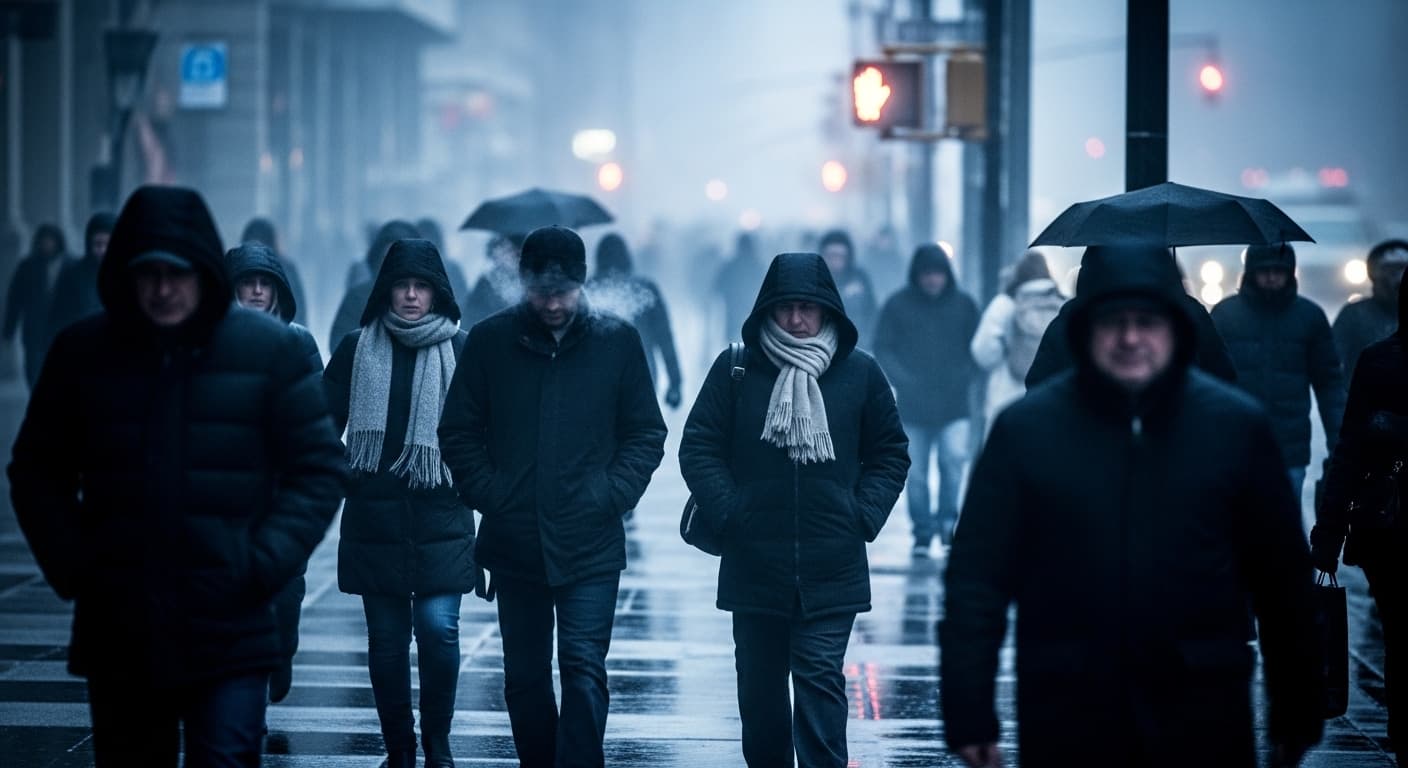
When Does Flu Season Actually Start? 29 Seasons of CDC Data
We analyzed 29 seasons of CDC FluView surveillance (1997-2026). Flu activity crosses the outpatient threshold at a median of week 51 and peaks at week 5 — but the last four seasons all started earlier. Here is what the timing means for protection and for shelf planning.
Flu season arrives on a schedule, and that schedule is more predictable than most people assume. We analyzed 29 seasons of CDC FluView national surveillance data (1997 through 2026) to answer a narrow question: when does flu activity actually start climbing, and when does it peak? The answer matters because respiratory protection, like vaccination, works best when it is in place before the curve moves — not after.
Across those seasons, excluding the pandemic years that distort the pattern (2008-09 H1N1 and the 2020-21 collapse in circulation), influenza-like illness crosses the 2.5% outpatient threshold at a median of week 51 — the back half of December — and peaks at a median of week 5, late January into early February. The variation is tighter than the folklore suggests: roughly 3.7 weeks of standard deviation on the onset, 3.6 on the peak.
The four most recent seasons crossed the same threshold in weeks 40, 42, 46, and 47 — all meaningfully earlier than the 1997-2019 median of week 51. Four seasons is a signal, not a proven trend, but the direction is consistent and it argues for treating late October, not December, as the point where preparation stops being early.
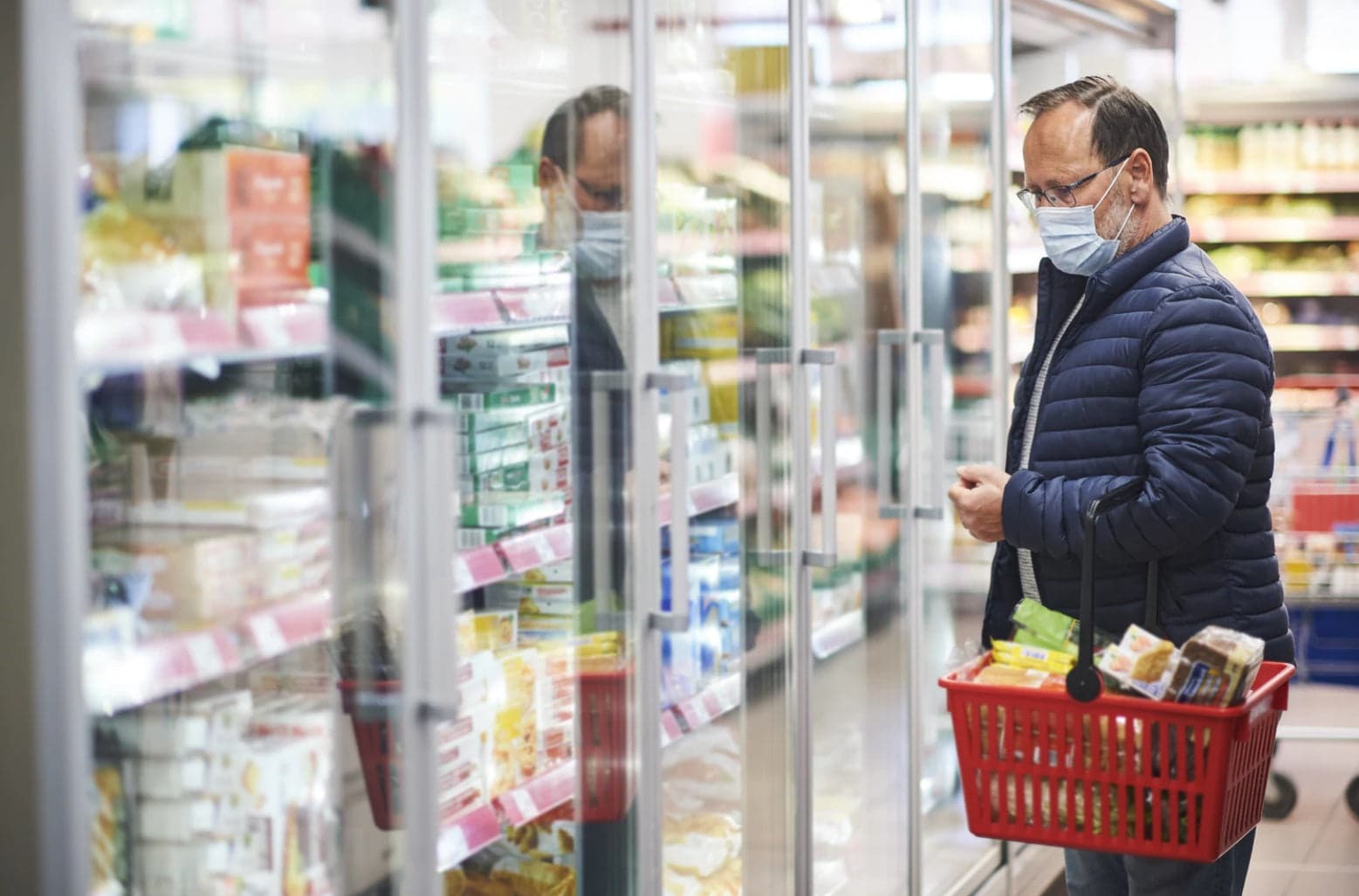
Why Does Flu Season Follow a Schedule at All?
Several factors move together each autumn, which is why the timing repeats even though severity does not. Indoor crowding rises as temperatures drop. Relative humidity falls, and drier air lets respiratory droplets stay aloft longer. School terms concentrate transmission among children, who are efficient spreaders. Seasonal travel around November and December mixes populations that were previously separate.
What varies between seasons is which strain dominates, how well the season's vaccine matches it, and how much population immunity carried over. Those variables drive severity. They do not move the calendar much — which is precisely why the calendar is the useful planning input.
The CDC recommends annual vaccination as the first line of defense. Additional protective measures, including respiratory protection in crowded indoor settings, are advised for people at higher risk. A mask is a complement to vaccination, not a substitute for it.
Where Does Respiratory Protection Fit?
Influenza spreads through respiratory droplets and aerosols produced when people cough, sneeze, or talk. What a certified mask does is measurable and narrow: it filters airborne particles at a tested efficiency, provided it seals against the face. What it does to any individual's odds of illness depends on exposure, duration, vaccination status, and underlying health — questions for the CDC and for a clinician, not for a mask specification.
With that boundary stated, the groups for whom the CDC advises additional precautions during periods of high activity are consistent year to year:
- Immunocompromised individuals, who may mount a weaker response to vaccination
- Adults 65 and older, who face higher hospitalization rates
- Healthcare workers and caregivers with sustained exposure
- Parents and caregivers of young children
- Anyone spending extended time in crowded indoor environments during peak activity
What Should You Look for in a Mask?
- Filtration efficiency: at least 95% of particles at 0.3 microns. ASTM F3502-21 certification is a reliable indicator of tested performance.
- Fit and seal: gaps at the nose and cheeks let air bypass the filter entirely, which makes the filtration rating academic.
- Breathability: a mask you find uncomfortable is a mask you will not wear consistently.
- Practicality: flu season runs for months. Choose something you can realistically use daily rather than something you will abandon in week two.
Many certifications test filtration alone. ASTM F3502 also tests fit and leakage, which is what determines whether the filtration rating survives contact with a real face. AirPop products are certified to ASTM F3502-21 (Intertek).
What Does a Layered Approach Look Like?
- 1Vaccination — the CDC's first line of defense, and the layer with the strongest evidence base.
- 2Respiratory protection — a certified, well-sealing mask in crowded indoor settings during periods of high activity.
- 3Hand hygiene — regular handwashing and avoiding face contact.
- 4Ventilation — improving indoor air exchange where you have any control over it.
- 5Staying home when sick — the layer that protects everyone else.
Related Article
5 Respiratory Health Habits That Make a Real Difference
Beyond wearing a mask — daily habits that reduce your exposure risk.
What Does the Timing Mean for Retailers?
For retail buyers and category managers, the median onset at week 51 and the recent shift toward weeks 40-47 have a direct planning consequence: shelf presence established in November is early enough, and shelf presence established in January is late. Demand does not build gradually from the first cold day — it moves with the surveillance curve, and the curve has been arriving sooner.
The broader point is that respiratory protection is not a single-season category. Winter respiratory season and late-summer wildfire smoke produce demand peaks of comparable size from entirely different causes. Retailers who treat the category as year-round wellness, positioned alongside cold remedies and vitamins, capture both.
“The retailers winning in respiratory protection understand that it is a year-round wellness category, not a single-season spike.”
— AirPop Retail Playbook
AirPop Air Wearables are designed for year-round use, from winter respiratory season to spring pollen to wildfire smoke. Certified to ASTM F3502-21 (Intertek), with 2x the breathability of standard N95 masks.
Related Article
The Complete Guide to ASTM F3502-21
What the certification actually tests, and how to verify a mask meets it.
About the author
Jett FuCo-Founder & CEO, AirPop
Cross-border entrepreneur and co-founder of AirPop. Leads global operations, retail expansion across 35+ markets, and B2B distribution partnerships with Target, Amazon, and Best Buy.
Related Articles
Do Masks Protect Against Bird Flu? What Actually Works in 2026
Not all masks filter the same way, and the difference is testable. N95, certified KN95, and ASTM F3502-21 masks filter at least 95% of airborne particles at 0.3 microns — but only if they seal against the face. Here is what the certifications actually measure, and what the CDC says about H5N1 exposure.

Spring Allergy Season 2026: A Retail and Consumer Guide to Respiratory Protection
With 81 million Americans affected by seasonal allergies, spring represents a massive retail opportunity. This guide covers the science of pollen protection and how to position respiratory products for allergy season sell-through.

Pregnancy and Air Quality: What Expecting Mothers Need to Know
Air pollution during pregnancy raises preterm birth and low birth weight risks. Learn safe AQI thresholds and effective protection for expecting mothers.