How Long Does a KN95 Mask Last? What Actually Wears Out
There is no expiry date on a KN95, and a depleted mask looks identical to a new one. What wears out is the electrostatic charge in the filter media, the seal against your face, and the straps — three things that fail at different rates. Here is what degrades, what certifications do not cover, and when to replace it.
There is no expiry date stamped on a KN95, and that is the honest starting point. What wears out is not a countdown — it is three separate things, and they fail at different rates: the electrostatic charge in the filter media, the physical seal around your face, and the straps that hold it there. A mask can look perfectly clean and still have stopped doing its job, which is why "how long does it last" has no single number as an answer.
What follows is what actually degrades, what the certifications do and do not test for, and how the answer changes depending on whether your mask was built to be worn once or built to be washed.
What Actually Wears Out in a KN95?
A KN95 does not filter by acting as a sieve. If it did, the pores would have to be smaller than the particles, and breathing through it would be close to impossible. Instead, the middle layer is meltblown polypropylene carrying a permanent electrostatic charge, and that charge pulls particles out of the airstream as they pass — including particles far smaller than the physical gaps in the fabric.
That charge is the part that degrades, and it is invisible when it does. Moisture is the main enemy: your own breath, humidity, and anything that wets the media. Oils and skin contact contribute. Alcohol and most disinfectants strip the charge outright, which is why "sanitizing" a disposable respirator with a spray tends to destroy the thing you were trying to preserve.
A mask with a depleted electrostatic charge looks identical to a new one. There is no visual cue, no color change, no smell. This is the single most important thing to understand about mask lifespan — appearance tells you nothing about filtration.
How Long Does a Disposable KN95 Last?
Disposable KN95s are designed around single-use assumptions, and the guidance from health authorities has consistently been framed in hours of wear rather than days on a calendar. The practical signals that a disposable has reached the end of its useful life are all things you can check:
- It has become damp from breath, sweat, or weather — moisture is the fastest route to charge loss
- Breathing through it has become noticeably harder, which indicates the media is loaded with particles
- The straps have stretched, so the mask no longer pulls tight against your face
- The nose wire no longer holds a shape, or the foam at the bridge has compressed flat
- It is visibly soiled, or it has been touched repeatedly on the filtering surface
The last two matter more than most people expect. A mask that filters at 95% but sits loose delivers far less than 95% protection, because unfiltered air takes the easier path around the edge rather than through the media. Strap fatigue and a flattened nose bridge are failures of the seal, and the seal is at least as important as the filter.
Can You Reuse a KN95 Mask?
For a disposable KN95, limited reuse is common in practice and is a fair thing to be honest about. If the mask is dry, undamaged, still seals, and has not been worn in a high-exposure setting, wearing it again is a reasonable choice — many people do it, and the alternative is often not wearing anything. Store it dry and breathable between wears rather than sealed in a plastic bag, which traps moisture against the media.
What does not work is trying to restore one. Washing a disposable KN95 destroys the electrostatic charge. Alcohol sprays destroy it. Microwaving, freezing, and oven-heating are all methods that circulate periodically and none of them are supported by the way the media works — heat and moisture are what the charge is vulnerable to.
A disposable KN95 that is reused is being stretched past its design intent. A mask engineered as reusable is a different product: the filter is protected by a wipe-clean outer structure, so cleaning the shell never touches the filter media.
How Long Does a Reusable Mask Last?
Reusable air wearables are built around the problem described above: keep the filter media dry and unhandled, and make the part that gets dirty the part you can clean. AirPop masks maintain their filtration performance through 10 cleaning cycles (70% alcohol wipe, Intertek), with the wipe-clean outer shell protecting the inner electrostatic filter rather than exposing it.
That changes the arithmetic rather than the physics. The charge still degrades, the seal still matters, the straps still fatigue. What changes is that a $19.99 four-pack covers roughly 40 wears — four masks, each reusable for up to 10 cleaning cycles — instead of each mask being discarded after one.
You can work the numbers for your own usage pattern with the free cost-per-wear calculator, which compares a reusable unit against a disposable habit over a year.
What Does the Certification Actually Guarantee?
This is where most lifespan advice quietly overstates things. GB2626-2019 for KN95, NIOSH for N95, and ASTM F3502-21 all test a mask in its as-manufactured condition. They certify what comes out of the box. None of them certifies a mask after ten wears, after a wash, or after a month in a coat pocket.
So when a manufacturer states a wash count, that is a claim about their own testing, not something the certification underwrites. It is worth asking whether the number has test data behind it. ASTM F3502-21 is the more useful standard here for a different reason: alongside filtration it also tests breathing resistance and leakage, so a mask cannot pass by filtering well while sealing badly.
Related Article
The Complete Guide to ASTM F3502-21
What the certification tests, and how to verify a mask actually meets it.
How Should You Store a Mask Between Wears?
- Dry and breathable — a paper bag or an open pouch, not a sealed plastic bag that holds moisture against the media
- Flat or in its formed shape, so the nose bridge and structure are not crushed
- Away from heat sources, including a car dashboard in summer
- Handled by the straps rather than the filtering surface
- Separately from other masks, if more than one person in the household wears them
When Should You Replace It?
The practical rule is that seal failure and moisture are the two triggers worth acting on, and both are checkable without any equipment. Do a seal check each time you put a mask on: cover the surface, inhale sharply, and watch for the mask drawing inward against your face. If it does not, or you feel air moving at the nose or cheeks, the mask is no longer doing what its rating implies — regardless of how new it is.
Related Article
How to Test Your Mask Fit and Seal
The checks that tell you whether a mask is working on your face.
About the author
Jett FuCo-Founder & CEO, AirPop
Cross-border entrepreneur and co-founder of AirPop. Leads global operations, retail expansion across 35+ markets, and B2B distribution partnerships with Target, Amazon, and Best Buy.
Compare Cost Per Wear
Free calculator: reusable versus disposable over a year of actual use.
Compare Cost Per WearRelated Articles
Do Face Masks Expire? What the Date on the Box Actually Means
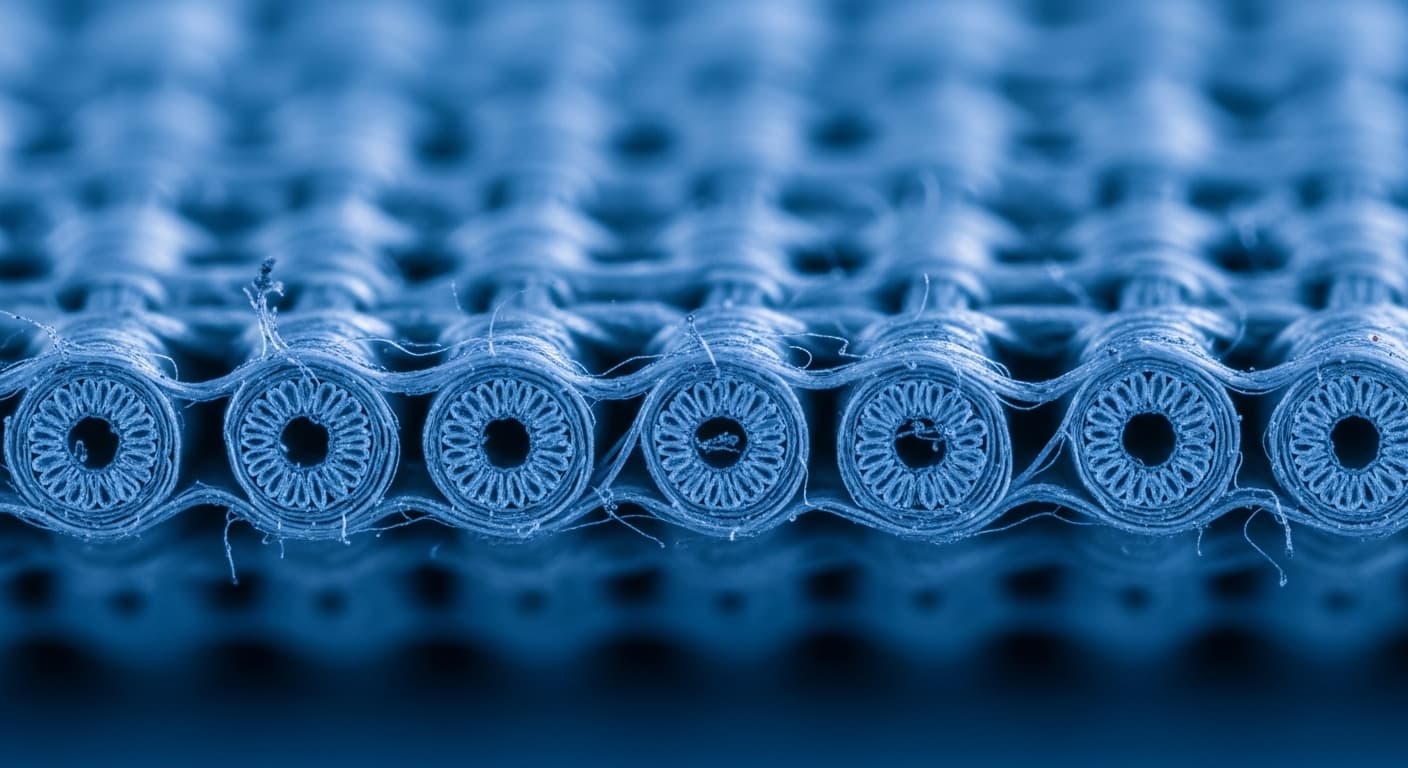
The date printed on a box of N95, KN95 or surgical masks is a manufacturer shelf-life date, not a safety cliff. What ages in storage is mostly mechanical — elastic straps lose tension, nose foam takes a set, packaging integrity fails — and all of it is checkable by hand. The one thing you cannot check is the electrostatic charge. Here is what degrades, how to test a stored mask, and how reusable masks run on a different clock entirely.
N95 vs KN95: Which One Should You Actually Wear?
N95 and KN95 set the same filtration bar — at least 95% at the most-penetrating particle size. The difference is which country certified the mask, and far more consequentially, how it attaches to your head. Headbands pull evenly from behind; ear loops pull from two side points and are more prone to gapping. Here is what separates the two standards, how to spot a counterfeit KN95, and where ASTM F3502-21 fits.

Running in Cold Weather With a Mask: What Actually Happens
Cold-weather running creates one specific problem for masks, and everything else follows from it: condensation. Warm saturated breath meets fabric sitting at outdoor temperature, the vapour condenses, and unlike in summer it does not evaporate between breaths. A wet mask breathes harder and filters worse — one of which you notice immediately, one of which you never notice at all. Here is the physics, and what to look for.