Wildfire Season Protection
Wildfire Smoke Masks
That Actually Protect
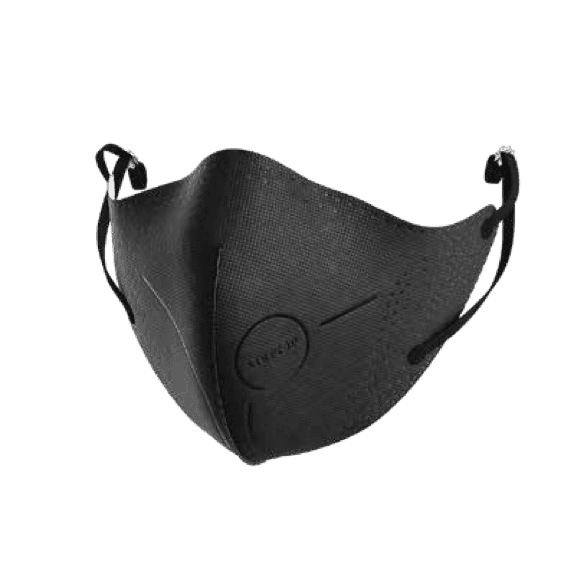
AirPop filters more than 97% of wildfire smoke particles (PM2.5). ASTM F3502-21 certified, KN95 rated, and reusable for up to 10 cleaning cycles.
When the AQI spikes, you need protection you can trust — not a cloth mask or a single-use N95 that runs out in hours. AirPop was engineered for exactly this.
Smoke and air protection is the Protect pillar of the AirPop Breathing System.
>97%
PM2.5 Filtration
2x
Breathability vs N95
10
Cleaning Cycles Tested
Level 2
ASTM F3502-21 filtration efficiency
Why Wildfire Smoke Is a Health Emergency
Wildfire smoke contains PM2.5 — fine particulate matter 30 times smaller than a human hair. These particles bypass your nose and throat, penetrating deep into lung tissue and entering the bloodstream.
According to the EPA, short-term PM2.5 exposure from wildfire smoke causes respiratory inflammation, aggravates asthma and COPD, and increases emergency room visits by 7-10% in affected areas. The CDC reports that wildfire smoke exposure is linked to increased cardiovascular events, even in healthy adults.
Wildfire seasons are getting longer. The National Interagency Fire Center reports that the US wildfire season has expanded by 80+ days since the 1970s. In 2023, Canadian wildfires pushed AQI above 300 in New York City — hazardous levels typically seen only near active fires.
Air Quality Index (AQI) and When to Mask
The EPA Air Quality Index measures PM2.5 concentration. Here is when protection becomes necessary.
AQI 0-50
Good
No mask needed. Normal outdoor activity.
AQI 51-100
Moderate
Sensitive groups may want protection outdoors.
AQI 101-150
Unhealthy (Sensitive)
Wear a certified mask outdoors. Limit exertion.
AQI 151+
Unhealthy to Hazardous
Everyone should mask outdoors. Stay indoors when possible.
Source: EPA Air Quality Index (AQI) Basics. Check the live AQI for your ZIP code with our free air quality tool or at AirNow.gov
Why AirPop for Wildfire Smoke
>97% PM2.5 Filtration
Tested at 0.3 microns (ASTM F2299) — wildfire PM2.5 particles range from 0.1 to 2.5 microns. AirPop captures particles across this entire range.
2x Breathability vs N95
Wildfire events last days or weeks, not hours. AirPop 3D Aerodome structure maintains airflow so you keep the mask on instead of pulling it down.
360° Seal — No Gap Leakage
PM2.5 particles follow airflow. If air leaks around the mask edges, smoke gets in regardless of filter quality. AirPop patented seal eliminates gap leakage.
Reusable: 10 Cleaning Cycles
During multi-week smoke events, disposable N95s run out fast. AirPop maintains >97% PFE after 10 cleaning cycles with a 70% alcohol wipe — verified by Intertek.
ASTM F3502-21 Certified
The US standard for barrier face coverings, graded on filtration efficiency and air flow resistance. AirPop is Level 2 for filtration, clearing the 50% floor at >97%, and Level 1 for air flow resistance (Intertek).
Kids Sizes Available
Children breathe faster relative to body weight, making PM2.5 exposure more dangerous. AirPop Kids (ages 3-12) provides the same certified protection.
Wildfire Smoke Mask FAQ
What kind of mask protects against wildfire smoke?
Wildfire smoke contains fine particulate matter (PM2.5) that penetrates deep into the lungs. Effective protection requires a mask with certified particle filtration — at minimum KN95 or ASTM F3502-21 rated. Cloth masks and surgical masks do not provide adequate filtration against PM2.5 smoke particles.
How effective is AirPop against wildfire smoke?
AirPop Light SE filters more than 97% of sub-micron particles, which includes the PM2.5 found in wildfire smoke, and holds that level after 10 cleaning cycles (ASTM F3502-21 §8.1, Intertek 104653485CRT-002).
Can I reuse a mask during wildfire season?
Yes. AirPop masks are designed for reuse — tested to maintain >97% particle filtration after 10 cleaning cycles with a 70% alcohol wipe (Intertek). During heavy smoke events, we recommend wiping the mask down daily and replacing when the mask no longer maintains a snug seal.
When should I wear a mask for wildfire smoke?
The EPA recommends wearing a properly fitted mask when the Air Quality Index (AQI) exceeds 101 (Unhealthy for Sensitive Groups). At AQI 151+ (Unhealthy), everyone should reduce outdoor exposure and wear certified protection when outside.
Is AirPop better than N95 for wildfire smoke?
AirPop provides comparable filtration to N95 (>97% PFE) while offering significantly better breathability — 2x that of a standard N95. For wildfire events that last days or weeks, comfort and breathability matter: a mask you actually keep wearing protects more than one you remove because you cannot breathe.
Do kids need wildfire smoke masks?
Yes. Children are more vulnerable to PM2.5 exposure because they breathe faster relative to body weight. AirPop Kids is sized for ages 3-12 with the same KN95 + ASTM F3502 certification as adult models.
Related Resources
Breathing System
The AirPop Breathing System
Protection by day and the Sleep system by night — one breathing-wellness brand.
Buying Guide
Best Masks for Wildfire Smoke in 2026
Features, certifications, and real-world performance compared.
Certification
ASTM F3502-21 Explained
What this certification tests and why it matters for smoke protection.
Technology
How AirPop Filtration Works
360° Seal, 3D Aerodome, multi-layer filtration — the engineering.
Prepare for Wildfire Season
Wildfire season runs May through October, with peak smoke events in July-September. Stock certified protection before demand spikes — retailers and organizations order early.
All claims based on independent third-party testing by Intertek, SGS and BSI.