Airport Air Quality: What Travelers Need to Know Before Their Next Flight
Airports are unique air quality environments — high passenger density, jet fuel emissions, and recirculated air. Here is what the research says and how to protect yourself.
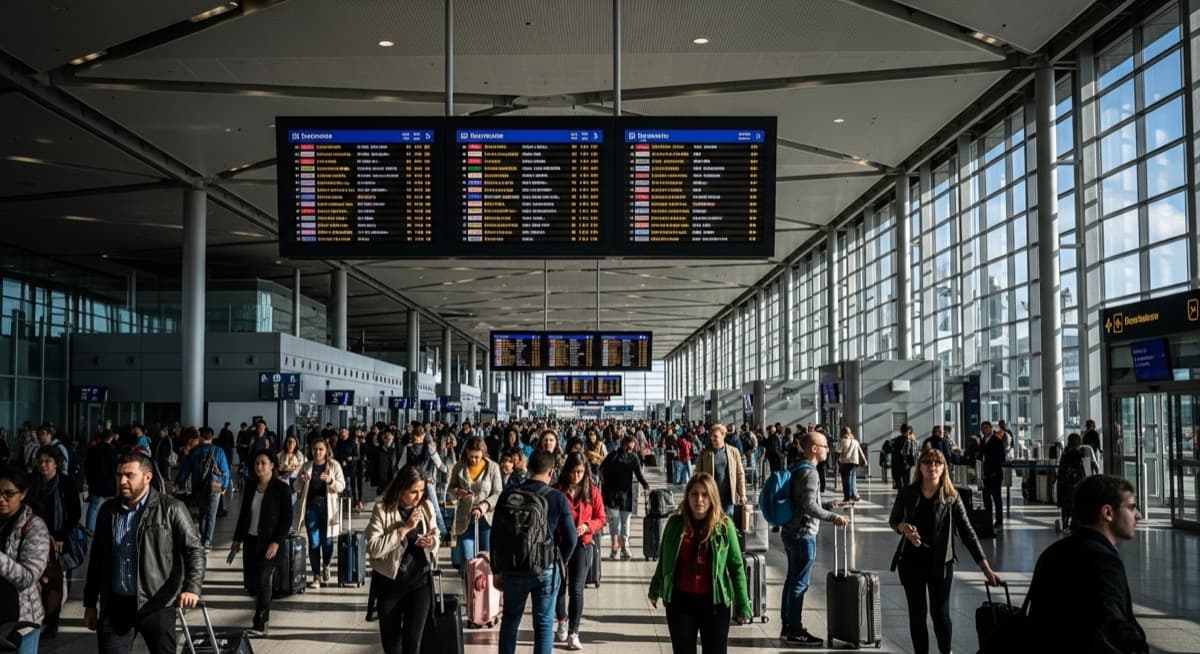
Airports are engineering marvels, but they are also unique air quality environments that most travelers never think about. With millions of passengers passing through daily, jet fuel emissions on the tarmac, and HVAC systems working overtime, the air inside an airport terminal is unlike anywhere else you will breathe.
This guide breaks down what research tells us about airport air quality, the specific risks travelers face, and practical strategies for protecting yourself.
What Makes Airport Air Different
Airports present a convergence of air quality challenges that are rare in other indoor environments:
- Jet fuel emissions: Aircraft operations produce ultrafine particles and volatile organic compounds (VOCs) that can infiltrate terminal buildings, especially near gates and during boarding.
- High occupant density: Major airport terminals can see 100,000+ passengers daily, creating significant bioaerosol loads from respiratory droplets.
- Global pathogen mixing: Travelers from every corner of the world converge, bringing regional pathogens that local populations may lack immunity to.
- Variable ventilation: Terminal air quality varies dramatically by location. Some areas have excellent HEPA filtration, while others rely on natural ventilation or older HVAC systems.
- Extended dwell time: Unlike a quick trip to the grocery store, airport visits often last 2-4 hours or more, extending exposure duration.
The Research: What Studies Show
A 2023 study published in Environmental Science & Technology measured air quality across 15 major international airports. The findings were eye-opening:
- Ultrafine particle concentrations run higher near boarding gates than in the concourses behind them, and jet exhaust infiltration is the likely reason.
- PM2.5 levels in some terminals exceeded WHO guidelines during peak travel periods.
- Bioaerosol concentrations (bacteria, viruses, fungal spores) correlated strongly with passenger density and were highest in security checkpoint areas.
- Air quality varied significantly between terminals at the same airport, suggesting that building age and HVAC design matter enormously.
Security checkpoints and boarding gate areas consistently show the highest pathogen concentrations. These are also areas where travelers are most densely packed and spend the most time stationary.
Practical Protection Strategies
Before You Arrive
- Check your airport: Some airports publish real-time air quality data. Major hubs like Singapore Changi and London Heathrow have invested heavily in air filtration.
- Time your arrival: Avoid peak hours when passenger density (and bioaerosol load) is highest. Early morning flights often mean quieter terminals.
- Pack premium protection: Bring respiratory protection rated for fine particles (PM2.5) and bioaerosols. Standard cloth masks offer minimal protection.
Inside the Terminal
- Wear protection through security: This is the highest-density, lowest-ventilation part of most airport journeys.
- Seek quieter areas: Airline lounges typically have better air filtration. If you do not have access, look for less crowded gate areas away from boarding activity.
- Minimize time near jet bridges: Boarding and deplaning expose you to jet exhaust infiltration. Board late if possible.
- Stay hydrated: Airplane cabin air is extremely dry (10-20% humidity), and dehydration impairs your respiratory defenses.
On the Aircraft
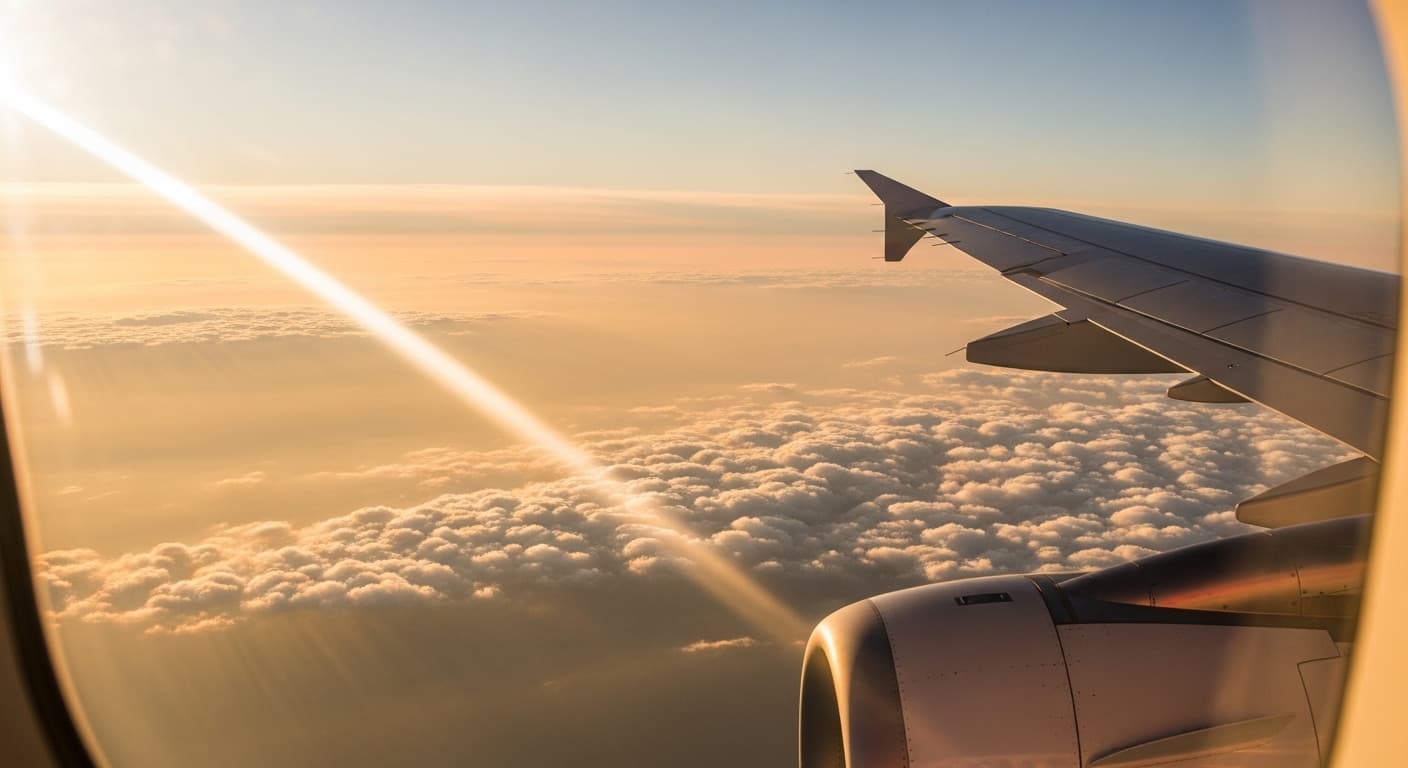
Aircraft cabins actually have excellent air filtration. Most modern planes use HEPA filters that capture 99.97% of particles. The challenge is proximity: you are seated inches from other passengers for hours.
- Keep protection on during boarding: Before the cabin air system is fully operating, air quality is at its worst.
- Use the overhead vent: Direct airflow creates a protective air curtain in front of your face.
- Window seat, if possible: Fewer close contacts than aisle seats, according to multiple studies.
- Consider protection during meal service: This is when other passengers remove their protection to eat.
Choosing the Right Protection for Travel
For airport and aircraft environments, look for respiratory protection that offers:
- >95% filtration efficiency for PM0.3 particles (this captures both fine particles and most bioaerosols)
- Comfortable for 4+ hours of continuous wear
- Secure seal that does not require constant adjustment
- Breathable enough for walking through large terminals
- Compact and crush-resistant for carry-on storage
AirPop Light SE delivers >97% filtration at PM0.3, 2x the breathability of standard N95s, and a 3D structure that maintains its shape in any bag. TSA-friendly, no metal parts. Trusted by frequent flyers in 35+ markets worldwide.
The Future of Airport Air Quality
The aviation industry is investing heavily in air quality improvements. Singapore Changi, Incheon, and several new terminal projects are implementing advanced air purification systems. Some airlines are upgrading cabin air systems beyond HEPA standards.
But infrastructure changes take time. For the foreseeable future, travelers who want to protect themselves need to take personal responsibility for their air quality exposure.
“Air quality is not something most travelers think about, but it should be. The airport environment is unique, and personal protection is the most reliable defense.”
— Dr. Sarah Chen, Environmental Health Researcher
Safe travels.
Related Article
The Frequent Flyer's Guide to Respiratory Protection
Practical, TSA-friendly protection solutions for frequent travelers.
About the author
Jett FuCo-Founder & CEO, AirPop
Cross-border entrepreneur and co-founder of AirPop. Leads global operations, retail expansion across 35+ markets, and B2B distribution partnerships with Target, Amazon, and Best Buy.
Related Articles
The Frequent Flyer's Guide to Respiratory Protection
Airports recirculate air every 2-3 minutes, but crowded terminals remain high-exposure zones. This guide covers which masks work best for flights, layovers, and long-haul travel comfort.

Pregnancy and Air Quality: What Expecting Mothers Need to Know
Air pollution during pregnancy raises preterm birth and low birth weight risks. Learn safe AQI thresholds and effective protection for expecting mothers.
Wildfire Season 2026: Why Respiratory Protection Matters More Than Ever
With wildfire seasons growing longer and more intense, understanding PM2.5 protection has never been more important. Here's what you need to know.