
Business Travel in 2026: The Executive Guide to Air Quality on the Road
From airport terminals to hotel rooms to client meetings — how business travelers are protecting their productivity by managing air quality exposure. A data-driven guide for the road warrior.
Business travel has rebounded to near pre-2020 levels, with global corporate travel spending projected to reach $1.48 trillion in 2026. But something has changed: the executives filling airport lounges and conference rooms are far more aware of air quality than they were five years ago.
For frequent business travelers, respiratory health is not just a personal concern. It is a productivity imperative. A single illness contracted during travel can derail weeks of deals, meetings, and momentum. Smart road warriors have learned to manage air quality exposure the same way they manage jet lag: proactively and systematically.
The Business Case for Air Quality Management
Let us start with the numbers. A 2024 Harvard Business Review study found that executives who actively managed their exposure to poor air quality during travel reported 23% fewer sick days and rated their post-travel cognitive performance significantly higher than those who did not.
The math is straightforward: if a senior executive earning $300,000+ annually loses even five days to travel-related illness, the direct cost exceeds $6,000, before accounting for delayed deals, rescheduled meetings, and lost opportunities.
The Air Quality Gauntlet: From Rideshare to Runway
A typical business trip exposes travelers to multiple air quality environments, each with unique challenges:
- 1Ground transportation (rideshare, taxi, rental car): Urban traffic pollution, variable vehicle air filtration, potential exposure to previous passengers.
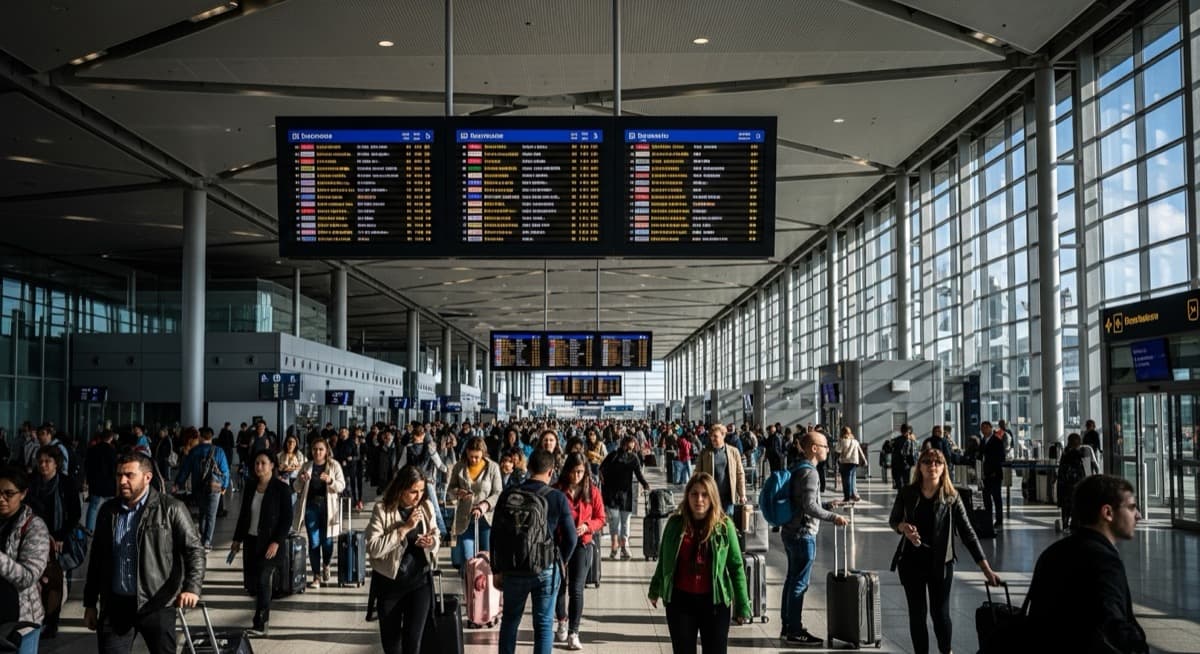
- 2Airport terminals: High-density crowds, limited ventilation in some areas, significant pathogen circulation during peak travel seasons.
- 3Aircraft cabin: Despite HEPA filtration, proximity to other passengers creates exposure risk. Research shows respiratory illness transmission rates are 3.2x higher in the rows immediately surrounding an infected passenger.
- 4Hotels: Variable air quality depending on HVAC maintenance, outdoor pollution levels, and room occupancy history.
- 5Conference venues and client sites: Often overlooked — large indoor gatherings with inconsistent ventilation standards.
Research from Emory University found that passengers in window seats have 80% fewer close contacts than aisle seat passengers, significantly reducing exposure risk on long-haul flights.
Related Article
Airport Air Quality: What Travelers Need to Know
Deep dive into the unique air quality challenges at airports.
The Executive Travel Air Quality Protocol
Based on interviews with over 200 frequent business travelers and input from corporate wellness consultants, here is the protocol that top performers follow:
Pre-Trip Preparation
- Check destination air quality forecasts (IQAir, AirVisual) for your travel dates.
- Pack premium respiratory protection — minimum one per day of travel, plus extras.
- Choose accommodations with verified HVAC standards or rooms with operable windows.
- Book window seats on flights when possible.
During Travel
- Wear protection in airport terminals, especially during boarding and deplaning.
- Maintain protection during the first 30 minutes of flight (before cabin air fully cycles).
- Use portable air quality monitors to identify high-risk environments.
- In hotels, run bathroom exhaust fan to improve room air circulation.
High-Stakes Meeting Protocol
Some situations call for discretion. Executives report using premium Air Wearables during ground transportation to meetings but removing them for face-to-face interactions. The key is protecting yourself during the highest-risk, lowest-visibility portions of your journey.
What to Look for in Travel-Ready Protection
Not all respiratory protection is created equal for travel. Business travelers need gear that meets specific criteria:
- Compact and packable: Must fit in a briefcase or carry-on without crushing.
- TSA-friendly: No metal components that trigger secondary screening.
- Breathable for long wear: Meetings and flights can last hours.
- Professional appearance: No industrial aesthetic that distracts from business interactions.
- Proven filtration: ASTM F3502 certification or equivalent, not just marketing claims.
AirPop Air Wearables are designed for exactly this use case: ASTM F3502-21 Workplace Performance Plus certified, 3D structure that maintains shape in bags, 2x the breathability of standard N95s, and a design-forward look that does not scream "PPE." Compact enough for any carry-on, trusted by travelers in 35+ markets.
Related Article
AQI Explained: How to Read the Air Quality Index
Monitor air quality at every destination before you travel.
Corporate Travel Policies Are Evolving
Forward-thinking companies are beginning to incorporate air quality management into their corporate travel policies. Some are providing premium respiratory protection as standard issue for traveling employees. Others are building air quality considerations into their duty-of-care frameworks.
“We view air quality protection the same way we view travel insurance. It is just smart risk management for our people.”
— VP of Operations, Fortune 500 Technology Company
If your organization sends employees on the road, consider whether your travel policy reflects modern understanding of air quality risks.
The Bottom Line
Business travel remains essential for building relationships, closing deals, and leading teams. But smart travelers no longer leave air quality to chance. The executives who perform best on the road are the ones who treat respiratory health as a competitive advantage, no tan afterthought.
The investment is minimal. The ROI is substantial. And the alternative — losing productivity and presence to preventable illness — is simply not worth the risk.
About the author
Jett FuCo-Founder & CEO, AirPop
Cross-border entrepreneur and co-founder of AirPop. Leads global operations, retail expansion across 35+ markets, and B2B distribution partnerships with Target, Amazon, and Best Buy.
Corporate Wellness Solutions
Protect your traveling team with premium Air Wearables.
Corporate Wellness SolutionsRelated Articles
Airport Air Quality: What Travelers Need to Know Before Their Next Flight
Airports are unique air quality environments — high passenger density, jet fuel emissions, and recirculated air. Here is what the research says and how to protect yourself.

The Frequent Flyer's Guide to Respiratory Protection
Airports recirculate air every 2-3 minutes, but crowded terminals remain high-exposure zones. This guide covers which masks work best for flights, layovers, and long-haul travel comfort.

AQI 150 and Your Kid's Soccer Practice: A Parent's Decision Guide
AQI 150 sits at the boundary between "Unhealthy for Sensitive Groups" and "Unhealthy" — and children are a sensitive group. This guide maps EPA and AirNow activity guidance to the decisions parents actually face: play, shorten, move indoors, or reschedule.