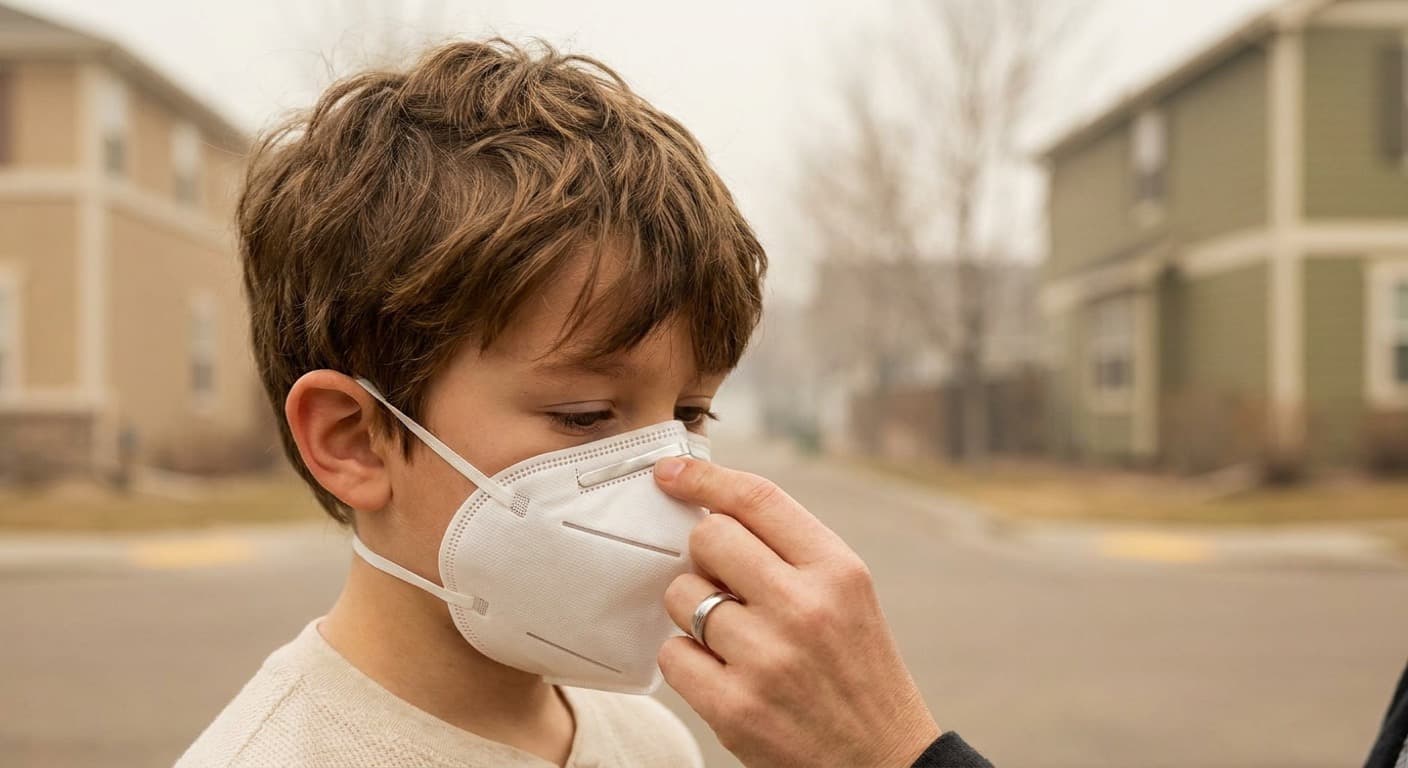
Can Kids Wear KN95 Masks? What the Guidance Actually Says
It depends on two things: age and fit. Children 7 and older can often wear a small adult-sized KN95 effectively — under 7, a reliable seal is unlikely with any filtering mask. What KN95 (GB2626) certification covers, what official guidance says, and how to seal-check a mask on your child.
Can kids wear KN95 masks? The short answer: it depends almost entirely on age and fit. Children age 7 and older can often wear a small adult-sized filtering mask effectively, because — according to guidance from the Pediatric Environmental Health Specialty Units (PEHSU) — a child that age will likely fit an adult small respirator. For children between 2 and 7, a reliable seal is unlikely with any filtering mask, KN95 included, and children under 2 should never wear a mask. One more thing every parent should know before buying: no US authority certifies any KN95 — adult or child-sized. A "kids KN95" is a manufacturer's sizing choice, not a certified category.
A KN95 can be a reasonable option for a child age 7 or older IF it passes a seal check on that child's face. Under age 7, official guidance points to reducing smoke exposure — clean indoor air, timing outdoor activity — rather than masks. Under age 2, masks should never be used.
What Is a KN95 (GB2626) Mask?
KN95 is a Chinese respirator standard — formally KN95 (GB2626) — that requires the filter material to capture at least 95% of fine airborne particles, broadly comparable on paper to the filtration requirement of a US N95. The critical difference is oversight. N95 is a NIOSH certification: masks are tested and approved by a US government laboratory before they can carry the mark. KN95 conformity is declared under the Chinese standard, and CDC's NIOSH does not approve KN95 masks or any other devices certified to international standards. That does not make KN95s bad — well-made ones filter to spec — but it shifts the burden of verification onto the buyer.
When NIOSH ran international assessments of non-NIOSH respirators in 2020–2021, about 60% of the KN95 masks evaluated did not meet the filtration requirements they claimed. If you buy KN95s, buy from an established brand with published third-party test results — not an unbranded marketplace listing.
What Does Official Guidance Say About Children and Masks?
Start with the fit warning that applies to every filtering mask, not just KN95s. According to EPA, children ages 2 and older can wear respirators — but NIOSH Approved respirators do not come in sizes suitable for young children, and leakage around the edge of a mask causes unfiltered air to enter and be inhaled. EPA also flags the behavioral half of the problem: a child wearing a poorly fitting or uncomfortable mask is likely to take it off when it is needed, or wear it incorrectly.
The Western States PEHSU turns that into age bands: a child age 7 or older will likely fit an adult small respirator; between 2 and 7 a good respirator fit is unlikely; under 2, no masks at all. PEHSU also addresses KN95s directly, cautioning that masks from other countries may not follow the same rules as NIOSH-approved devices and might not provide the same protection. We unpack the full age logic — and what to do for younger kids — in Why Age 7 Is the Dividing Line for Kids and Masks.
So Can Kids Actually Wear KN95 Masks?
Putting the guidance together, the honest answer runs on two variables — age and fit — and neither one is optional:
| Age | Can They Wear a KN95? | Why |
|---|---|---|
| Under 2 | No — never | Official guidance rules out masks entirely at this age |
| 2 to 7 | Not as a real protection strategy | A reliable seal is unlikely on faces this small; reduce smoke exposure instead |
| 7 and older | Often yes — if it passes a seal check | Faces at this age will likely fit small adult sizing; the seal check is the deciding test |
Note what is not on that list: any age at which a KN95 works regardless of fit. A KN95 whose edges leak filters only the fraction of air that happens to pass through the material. PEHSU's own illustration makes the stakes concrete — out of 1,000 smoke particles in the air, a well-sealed respirator lets a child breathe in about 100, while a loose-fitting medical mask lets in 700 to 800. Certification printed on the mask cannot rescue a seal that fails on your child's face.
How Are "Kids KN95" Masks Actually Sized?
Search any marketplace and you will find masks labeled "kids KN95" in bright colors and small dimensions. Understand what that label is: a manufacturer scaling down its adult pattern and self-declaring conformity. There is no US certification behind any KN95 — CDC's NIOSH does not approve devices certified to international standards, for adults or children — so a children's KN95 carries even more manufacturer-dependent risk than an adult one. Some are well made and genuinely smaller-patterned; many are simply shrunk without regard to how a child's nose bridge and chin actually differ in proportion. Since no certification will settle the question for you, the seal check below is the only test that matters.
Named brand with published third-party filtration test results. Standard stated precisely — "KN95 (GB2626)" or "ASTM F3502-21", not vague "95% protection" claims. Adjustable nose piece. Sized options rather than one-size-fits-all. And a seal check on your child's face before you rely on it.
How Do You Fit-Check a KN95 on a Child?
- 1Adjust the mask so it covers from the bridge of the nose to under the chin, and press the nose piece to follow the nose's contour with two fingers.
- 2Cup your hands around the mask's edges and have your child blow out hard — like blowing out birthday candles. Feel for air escaping at the nose, cheeks, or chin.
- 3Have your child breathe in deeply. The mask should visibly pull toward the face; air flowing in around the edges means the seal has failed.
- 4If it leaks, re-mold the nose piece and re-test once. Still leaking? Change size or change design — do not "make it work".
- 5Watch your child wear it for a few minutes. A mask that gets pulled below the nose or taken off is not protecting anyone — comfort is part of fit.
These checks are the child-focused version of the seal tests in our mask fit and seal guide. And remember what a passing seal check does not change: guidance says children should not add extra outdoor activity during smoke events just because they are masked. Before a smoke-day practice or game, check the live AQI for your ZIP code and see our guide to youth sports when AQI passes 150.
What Are the Alternatives if a KN95 Doesn't Fit?
If no KN95 seals on your child's face, do not downgrade to a cloth mask — PEHSU notes cloth face coverings usually do not reduce exposure to wildfire smoke, a finding we break down in our cloth mask analysis. The stronger move is reducing the smoke your child breathes in the first place: a clean-air room with a HEPA air cleaner, closed windows during smoke peaks, and outdoor time shifted to cleaner AQI windows. For older children, a structured 3D mask in a genuinely smaller size — rather than a shrunk flat-fold — is often the difference between a failed and a passed seal check. The full family playbook lives in our parent's guide to air quality and children.
AirPop's Youth & Petite sizing takes the guesswork out of the smaller-face problem: a contoured design with a 360° flexible seal and adjustable nose piece shaped for smaller facial contours, KN95 (GB2626)-level filtration tested to capture at least 95% of airborne particles down to 0.3 μm, and low breathing resistance — because a mask only counts when it seals and stays on.
Related Article
Why Age 7 Is the Dividing Line for Kids and Masks
The full expansion of the PEHSU age guidance — why fit fails under 7, and what to do instead.
Related Article
Air Quality and Children: A Parent's Guide
Why children are more vulnerable to air pollution, and the complete protection toolkit for parents.
Related Article
How to Test Your Mask's Fit and Seal
Five at-home seal tests that take under two minutes — no special equipment required.
About the author
Jett FuCo-Founder & CEO, AirPop
Cross-border entrepreneur and co-founder of AirPop. Leads global operations, retail expansion across 20+ countries, and B2B distribution partnerships that have included Target, Amazon, and Best Buy.
Check Your Air Quality Now
Free live AQI by ZIP code, with guidance for children and sensitive groups.
Check Your Air Quality NowRelated Articles
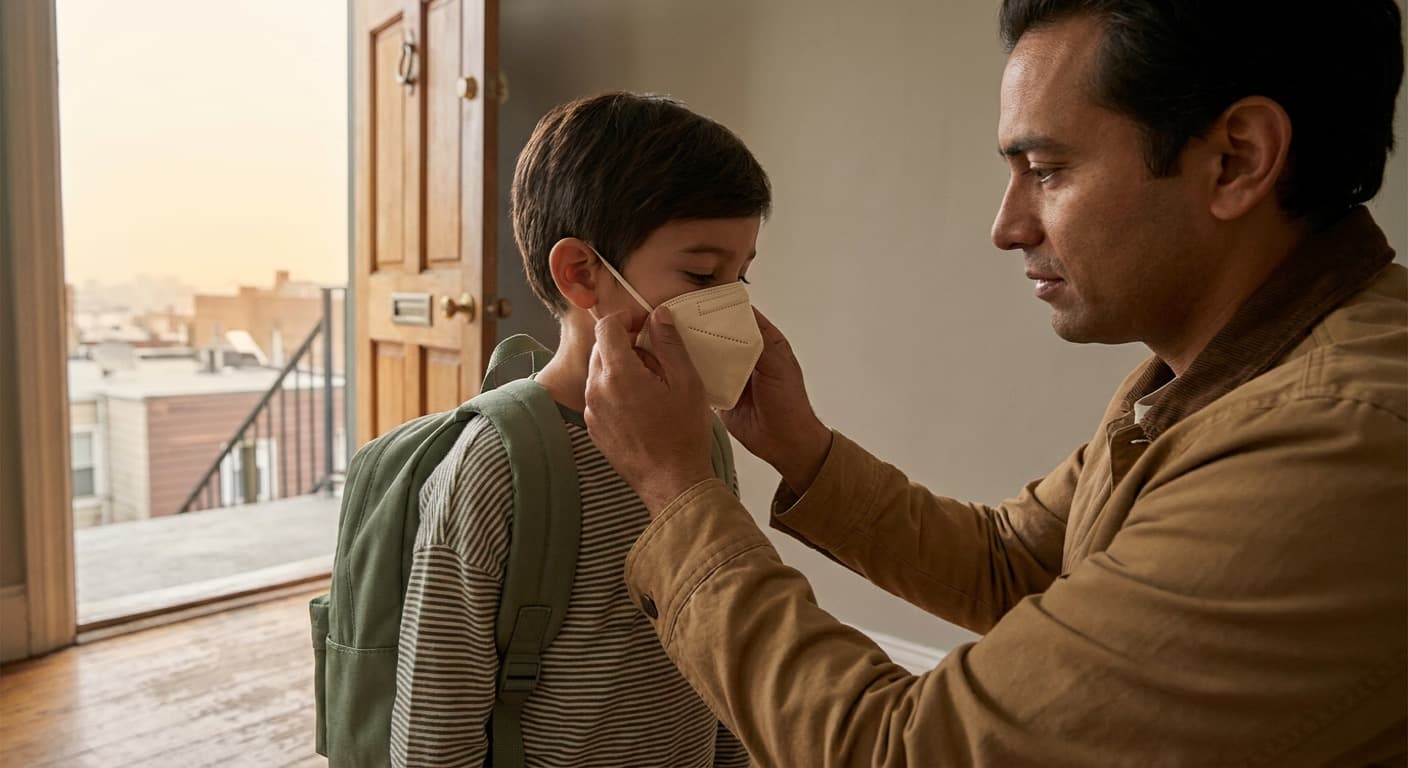
Why Age 7 Is the Dividing Line for Kids and Masks
EPA warns that respirators are not sized for young children — but pediatric environmental health specialists draw a practical line at age 7. Here is why fit fails on smaller faces, why older kids can often wear adult-small sizes, and what parents of younger children should do instead during wildfire smoke.

Do Cloth Masks Work for Wildfire Smoke?
The official answer from EPA and PEHSU is no — cloth masks and bandanas do not filter wildfire PM2.5. Here is the particle-size physics behind that answer, what filtration standards like ASTM F3502-21 and KN95 (GB2626) actually mean, and when a well-fitting mask makes sense for children 7 and older.
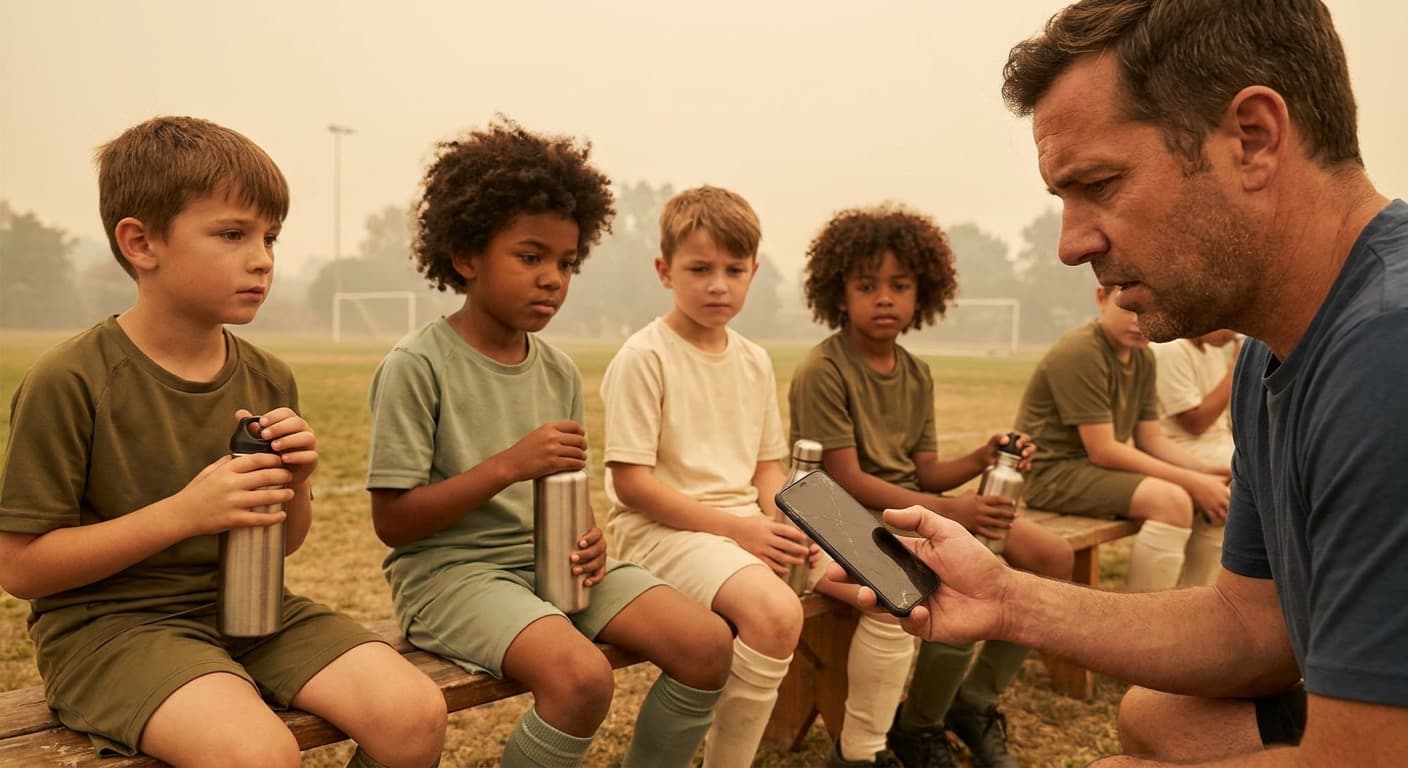
AQI 150 and Your Kid's Soccer Practice: A Parent's Decision Guide
AQI 150 sits at the boundary between "Unhealthy for Sensitive Groups" and "Unhealthy" — and children are a sensitive group. This guide maps EPA and AirNow activity guidance to the decisions parents actually face: play, shorten, move indoors, or reschedule.