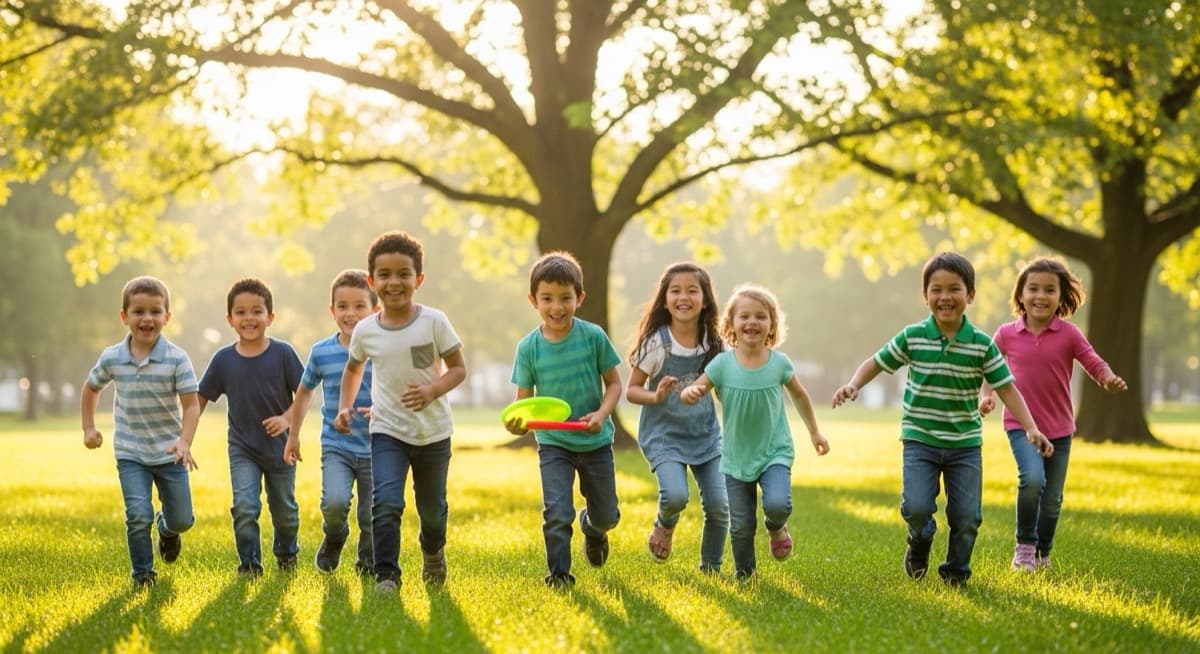
Air Quality and Children: A Comprehensive Parent's Guide
Children breathe faster, spend more time outdoors, and have developing lungs — making them especially vulnerable to air pollution. What age can a child actually wear a mask, when should play move indoors, and what parents really control on smoke days.
Children are not small adults — at least not when it comes to air pollution. Their developing lungs, higher breathing rates, and greater time spent outdoors make them disproportionately vulnerable to the effects of poor air quality. As a parent, understanding these vulnerabilities and taking proactive steps to protect your child's respiratory health is one of the most important investments you can make in their long-term wellbeing.
Enter your ZIP code in our free air quality tool to see the live AQI near you, pulled from EPA AirNow, with plain-language guidance for children, sensitive groups, and outdoor workers.
Why Children Are More Vulnerable
Several physiological factors make children uniquely susceptible to air pollution. First, children breathe faster than adults, are sting child takes 20 to 30 breaths per minute compared to 12 to 20 for an adult. This higher respiratory rate means more polluted air enters their lungs per unit of body weight. Second, children's lungs are still developing. Approximately 80% of alveoli, the tiny air sacs responsible for gas exchange — form after birth and continue developing through adolescence. Exposure to pollutants during this critical growth period can cause permanent structural damage and reduced lung capacity that persists into adulthood.
Research from the University of Southern California's Children's Health Study found that children exposed to higher levels of PM2.5 and nitrogen dioxide had measurably reduced lung function by age 18, with deficits that are unlikely to be recovered later in life.
Third, children spend more time outdoors and are more physically active than adults, increasing their total exposure. They also spend more time closer to the ground, where heavier pollutants concentrate. Their immature immune systems are less equipped to handle the inflammatory response triggered by particulate exposure. And because they have decades of life ahead of them, the cumulative effects of early exposure have more time to manifest as chronic disease.
Common Air Quality Threats for Children
- Vehicle exhaust near schools and playgrounds — schools located near major roads expose children to chronically elevated NO₂ and PM2.5
- Wildfire smoke — children are among the first to show symptoms during smoke events, including wheezing and asthma exacerbations
- Indoor pollutants — schools and homes with poor ventilation, gas stoves, or aging HVAC systems can have indoor PM2.5 levels exceeding outdoor levels
- Pollen and allergens — children have higher rates of allergic sensitization, and early exposure can trigger the development of asthma
- Secondhand smoke — tobacco smoke exposure in childhood dramatically increases the risk of developing asthma and respiratory infections
Related Article
Do Cloth Masks Work for Wildfire Smoke?
Why PM2.5 passes straight through cloth — and what actually filters smoke.
School and Outdoor Activity Guidelines
Many school districts have adopted AQI-based policies for outdoor activities, but these thresholds vary widely and some schools have no policy at all. As a general guideline, outdoor recess and sports should be moved indoors when the AQI exceeds 100 (Unhealthy for Sensitive Groups). Children with asthma should limit outdoor exertion when AQI exceeds 50 during ozone season. On days when AQI exceeds 150, all children should avoid extended outdoor time.
- 1Check AQI every morning before your child leaves for school — our free air quality tool shows the live EPA AirNow reading for your ZIP code
- 2Communicate with your child's school about their outdoor activity AQI policy
- 3For children about 7 and older, send a well-fitting small-size mask on days when AQI exceeds 100 — and teach them how to check the seal (fit guide)
- 4For children with asthma, provide the school with an action plan that includes AQI thresholds
- 5Advocate for air purifiers in classrooms if your school does not already have them
- 6Teach your child to recognize symptoms of air pollution exposure: coughing, wheezing, eye irritation
Related Article
AQI 150 and Your Kid's Soccer Practice: A Parent's Decision Guide
A practical decision flow for youth sports on poor air quality days.
Related Article
Seasonal Air Quality Guide
Year-round air quality risks that affect children at every age.
What Age Can a Child Actually Wear a Mask?
This is the question most parents get wrong — usually because product marketing answers it for them. The honest starting point comes from the EPA: N95 respirators are not designed or tested to fit children. That is not a reason to give up on protection; it is the reason age and fit have to lead the decision. Guidance from the Pediatric Environmental Health Specialty Units (PEHSU) draws the practical dividing line at about age seven: children roughly 7 and older can often achieve a workable fit in the smallest adult sizes, while for children younger than about 7, a reliable seal generally cannot be achieved — and an unsealed mask delivers far less protection than the packaging implies.
For young children, the effective tools are the boring ones: keep smoke-day time indoors, run HVAC or a purifier with a high-efficiency filter, close windows during smoke events, and shift outdoor play to hours when the AQI improves. A mask that cannot seal on a small face is a false comfort, not a safety measure.
For a full breakdown of the age-7 guidance — why fit fails on younger faces, and what to do at each age — see Why Age 7 Is the Dividing Line for Kids and Masks. If your child is asking about a specific mask type, Can Kids Wear KN95 Masks? covers what the guidance actually says.
Choosing the Right Mask for Older Children (7+)
An adult mask on a small face gives a false sense of protection while leaving gaps around the cheeks, chin, and nose. For children old enough to wear one (roughly 7 and up, per PEHSU guidance), the search is for a small-fitting design: a secure seal without pressure, breathing resistance low enough for smaller lungs, and materials gentle on sensitive skin. Learn how to check the seal at home in our fit and seal testing guide.
The AirPop Youth & Petite fit uses a 360° flexible seal and contoured shape tailored to narrower noses and smaller face profiles, with KN95 (GB2626)-level filtration and low breathing resistance. Designed for teens, petite adults, and smaller faces — because a mask only works when it actually seals.
Making Protection a Positive Habit
Children are more likely to wear masks consistently when the behavior is normalized rather than forced. Explain air quality in age-appropriate terms — compare particles to invisible dust or tiny bits of smoke. Let your child choose their mask color or design. Check AQI together as part of the morning routine, making it a learning activity. When children understand why they are wearing protection and feel ownership over the decision, compliance improves dramatically.
Children model their parents' behavior. When you wear your AirPop mask on poor air quality days, your child is far more likely to wear theirs without resistance. Make it a family habit, not a child-only requirement.
“Every breath a child takes during their developmental years shapes the lungs they will carry for the rest of their life. Protecting those breaths is not overprotective. It is proactive.”
Related Article
The AirPop Story
AirPop was founded by a father protecting his children from polluted air.
About the author
Jett FuCo-Founder & CEO, AirPop
Cross-border entrepreneur and co-founder of AirPop. Leads global operations, retail expansion across 35+ markets, and B2B distribution partnerships with Target, Amazon, and Best Buy.
The AirPop Breathing System
One brand for better breathing, awake and asleep.
The AirPop Breathing SystemRelated Articles
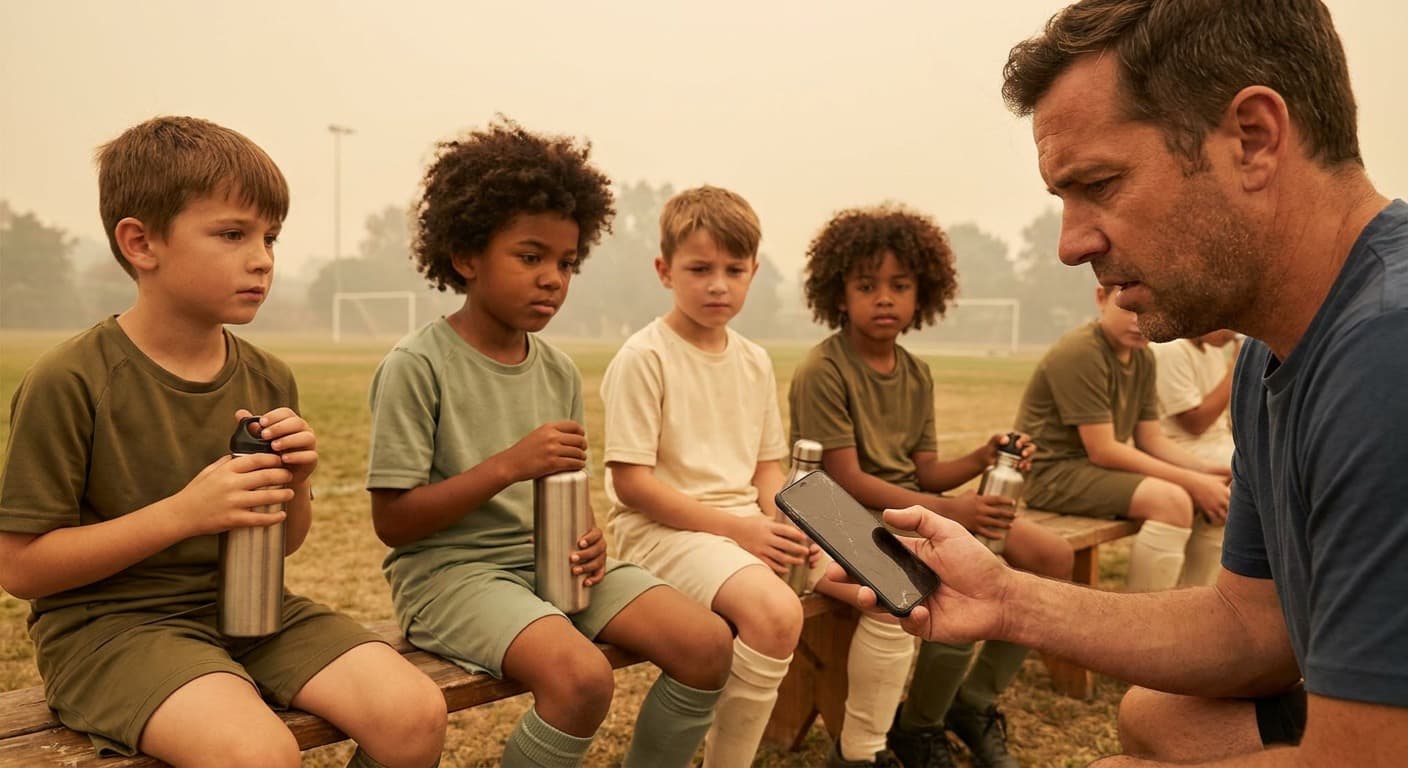
AQI 150 and Your Kid's Soccer Practice: A Parent's Decision Guide
AQI 150 sits at the boundary between "Unhealthy for Sensitive Groups" and "Unhealthy" — and children are a sensitive group. This guide maps EPA and AirNow activity guidance to the decisions parents actually face: play, shorten, move indoors, or reschedule.
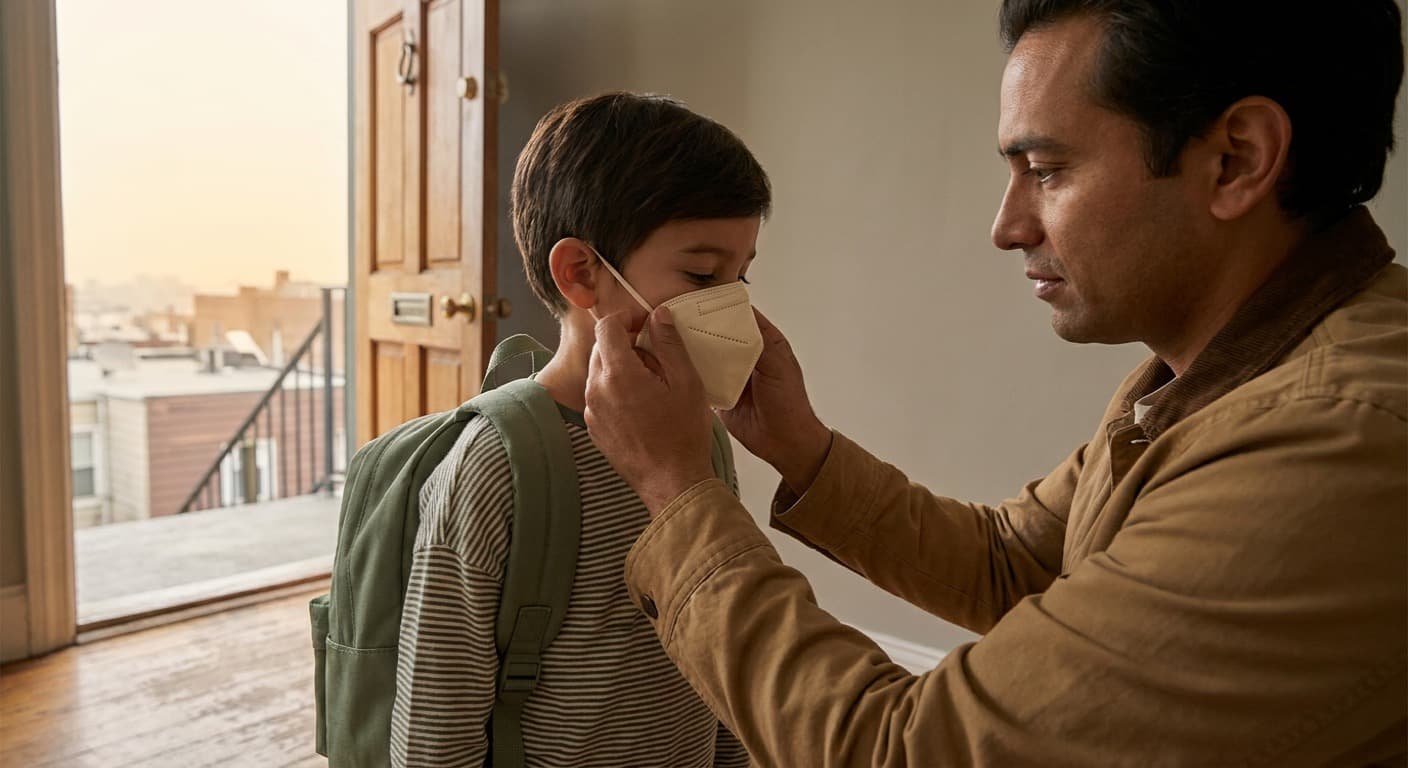
Why Age 7 Is the Dividing Line for Kids and Masks
EPA warns that respirators are not sized for young children — but pediatric environmental health specialists draw a practical line at age 7. Here is why fit fails on smaller faces, why older kids can often wear adult-small sizes, and what parents of younger children should do instead during wildfire smoke.

Do Cloth Masks Work for Wildfire Smoke?
The official answer from EPA and PEHSU is no — cloth masks and bandanas do not filter wildfire PM2.5. Here is the particle-size physics behind that answer, what filtration standards like ASTM F3502-21 and KN95 (GB2626) actually mean, and when a well-fitting mask makes sense for children 7 and older.