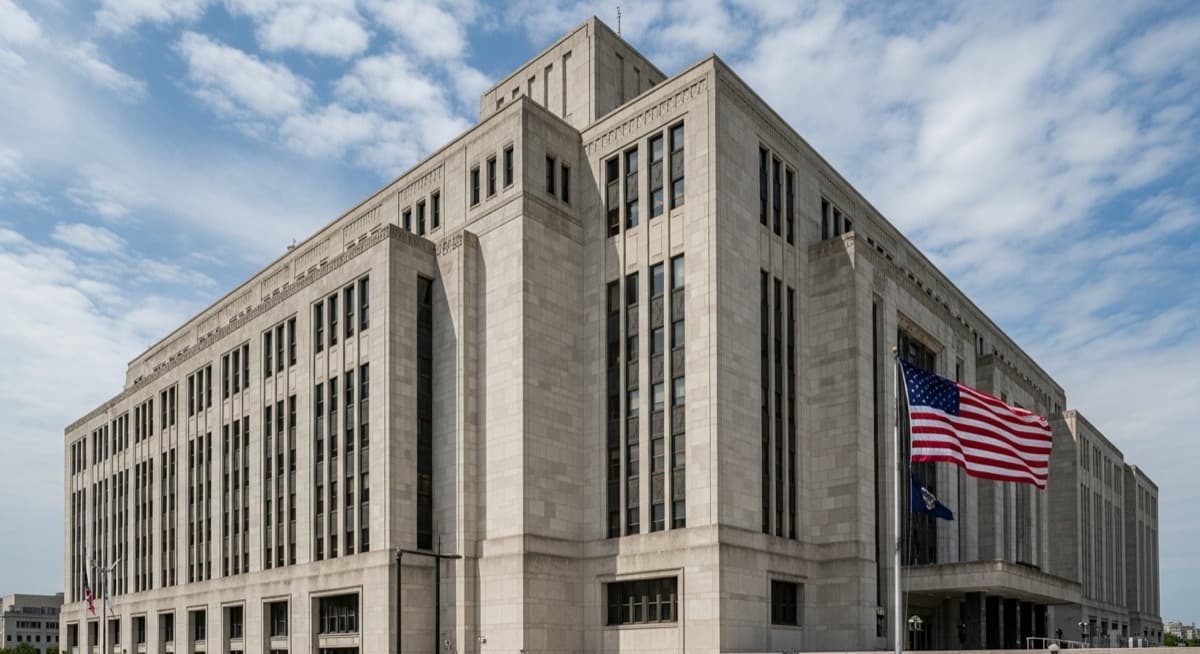
2026 OSHA & FDA Compliance Checklist for Respiratory Retailers
3 new OSHA guidelines, 2 wildfire mandates, and updated FDA rules hit in 2026. This checklist covers what every respiratory protection retailer must do now to stay compliant and avoid fines.
The regulatory landscape for respiratory protection in the United States has shifted more in the past three years than in the previous two decades. Between the EPA's tightened PM2.5 standard, expanding state-level wildfire smoke mandates, evolving OSHA guidance, and FDA oversight changes, retailers and distributors face a compliance environment that is simultaneously more demanding and more consequential. This article provides a comprehensive compliance checklist for 2026, covering federal and state requirements, certification verification procedures, and retailer liability considerations that every buyer and procurement manager should understand.
Retailers who sell respiratory protection products bearing certification claims (N95, KN95, ASTM F3502) have legal exposure if those claims are false or unverified. The FTC's enforcement actions against deceptive health product claims increased 40% between 2023 and 2025, and respiratory protection has been specifically identified as a priority category. Verifying supplier certifications is not just good practice. It is a legal requirement.
What Are the Key OSHA Updates for 2026?
OSHA's regulatory framework for respiratory protection is anchored by 29 CFR 1910.134, the Respiratory Protection Standard, which governs employer-provided respirators in occupational settings. While OSHA does not directly regulate consumer retail sales, its standards have significant downstream effects on retail demand and product requirements. In 2025-2026, three OSHA developments are reshaping the landscape.
- 1Heat and Outdoor Worker Protection Rule (Final Rule 2025): OSHA's first-ever federal heat safety standard includes provisions for respiratory protection during combined heat and air quality events. Employers in agriculture, construction, and logistics must provide respiratory protection when both heat index and AQI exceed specified thresholds. This creates new demand for lightweight, breathable masks designed for hot-weather use.
- 2Wildfire Smoke Guidance Expansion: OSHA's National Emphasis Program (NEP) for outdoor and indoor workers during wildfire events has been expanded to cover all states (previously focused on Western states). The guidance recommends, but does not yet mandate at the federal level — N95 or equivalent respiratory protection when the AQI for PM2.5 exceeds 151. This federal guidance strengthens the hand of state regulators considering their own mandates.
- 3General Duty Clause Enforcement Trend: OSHA is increasingly using the General Duty Clause (Section 5(a)(1) of the OSH Act) to cite employers who fail to provide respiratory protection during air quality events, even absent a specific standard. The number of General Duty Clause citations related to air quality doubled between 2022 and 2025. This creates compliance demand for respiratory protection products even in states without specific wildfire smoke laws.
What Are the State-Level Mandates Retailers Need to Know?
State-level regulation is where the most actionable compliance requirements exist for retailers. Three states — California, Oregon, and Washington — have enacted mandatory wildfire smoke protection standards that directly impact what products employers must purchase and what retailers should stock. At least five additional states are actively developing similar legislation.
- California (Cal/OSHA Section 5141.1): Mandatory since 2019, updated 2024. Triggers at AQI 151 (Unhealthy). Requires NIOSH-approved respirators (N95, P100, or PAPR). Engineering controls required above AQI 500. Applies to all outdoor workers and indoor workers in buildings without effective air filtration. Penalties: up to $25,000 per serious violation.
- Oregon (OAR 437-002-1081): Mandatory since 2022. Triggers at AQI 101 (Unhealthy for Sensitive Groups) — more stringent than California. Requires respiratory protection at lower thresholds. Applies to all work activities with wildfire smoke exposure. Penalties: up to $12,675 per violation.
- Washington (WAC 296-62-085): Mandatory since 2022. Triggers at AQI 69 (Moderate for sensitive groups) — the most aggressive threshold in the nation. Graduated response: information at AQI 69-100, exposure reduction at AQI 101-500, mandatory respirators above AQI 500. Penalties: up to $13,653 per violation.
- Colorado: Proposed legislation (SB 26-045) introduced January 2026 for wildfire smoke protection. Would trigger at AQI 101, following Oregon's model. Expected committee vote Q2 2026.
- Montana: Interim study committee on wildfire smoke workplace protection formed 2025. Recommendations expected mid-2026. Likely to follow Washington's graduated response model.
- Nevada, Arizona, New Mexico: All three states have active wildfire smoke protection advocacy groups and legislative proposals in development. Nevada's is most advanced, with a draft bill expected in the 2027 legislative session.
For mandatory compliance under state wildfire smoke laws, only NIOSH-approved respirators (N95, P100, PAPR) are currently accepted. ASTM F3502 products are not yet recognized for mandatory compliance but are appropriate for voluntary workplace protection programs and consumer use. Retailers in CA, OR, and WA should stock both: NIOSH N95 for employer compliance and ASTM F3502 for consumer wellness.
How Is FDA Oversight Changing?
The FDA's role in respiratory protection oversight has evolved significantly since the early-2020s Emergency Use Authorizations (EUAs). All 2020-era EUAs for imported respirators (including KN95 masks) were revoked by the end of 2023, returning the market to standard regulatory pathways. For retailers, the key FDA developments in 2025-2026 are focused on two areas: enforcement against fraudulent medical device claims and the evolving classification of consumer respiratory protection products.
The FDA considers surgical masks and respirators marketed for medical use to be Class II medical devices, requiring 510(k) clearance. Consumer masks not marketed for medical use (including ASTM F3502 products) generally fall outside FDA medical device jurisdiction — but the line is often unclear in marketing and packaging. If a product's marketing claims protection against "viruses," "bacteria," or specific named illnesses, the FDA may classify it as a medical device requiring clearance, regardless of the manufacturer's intent. In 2025, the FDA issued warning letters to 23 mask brands for making unsubstantiated medical claims without 510(k) clearance. Retailers who carry these products share potential liability.
- Verify that products claiming "surgical" or "medical" grade have valid FDA 510(k) clearance — check the FDA 510(k) database at accessdata.fda.gov
- Products marketed solely for particulate/air quality protection (not medical claims) generally do not require FDA clearance — but review packaging and marketing materials carefully
- FDA Registration is NOT the same as FDA Approval or Clearance — "FDA Registered" means the facility is registered, not that the product is reviewed or approved. Do not confuse these claims.
- If a supplier claims "FDA Approved" for a consumer mask, this is almost certainly false — the FDA does not "approve" masks. Challenge this claim and request documentation.
- Monitor the FDA's enforcement action database for any products you carry — warning letters and recalls are publicly searchable at fda.gov
What Is the Retailer's Liability Exposure?
Retailers selling respiratory protection products face liability exposure from three directions: product liability (if a product fails to perform as certified and a consumer is harmed), false advertising liability (if certification claims on packaging or marketing are deceptive), and regulatory compliance liability (if products violate FDA, FTC, or state consumer protection requirements). Understanding these liability vectors is essential for building a defensible sourcing and verification program.
- 1Product liability: Under strict liability doctrine in most states, retailers can be held liable for defective products they sell, even without negligence. If a mask certified as N95 or KN95 fails to provide the claimed filtration and a consumer suffers health consequences, the retailer is in the chain of liability. Mitigation: require certificates of conformity from suppliers, obtain product liability insurance, and verify certifications through independent channels.
- 2FTC false advertising: The FTC Act Section 5 prohibits deceptive trade practices, including false certification claims. If a product on your shelf claims "N95" without valid NIOSH approval or "ASTM F3502" without third-party lab verification, both the manufacturer and the retailer face potential FTC enforcement action. In 2024-2025, the FTC levied $4.7 million in fines against companies making false respirator claims.
- 3State consumer protection: State attorneys general have independent authority to enforce consumer protection laws against deceptive product claims. California, New York, and Illinois have been the most active in respiratory protection enforcement. State penalties can include per-unit fines, mandatory recalls, and injunctive relief.
- 4Employer liability (B2B channel): Distributors selling to employers for workplace compliance face additional exposure. If a product sold as compliant with state wildfire smoke laws fails to meet NIOSH approval requirements, the employer faces OSHA citations and may seek indemnification from the supplier. B2B distributors should carry professional liability insurance and require manufacturer indemnification agreements.
KN95 products carry the highest liability risk for retailers. The CDC/NPPTL found that approximately 60% of KN95 masks tested failed to meet claimed filtration levels. The FTC has specifically targeted KN95 certification claims in enforcement actions. Retailers who stock KN95 products without independent third-party verification from an accredited U.S. lab are assuming significant legal risk. At minimum, require a certificate of analysis from Intertek, SGS, Nelson Labs, or an equivalent accredited facility for every KN95 SKU.
How Should Buyers Verify Certifications?
Certification verification is the single most important compliance activity for respiratory protection buyers. A systematic verification process protects against liability, ensures product quality, and builds consumer trust. The following checklist provides a step-by-step verification framework for each major certification standard.
- NIOSH N95 verification: Check the NIOSH Certified Equipment List (CEL) at cdc.gov/niosh/npptl. Every approved N95 has a unique approval number (e.g., TC-84A-XXXX). Verify the specific product model, not just the brand. Cross-reference the manufacturer and facility on the approval.
- KN95 verification: Request a Certificate of Analysis (CoA) from an accredited lab (ISO 17025) for the specific product lot. The CoA must reference GB2626-2019 testing methodology and show ≥95% filtration efficiency at 0.3 μm. Do not accept manufacturer self-certification. Check the CDC/NPPTL international assessment results for the specific manufacturer.
- ASTM F3502 verification: Request third-party test reports from an accredited lab showing sub-micron PFE results, breathing resistance measurements, and source control data. Verify which level the report states on each axis (filtration efficiency Level 2 is ≥50% PFE). The test report should reference ASTM F2299 (filtration) and ASTM F2101 (bacterial filtration) methodologies.
- FDA Registration verification: Search the FDA Establishment Registration database at accessdata.fda.gov. Confirm the facility (not just the brand) is registered and that the product listing is current. Remember: registration ≠ approval.
- General documentation requirements: Maintain a certification file for every respiratory protection SKU including: manufacturer CoA, third-party lab test reports, NIOSH approval number (if applicable), FDA registration number (if applicable), and supplier indemnification agreement. Review and update annually.
What Is the 2026 Compliance Calendar?
Regulatory compliance is not a one-time activity. It requires ongoing monitoring of enforcement changes, standard updates, and legislative developments. The following calendar highlights the key compliance milestones retail buyers should track in 2026.
- 1Q1 2026 (January-March): Annual certification file audit — verify all SKU certifications are current. Review California Cal/OSHA wildfire smoke standard updates (annual revision cycle). Monitor Colorado SB 26-045 committee proceedings. Update supplier indemnification agreements.
- 2Q2 2026 (April-June): Pre-wildfire season inventory audit — ensure NIOSH N95 stock levels for CA/OR/WA employer compliance demand. OSHA National Emphasis Program update review. FTC enforcement action review — check for any actions against brands you carry. Monitor Montana interim study committee recommendations.
- 3Q3 2026 (July-September): Peak wildfire season — activate event-response inventory protocols. Monitor real-time state enforcement activity. Review any OSHA heat standard respiratory protection integration guidance. Mid-year certification re-verification for high-volume KN95 SKUs.
- 4Q4 2026 (October-December): State legislative session prep — monitor pre-filed bills for 2027 sessions in CO, MT, NV, AZ, NM. EPA PM2.5 standard implementation progress review (county non-attainment designations). Annual supplier audit and re-qualification. Plan 2027 certification verification schedule.
AirPop provides compliance documentation to retail partners: the ASTM F3502-21 lab report (Intertek), KN95 (GB2626-2019) filter-efficiency test reports (SGS), the BSI type-test report to AFNOR SPEC S76-001, and the 16 CFR 1610 / CPSIA §101(a)(2) test report for the small-fit size (SGS). Contact hello@getairpop.com for a documentation package.
About the author
Jett FuCo-Founder & CEO, AirPop
Cross-border entrepreneur and co-founder of AirPop. Leads global operations, retail expansion across 35+ markets, and B2B distribution partnerships with Target, Amazon, and Best Buy.
Compliance-Ready Products
AirPop exceeds all current compliance requirements.
Compliance-Ready ProductsRelated Articles
Air Quality Regulations in 2026: What EPA and OSHA Changes Mean for You
New EPA PM2.5 standards, updated OSHA workplace guidelines, and state-level wildfire smoke protections are reshaping the air quality regulatory landscape. Here is what businesses and consumers need to know.

The Respiratory Protection Merchandising Calendar: When to Stock What
Respiratory protection demand is not random — it follows predictable seasonal patterns driven by flu season, allergy cycles, wildfire smoke, and back-to-school. This calendar helps retailers plan inventory year-round.
The Retail Playbook: How to Win in Respiratory Protection
From seasonal demand cycles to category positioning and certification requirements — everything retail buyers and category managers need to know about building a respiratory protection assortment that sells.