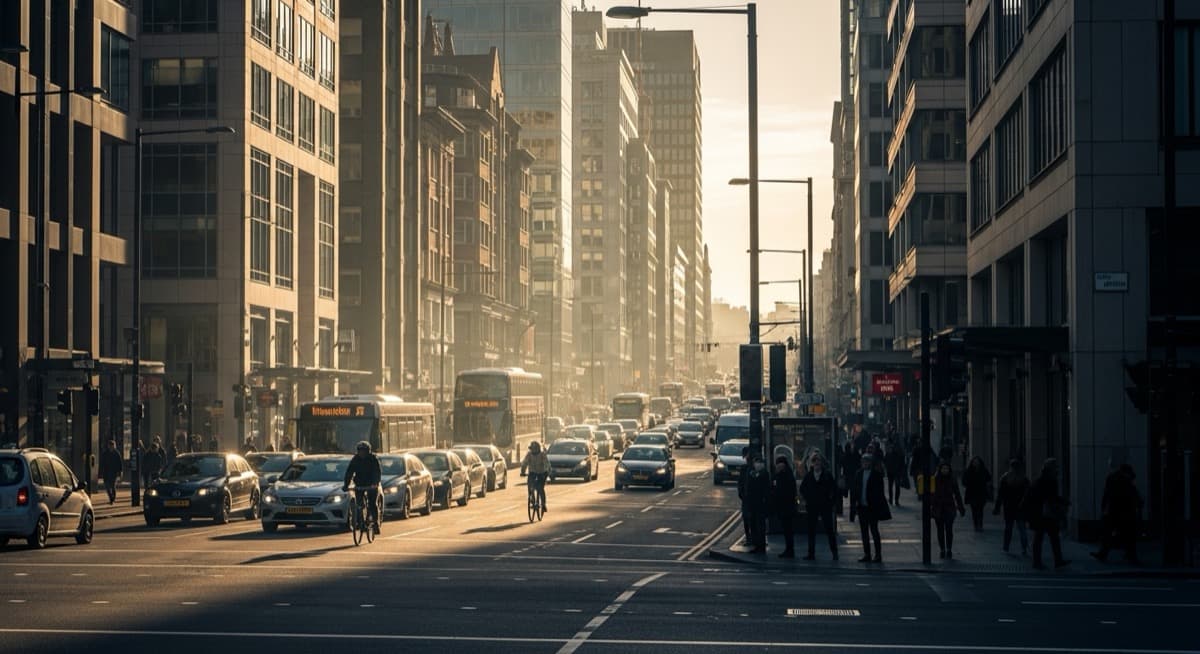
Commuting Through Pollution: A City Dweller's Guide to Clean Air
Urban commuters are exposed to 2-3x more pollution than non-commuters. From subway platforms to congested intersections, here is what the research shows — and how to reduce your daily exposure.
Your daily commute may be the most polluted part of your day, and you probably do not realize it. Whether you drive, take the subway, cycle, or walk, commuting through urban environments exposes you to concentrated doses of particulate matter (PM2.5), nitrogen dioxide, carbon monoxide, and volatile organic compounds. Studies consistently show that commuters absorb 2-3 times more air pollution per hour than people at home or in office buildings, because transportation corridors concentrate emissions from thousands of vehicles in enclosed or semi-enclosed spaces. Understanding where and when your exposure peaks, and how different transport modes compare — is the first step toward protecting your respiratory health during the daily commute.
Even though commuting typically accounts for only 6-8% of your day, it can contribute 20-30% of your total daily air pollution exposure. This disproportionate exposure occurs because transportation microenvironments — car interiors, subway platforms, bus cabins, and roadside sidewalks — concentrate pollutants far above ambient urban levels.
How Bad Is Air Quality During Your Commute?
The air you breathe during your commute is dramatically different from the ambient air quality reported by city monitoring stations. Those stations measure background urban air quality, typically located on rooftops or in parks away from direct traffic sources. The air inside your car, on a subway platform, or alongside a busy road is far more polluted. In-vehicle air pollution concentrations during rush hour can be 2-5 times higher than ambient levels, because your car's ventilation system draws air from the exhaust plumes of surrounding vehicles. Subway platforms are even worse in some cities, with PM2.5 levels 2-7 times higher than surface air due to brake dust, rail grinding particles, and poor underground ventilation.
Transport Mode Comparison: Which Is Worst?
Not all commute modes expose you equally. Research comparing personal pollution exposure across transport modes consistently shows that the worst exposure occurs in cars stuck in traffic (especially with windows open or ventilation on fresh air mode), followed closely by underground subway systems. Cyclists and pedestrians on busy roads face high exposure but benefit from being slightly farther from direct exhaust plumes. Bus passengers experience moderate exposure that depends heavily on the age of the bus fleet and ventilation system. The safest modes, from an air quality perspective, are electric trains and buses with modern filtration systems — though platform exposure can still be significant.
- In-car exposure: Cars create a false sense of protection — vehicle ventilation systems pump exhaust from surrounding traffic directly into your breathing zone, with in-car PM2.5 levels exceeding WHO guidelines by 3-5x during rush hour. Use recirculate mode in heavy traffic.
- Subway and underground rail: Enclosed underground environments trap metallic particles from braking and rail grinding. Studies in London, New York, Seoul, and Beijing document PM2.5 levels 2-7x higher than surface air, with peak exposure on platforms where trains brake.
- Cycling and walking: Active commuters face higher breathing rates but benefit from distance to exhaust plumes. Route choice is critical — cyclists on major roads inhale 2-4x more pollutants than those on parallel side streets just 50-100 meters away from traffic.
Peak Exposure Times: When Is Your Commute Most Dangerous?
- Morning rush hour (7-9 AM) — cold engines emit more pollutants, atmospheric inversions trap emissions near ground level, and traffic congestion maximizes exposure duration
- Evening rush hour (5-7 PM) — accumulated daytime emissions peak, ozone levels are highest in summer, and stop-and-go traffic generates maximum brake and tire particulates
- Winter months — cold air inversions trap pollutants near ground level for days; diesel vehicles emit more PM2.5 during cold starts
- Wildfire smoke events — can push AQI above 200 across entire metro areas, turning every commute into a hazardous exposure
- Near construction zones — demolition and earthmoving generate localized PM10 and PM2.5 spikes that monitoring stations may not capture
Protecting Yourself: Practical Commuter Strategies
The most effective commuter protection strategy combines exposure reduction (minimizing the pollution you encounter) with respiratory protection (filtering the pollution you cannot avoid). Neither approach alone is sufficient, but together they can reduce your commuting pollution dose by 70-90%.
Reduce Your Exposure
- 1Time-shift your commute by 30-60 minutes to avoid peak rush hour, even small timing changes reduce exposure significantly
- 2Route through side streets and park paths instead of main arterials when walking or cycling
- 3Use recirculate mode in your car during heavy traffic — switch back to fresh air when traffic clears
- 4Stand back from the platform edge in subway stations — particle concentrations are highest directly where trains brake
- 5Choose above-ground transit options when available — surface buses and trams generally have better air quality than underground systems
- 6Replace your car's cabin air filter every 12,000-15,000 miles. Most drivers never replace theirs, leaving a degraded filter that provides minimal protection
Wear Respiratory Protection
For subway commuters, cyclists, pedestrians, and anyone walking through congested urban streets, a certified mask is the single most effective intervention. Unlike car cabin filters that you cannot control, a personal mask travels with you across every microenvironment of your commute, from the walk to the station, through the subway platform, on the train, and to your workplace door. The key is choosing a mask that you will actually wear consistently: comfortable enough for a 30-60 minute commute, breathable enough for walking and climbing stairs, and effective enough to meaningfully filter sub-micron particles.
If your commute includes any underground transit, wearing a certified mask from platform entry to platform exit can reduce your PM2.5 exposure by 80-95%. The highest exposure occurs on the platform during train arrival and departure — exactly when most people are not wearing protection. Put your mask on before descending to the platform, not after.
“The daily commute is the forgotten exposure — people worry about outdoor air quality but ignore the fact that their most concentrated pollution dose comes from the 45 minutes they spend getting to work.”
— Environmental health research summary
AirPop masks are designed for exactly this use case: daily wear during urban commuting. The lightweight 3D knit construction is comfortable for 30-60 minute commutes, the replaceable filter system keeps protection fresh without buying new masks, and more than 97% sub-micron filtration handles everything from subway brake dust to street-level vehicle exhaust. Compact enough to fold into a pocket or bag when you reach your destination.
Related Article
AQI Explained
How to read the Air Quality Index and understand when your commute requires respiratory protection.
Related Article
Seasonal Air Quality Guide
How air quality patterns change with the seasons and what it means for your daily commute exposure.
About the author
Jett FuCo-Founder & CEO, AirPop
Cross-border entrepreneur and co-founder of AirPop. Leads global operations, retail expansion across 20+ countries, and B2B distribution partnerships that have included Target, Amazon, and Best Buy.
See Our Urban Solutions
Compact, stylish protection designed for the daily commute.
See Our Urban SolutionsRelated Articles
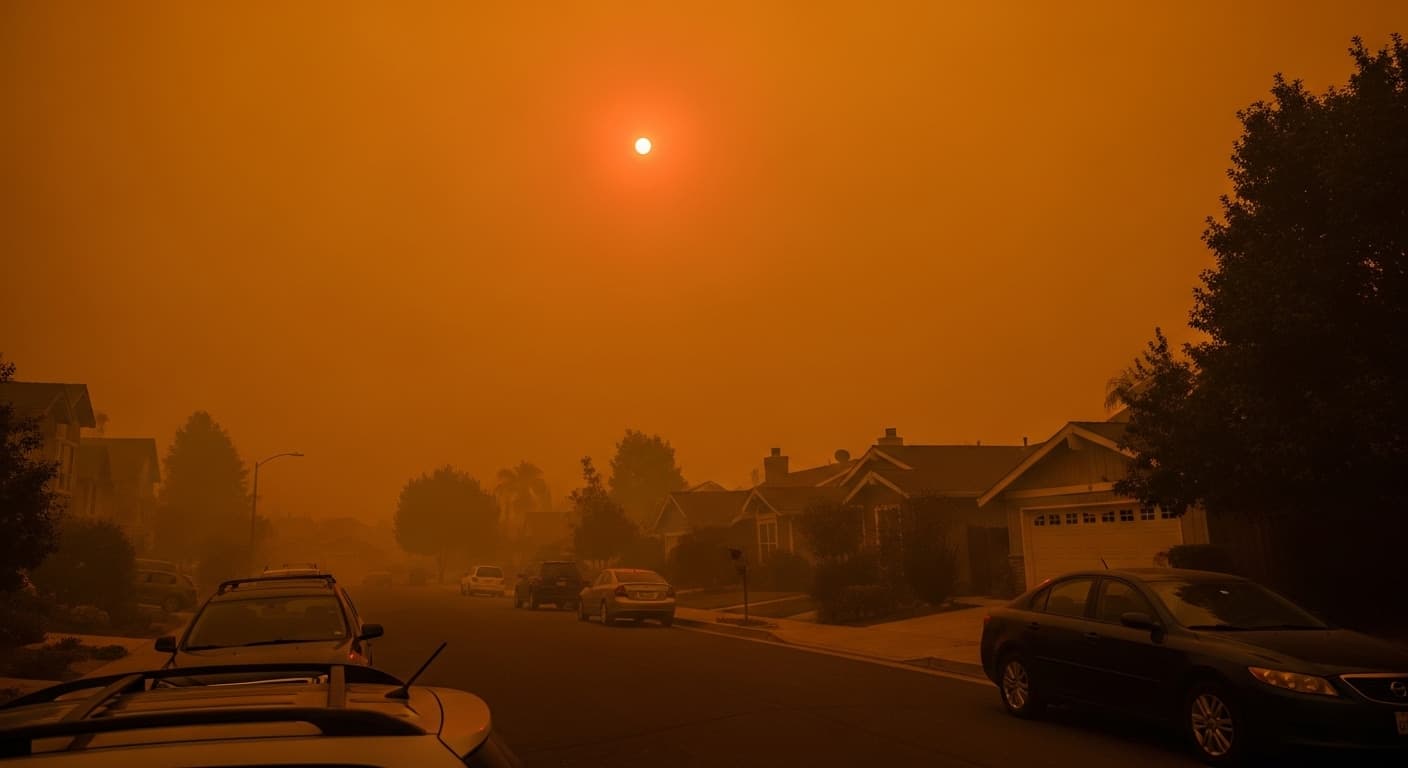
The 2026 Wildfire Smoke Event: What the Air Quality Data Shows
In July 2026, Canadian wildfire smoke put ~120 million people across 16 US states under air quality alerts, with some local AQI readings above the 500 "hazardous" ceiling. A plain-data explainer of how bad it was, what the AQI numbers mean, and what agencies say about breathing through smoke.

Wildfire Season 2026: Why Respiratory Protection Matters More Than Ever
With wildfire seasons growing longer and more intense, understanding PM2.5 protection has never been more important. Here's what you need to know.
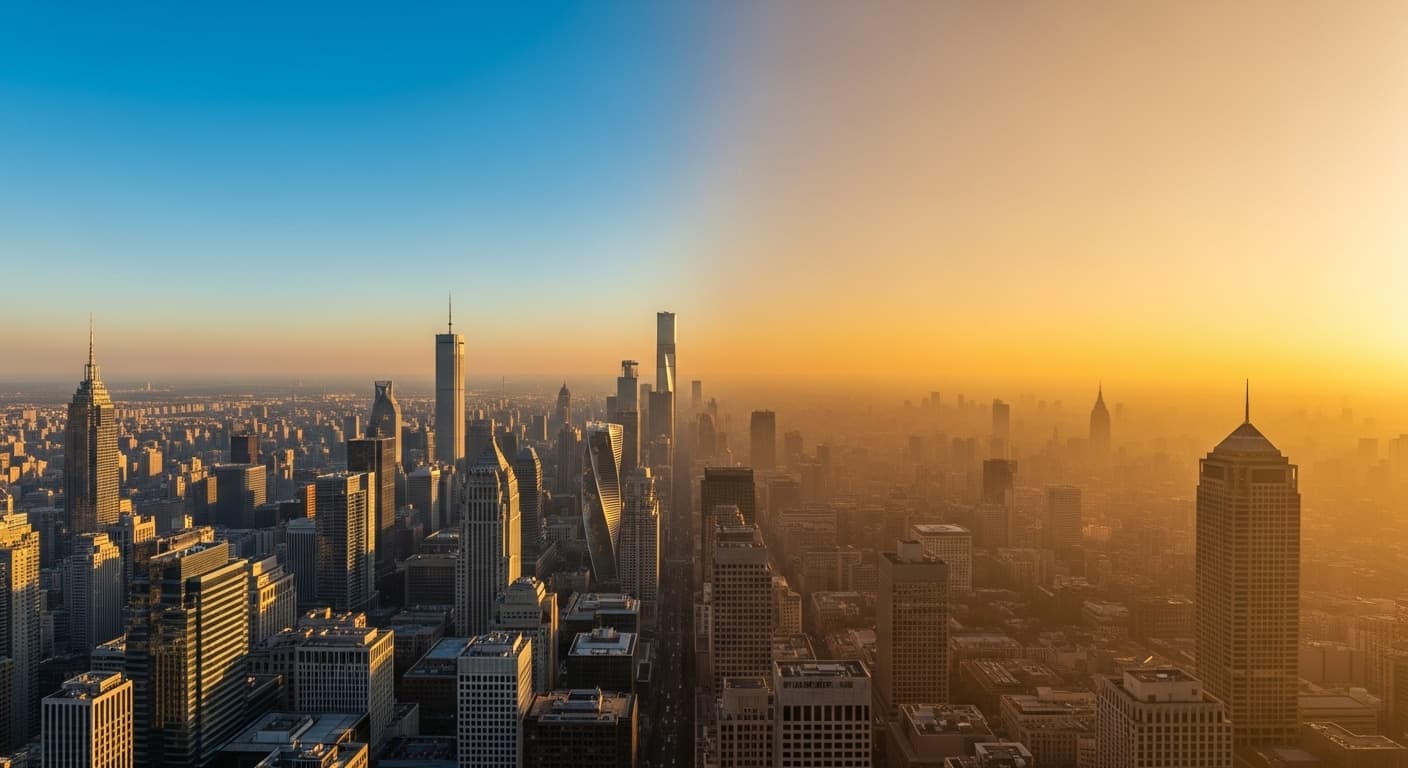
AQI Explained: How to Read and Act on the Air Quality Index
EPA AQI 101+ puts sensitive groups at risk. 6 levels decoded with exact thresholds for pregnant people, children, and elderly.