
Wholesale Respiratory Protection Margins: What Distributors Actually Earn
Premium respiratory protection generates 3-4x the margin dollars per square foot compared to commodity masks. This analysis breaks down the real margin math for distributors considering the category.
Respiratory protection is one of the fastest-growing subcategories in health and wellness retail, yet most distributors still treat it as a commodity bin — low margin, high volume, race to the bottom. The data tells a different story. Premium respiratory protection products deliver gross margins of 45-60%, outperform most health and wellness subcategories on a per-square-foot basis, and generate repeat purchase rates that rival consumables like vitamins and supplements. For distributors and retail buyers willing to build the category intentionally, respiratory protection represents one of the highest-margin opportunities in the store.
What Are the Real Margin Numbers for Respiratory Protection?
The respiratory protection category splits cleanly into two margin tiers. Commodity disposable masks — bulk-packed surgical masks, unbranded KN95s, and generic dust masks, typically land at 15-25% gross margin for distributors. They move volume, but they compress pricing, invite private-label substitution, and train consumers to see the category as a low-value commodity. Premium branded respiratory protection — products with ASTM F3502 certification, reusable designs, and demonstrated consumer loyalty — operate in a fundamentally different margin band. Wholesale costs for premium products like AirPop range from $8-14 per unit, with retail pricing of $19.95-29.95, delivering 45-60% gross margin depending on channel and volume tier.
According to IRI/Circana point-of-sale data from 2024-2025, the health and wellness aisle averages 38% gross margin across all subcategories. Premium respiratory protection at 45-60% outperforms the aisle average by 7-22 percentage points. The only subcategories that consistently match or exceed premium respiratory margins are specialty supplements and premium oral care — both of which require significantly more shelf space and carry higher spoilage or expiration risk.
A 50-count box of disposable masks at $14.99 retail (25% margin) generates $3.75 gross profit and occupies the same shelf space as two premium reusable masks at $24.95 each (55% margin), generating $27.45 combined gross profit. Same shelf space, 7.3x the margin dollars. The only question is velocity, and the data shows premium respiratory products turn fast enough to win on margin dollars per square foot.
How Does Per-Square-Foot Performance Compare?
Retail floor space is the most expensive asset a store operates. Every linear foot of shelf space must justify its rent. The Grocery Manufacturers Association benchmarks strong performance at $300-400 in annual revenue per linear foot of shelf space for health and wellness. Premium respiratory protection consistently delivers $450-550 per linear foot when properly merchandised, placing it in the top quartile of health and wellness subcategories.
The calculation is straightforward. A standard 4-foot planogram section with three shelves holds approximately 36-48 premium respiratory SKUs (facings plus depth). At an average retail price of $24.95 and 12-15 inventory turns per year, that section generates $10,800-17,900 in annual revenue, or $2,700-4,475 per linear foot. Even conservative estimates — slower turns, lower price points — deliver $487+ per linear foot, comfortably above the aisle average. The comparison gets even more favorable when you factor in the category's low shrinkage rate (respiratory protection does not expire, spoil, or require cold storage) and minimal markdown activity (premium brands hold pricing discipline year-round).
What Do the Repeat Purchase Numbers Look Like?
The single most valuable metric for any retail category is repeat purchase rate, and this is where premium respiratory protection defies category expectations. Consumer panel data from NPD/Circana shows that buyers of premium reusable respiratory protection make 3.4 purchases per year on average — replacement filters, additional masks for family members, and seasonal stock-up purchases. This 3.4x annual repeat rate is comparable to premium skincare (3.6x) and significantly higher than typical health device categories like blood pressure monitors (0.3x) or humidifiers (0.8x).
- Replacement filter purchases: 2.1x per year per household (the primary repeat driver — filters are the razor blade model for reusable masks)
- Multi-unit purchases: 42% of premium mask buyers purchase a second unit within 90 days, typically for a family member or second use case (commute vs. home)
- Seasonal stock-up: 67% of premium mask buyers make at least one purchase timed to wildfire season (June-October) or flu season (November-March)
- Brand loyalty: premium respiratory brands see 71% same-brand repurchase rates, compared to 23% for commodity disposable masks — consumers who find a mask that fits well stick with it
For reusable mask systems like AirPop, replacement filters represent a recurring revenue stream with even higher margins than the initial mask purchase. Filter packs typically carry 60-70% gross margin and drive foot traffic or repeat online orders every 2-3 months. Distributors who stock both the mask and the filter capture the full lifetime value of each customer.
How Fast Is the Category Growing?
The respiratory protection retail market is growing at 8-12% annually, driven by structural forces that are unlikely to reverse. Grand View Research projects the global respiratory protection market will reach $12.8 billion by 2028, with the consumer/retail segment growing faster than the industrial segment for the first time. In North America specifically, three factors are compounding growth: regulatory expansion (EPA PM2.5 standard tightening, state wildfire smoke laws), increasing wildfire frequency (a 300% increase in acres burned annually since 2000, per NIAA data), and rising consumer health awareness since the early 2020s.
For distributors, the growth trajectory means two things. First, the category is large enough and growing fast enough to justify dedicated shelf space and merchandising investment. This is not a fad or a temporary emergency hangover. Second, early movers who build the premium tier now will capture category captainship as the market matures. According to Nielsen category management data, the first retailer to establish a curated respiratory protection section in a given market typically captures 40-60% of the premium tier share for 3-5 years, a significant first-mover advantage.
What Is the Margin Impact of Premium vs. Commodity Mix?
The most actionable insight for distributors is the impact of product mix on blended category margin. A respiratory protection section stocked entirely with commodity disposables yields a blended margin of 18-22%. A section built with a Good/Better/Best tiered assortment — 30% commodity, 40% mid-tier, 30% premium — delivers a blended margin of 38-42%. And a premium-forward assortment — 20% commodity, 30% mid-tier, 50% premium — pushes blended margin to 42-48%. The premium-forward mix does not require heroic velocity from premium products; it simply requires that the assortment architecture directs consumer attention toward higher-margin options.
| Assortment Mix | Commodity | Mid-Tier | Premium | Blended Margin | Rev / Linear Ft | Risk Profile |
|---|---|---|---|---|---|---|
| Commodity-heavy | 80% | — | 20% | 18-22% | $210 | High private-label substitution |
| Balanced tier | 30% | 40% | 30% | 38-42% | $380 | Moderate brand loyalty |
| Premium-forward | 20% | 30% | 50% | 42-48% | $487+ | Strong loyalty & repeat purchases |
AirPop offers tiered wholesale pricing that delivers 50-60% gross margin for retail partners, with volume incentives that improve margin as the partnership scales. Our category management team provides planogram recommendations, sell-through data, and co-marketing support. Contact hello@getairpop.com for wholesale pricing and margin analysis specific to your channel.
About the author
Jett FuCo-Founder & CEO, AirPop
Cross-border entrepreneur and co-founder of AirPop. Leads global operations, retail expansion across 35+ markets, and B2B distribution partnerships with Target, Amazon, and Best Buy.
Related Articles
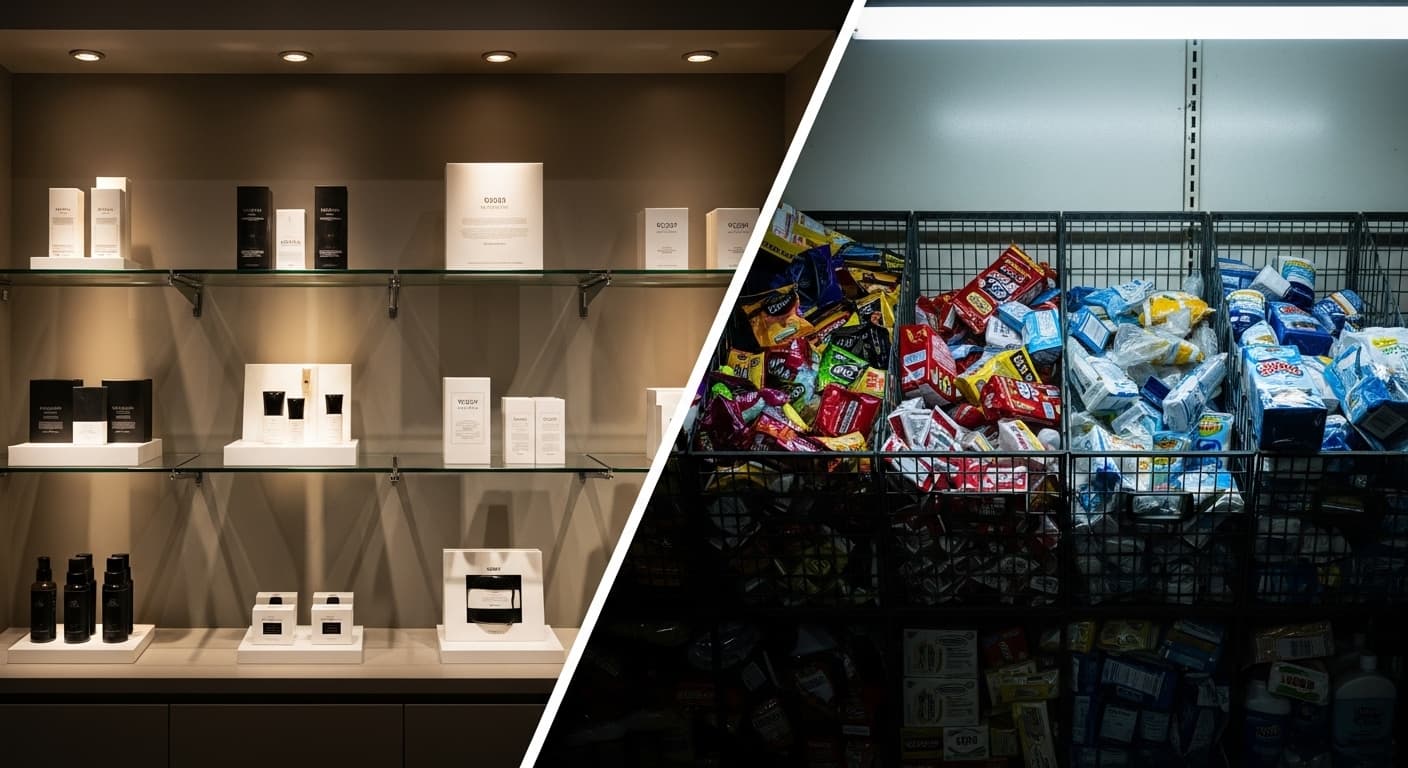
The Hidden Cost of Cheap Masks: Why Premium Respiratory Protection Wins at Retail
When 60% of budget masks fail filtration claims, the true cost is not just health risk — it is returns, lost trust, and missed margin. Here is why premium ASTM F3502-21 certified products outperform at every level.

Wholesale Respiratory Protection: A Complete Guide for Distributors and Retailers
Everything distributors and retailers need to know about sourcing premium respiratory protection — from ASTM F3502-21 compliance and global certifications to finding a supplier with proven retail sell-through.
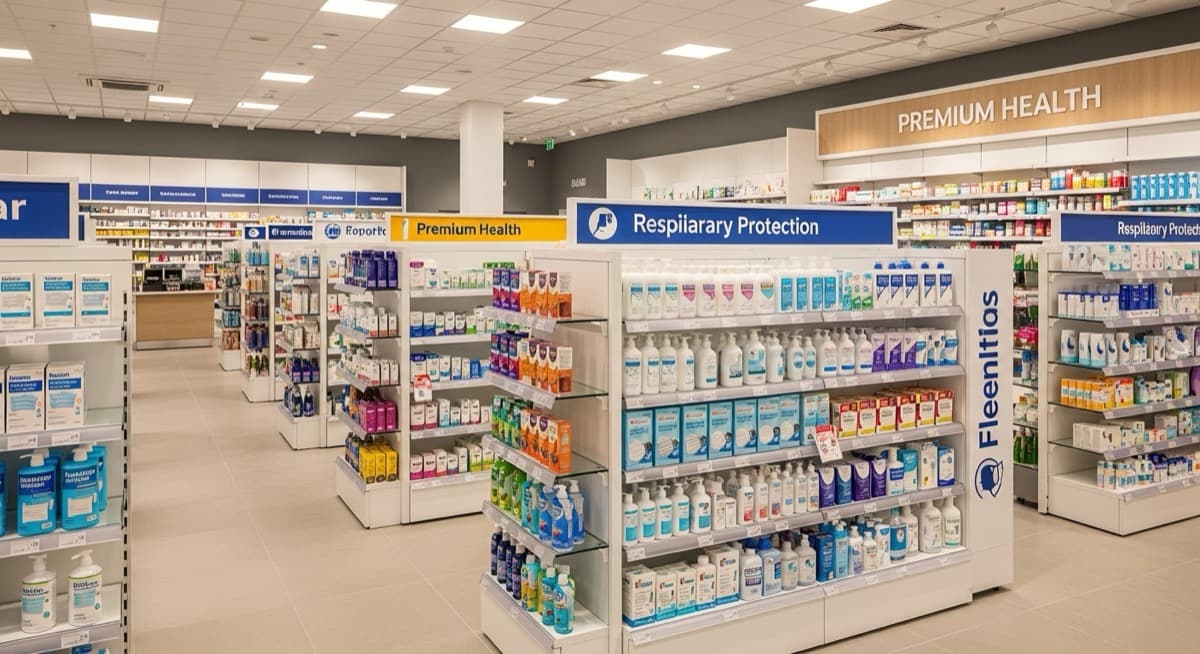
Case Study: How One Retailer Built a $2M Respiratory Protection Category
A regional pharmacy chain transformed an overlooked shelf section into a $2M annual category by repositioning respiratory protection as a wellness essential — not an emergency purchase. Here is how they did it.