Wildfire Preparedness for Schools and Organizations: A Bulk Protection Planning Guide
With 7.4 million U.S. children exposed to wildfire smoke annually, schools and organizations need proactive respiratory protection plans. This guide covers AQI trigger protocols, inventory planning, and bulk procurement strategies for institutional buyers.
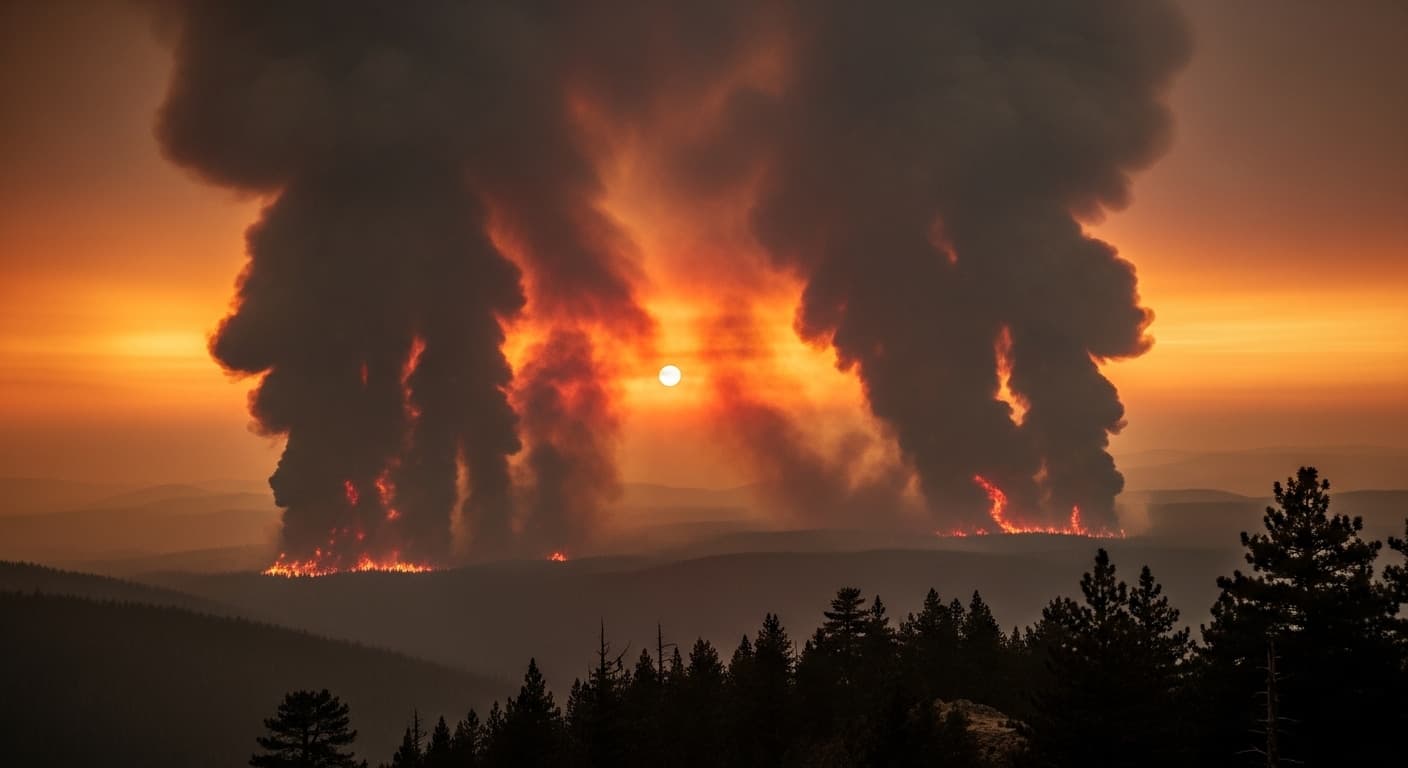
Every year, wildfire smoke disrupts school schedules, outdoor activities, and workplace operations across the United States. In 2025, over 7.4 million U.S. children were exposed to hazardous wildfire smoke, and the trend is accelerating. For schools, corporate campuses, healthcare facilities, and event organizers, the question is no longer whether wildfire smoke will affect your operations, but when and how prepared you will be.
Enter your ZIP code in our free air quality tool to see the live AQI near you, pulled from EPA AirNow, with plain-language guidance for children, sensitive groups, and outdoor workers.
Why Do Schools and Organizations Need a Wildfire Respiratory Protection Plan?
Wildfire smoke does not respect boundaries. Schools in Seattle, Sacramento, Denver, and New York have all experienced AQI readings above 200 — classified as "very unhealthy" — in recent years. Children are especially vulnerable because their respiratory systems are still developing, they breathe faster than adults relative to body weight, and they spend more time outdoors during recess and sports.
Organizations face real consequences from poor preparedness. Schools that lack respiratory protection plans face parent complaints, liability exposure, and lost instruction days. Companies without employee protection protocols see absenteeism spike 25-40% during smoke events. Event organizers have cancelled outdoor gatherings at the last minute, absorbing six-figure losses.
California, Oregon, and Washington now have mandatory wildfire smoke protection laws for employers, with penalties up to $25,000 per violation. At least five additional states are developing similar legislation for 2026-2027. Schools and organizations that fail to provide respiratory protection during smoke events face increasing liability risk.
How Do You Build an AQI Trigger Protocol?
An AQI trigger protocol defines exactly what actions your organization takes at each air quality threshold. Without one, decisions are made ad hoc — usually too late and inconsistently. Here is a recommended framework based on EPA guidance and best practices from California school districts:
| AQI Level | Classification | Recommended Action |
|---|---|---|
| 0-50 | Good | Normal operations. No action required. |
| 51-100 | Moderate | Monitor AQI hourly. Alert sensitive individuals. Pre-position masks at reception. |
| 101-150 | Unhealthy for Sensitive Groups | Cancel outdoor PE and recess for sensitive individuals. Distribute masks to staff working outdoors. Close building intake vents. |
| 151-200 | Unhealthy | Move all activities indoors. Distribute masks to everyone entering/exiting buildings. Run HVAC in recirculation mode with MERV-13+ filters. |
| 201-300 | Very Unhealthy | Mandatory mask use for any outdoor exposure. Consider early dismissal or remote operations. Deploy portable air purifiers in classrooms and meeting rooms. |
| 300+ | Hazardous | Close facility or shift to fully remote. Essential on-site staff must wear ASTM F3502-certified masks continuously. |
Set up automated AQI alerts via AirNow.gov, PurpleAir, or IQAir. Designate one staff member per location as the "air quality coordinator" responsible for monitoring and triggering protocol actions.
How Many Masks Does Your Organization Need?
Inventory planning depends on your headcount, geographic risk, and operational model. A school in Sacramento needs more inventory than one in Miami. A construction company with outdoor crews needs higher quantities per person than an office-based firm. Use this planning framework:
| Organization Type | People | Masks per Person | Recommended Inventory | Rationale |
|---|---|---|---|---|
| Elementary School (500 students) | 500 + 50 staff | 2 | 1,100 | One for use, one in reserve. Children lose masks frequently. |
| High School (1,500 students) | 1,500 + 150 staff | 2 | 3,300 | Higher outdoor activity exposure. Include athletic department. |
| School District (10 schools) | ~8,000 | 2 | 16,000+ | Centralized procurement saves 15-25% vs per-school orders. |
| Corporate Office (200 employees) | 200 | 1-2 | 200-400 | Lower risk; primarily for commuters and outdoor areas. |
| Construction Site (50 workers) | 50 | 3-5 | 150-250 | Outdoor exposure all day. Replace more frequently. |
| Outdoor Event (5,000 attendees) | 5,000 | 1 | 5,000 | Single-use distribution. Plan for 10% overage. |
At volume pricing, ASTM F3502-certified masks like the AirPop Light SE cost $2.50-3.50 per unit depending on quantity — significantly less than the $5.00 retail price. For a 500-student school, a full preparedness kit costs approximately $2,750-3,850.
What Should You Look for in Bulk Respiratory Protection?
Not all masks are appropriate for wildfire smoke protection at scale. When procuring for an organization, you need to evaluate five factors: filtration certification, fit across face sizes, breathability for extended wear, durability and washability, and cost per protected person.
- ASTM F3502 certification, the only U.S. standard that tests both filtration AND fit for consumer/workplace use
- Size range that fits both children and adults — critical for schools serving K-12
- Breathability rating at least 2x standard N95 — people will not wear uncomfortable masks for hours
- Reusable across 10 cleaning cycles — reduces per-event cost by 5-10x vs disposable N95s
- Individually sealed packaging — maintains filtration integrity during multi-year storage
The AirPop Light SE meets all five criteria: ASTM F3502-21 certified, available in adult and youth sizes, 2x N95 breathability, reusable for up to 10 cleaning cycles while maintaining >97% PFE, and individually sealed. Currently available Target stores nationwide and direct via bulk orders.
When Should You Order? The Procurement Timeline
The biggest mistake organizations make is waiting until smoke appears to order protection. During active wildfire events, demand spikes 500-800% and supply chains cannot keep up. The 2023 Canadian wildfire season caused nationwide mask shortages within 48 hours of smoke reaching the East Coast. Plan procurement 2-3 months before your regional wildfire season begins.
| Region | Peak Wildfire Season | Order By | Delivery Lead Time |
|---|---|---|---|
| Pacific Northwest (WA, OR) | July - October | April - May | 5-10 business days |
| California | June - November | March - April | 5-10 business days |
| Rocky Mountain (CO, MT, ID) | June - September | March - April | 5-10 business days |
| Southwest (AZ, NM) | May - July | February - March | 5-10 business days |
| Northeast / Mid-Atlantic | June - September (smoke transport) | March - April | 5-10 business days |
| Southeast | March - May (prescribed burns) | January - February | 5-10 business days |
How Do You Distribute and Train Staff?
Having masks in a storage closet is not a preparedness plan. Effective distribution requires pre-positioned inventory, clear protocols, and staff training. Here is a practical implementation checklist:
- 1Designate an air quality coordinator at each location responsible for AQI monitoring and protocol activation
- 2Pre-position sealed masks at every building entrance, reception desk, and school nurse office
- 3Train all staff on proper mask fitting — demonstrate the "seal check" (inhale and feel for air leaks around the edges)
- 4Create parent communication templates explaining your AQI trigger protocol and mask distribution plan
- 5Post AQI trigger charts in visible locations (teacher lounges, break rooms, security desks)
- 6Conduct one drill per year before fire season — practice the full AQI-200 protocol with mask distribution
- 7Track inventory monthly and reorder when stock drops below 25% of full capacity
Send parents a letter before wildfire season: "Our school has implemented an AQI trigger protocol and stocked [X] ASTM F3502-certified masks for student protection. When AQI exceeds [threshold], we will distribute masks to all students and move activities indoors. No parent action is needed. We are prepared."
What About Storage and Shelf Life?
Properly stored respiratory protection maintains effectiveness for years. AirPop masks in sealed packaging have a shelf life of 3+ years when stored in a cool, dry environment away from direct sunlight. This means organizations can build multi-year inventory during off-season purchasing when prices are lowest and availability is highest.
- Store in original sealed packaging until distribution
- Keep in climate-controlled space (40-90°F, <80% humidity)
- Avoid direct sunlight and UV exposure
- Rotate stock using FIFO (first in, first out) method
- Inspect packaging integrity during monthly inventory checks
- After use: AirPop masks can be wiped clean with a 70% alcohol wipe and air-dried, for up to 10 cleaning cycles while maintaining >97% PFE
Related Article
Wildfire Season 2026: Why Respiratory Protection Matters More Than Ever
Consumer-focused guide to individual wildfire protection strategies.
Related Article
AQI Explained: How to Read and Act on the Air Quality Index
Understand AQI levels and when to take protective action.
How Do You Fund Wildfire Preparedness?
Budget is often the barrier to institutional preparedness. However, several funding mechanisms can offset or fully cover respiratory protection costs:
- FEMA Hazard Mitigation Grant Program (HMGP) — covers pre-disaster preparedness supplies including respiratory protection
- State emergency management grants — California, Oregon, and Washington have dedicated wildfire preparedness funding for schools
- OSHA Susan Harwood Training Grants — fund workplace safety training and equipment
- School district emergency/safety budgets. Most districts have discretionary safety funds that can be allocated before season
- PTA/PTO fundraising — parent organizations are highly motivated to fund air quality protection for children
- Corporate wellness budgets — employers can allocate health and safety funds for employee protection
Getting Started: Your Next Steps
Wildfire preparedness does not require a massive upfront investment or complex planning. Start with three actions this week: assess your headcount and calculate inventory needs using the table above, designate an air quality coordinator, and request a bulk quote to understand your costs. AirPop offers volume pricing starting at 25 units with free shipping on orders of 250+.
Related Article
2026 Wildfire Season Forecast
NIFC predictions show above-normal fire potential across the West, Southwest, and Southeast. What this means for your preparation timeline.
Related Article
Wildfire Smoke Indoors: How to Protect Your Home
HVAC upgrades, HEPA purifiers, and sealing strategies to keep indoor PM2.5 below safe thresholds during smoke events.
About the author
Jett FuCo-Founder & CEO, AirPop
Cross-border entrepreneur and co-founder of AirPop. Leads global operations, retail expansion across 35+ markets, and B2B distribution partnerships with Target, Amazon, and Best Buy.
Get a Bulk Quote
Protect your organization with volume pricing on ASTM-certified masks.
Get a Bulk QuoteRelated Articles

Wildfire Smoke Indoors: How to Protect Your Home When the AQI Spikes
Indoor PM2.5 can reach 50-70% of outdoor levels during wildfire smoke events without mitigation. Sealing your home, upgrading HVAC filters to MERV 13+, and running HEPA purifiers can reduce indoor smoke exposure by 60-80%. Here is the complete layered protection strategy.
2026 Wildfire Season Forecast: What NIFC Predictions Mean for Your Health
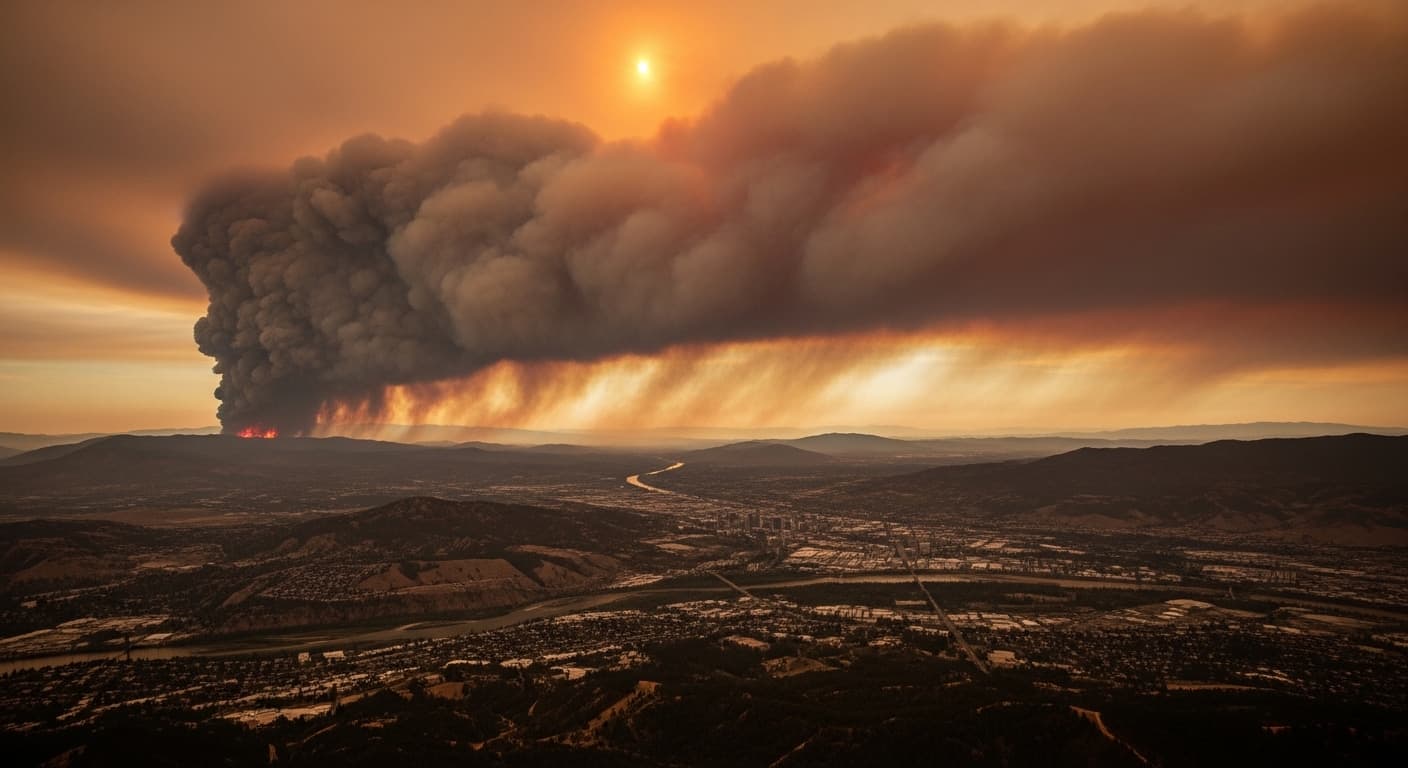
NIFC forecasts above-normal wildfire potential across the Southwest, Great Basin, California, and southern Plains for summer 2026. With 1.6 million acres already burned and 50% of the U.S. in drought, here is what the predictions mean for respiratory health and how to prepare.
Wildfire Season 2026: Why Respiratory Protection Matters More Than Ever
With wildfire seasons growing longer and more intense, understanding PM2.5 protection has never been more important. Here's what you need to know.