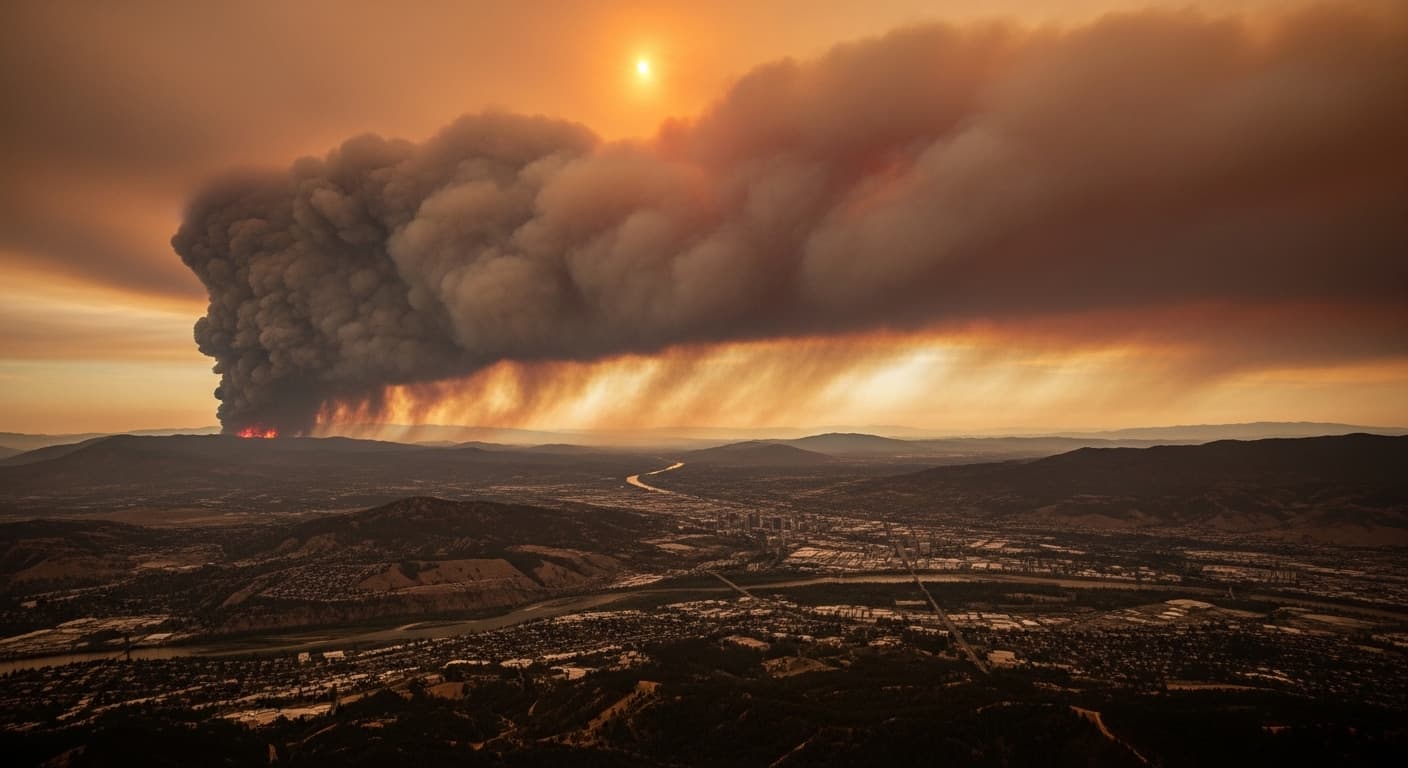
2026 Wildfire Season Forecast: What NIFC Predictions Mean for Your Health
NIFC forecasts above-normal wildfire potential across the Southwest, Great Basin, California, and southern Plains for summer 2026. With 1.6 million acres already burned and 50% of the U.S. in drought, here is what the predictions mean for respiratory health and how to prepare.
The 2026 wildfire season is already breaking records before summer has even begun. According to the National Interagency Fire Center (NIFC), 1.6 million acres have burned year-to-date as of early April — more than double the 10-year average. With above-normal fire potential forecast across the West, Southwest, and Southeast, understanding what these predictions mean for respiratory health is essential for families, businesses, and institutions planning ahead.
Enter your ZIP code in our free air quality tool to see the live AQI near you, pulled from EPA AirNow, with plain-language guidance for children, sensitive groups, and outdoor workers.
What Does NIFC Predict for the 2026 Wildfire Season?
The NIFC's National Significant Wildland Fire Potential Outlook, updated monthly, paints a concerning picture for 2026. A NIFC meteorologist described the setup as potentially "very long and very busy" for the West, citing snow drought and expected heat waves. The spring outlook identified above-normal significant fire potential stretching from the southern Rockies through the southern Plains and much of the Southeast, driven by high concentrations of cured and dormant fuels, ongoing drought, and forecast precipitation deficits.
For summer 2026, NIFC expects wildfire conditions to worsen across several key regions. Below-average precipitation in the Great Basin, the Southwest, California, and the southern High Plains is creating dangerous fuel conditions. Temperatures are forecast to run above normal for most of the country through June, with the Greater Four Corners region facing the highest temperature anomalies.
NIFC forecasts a "very long and very busy" fire season for the West. Above-normal fire potential: Southern Rockies and Plains (April through summer), the Great Basin and California (June onward), Utah statewide (July), Southeast coast from Florida to the Carolinas (spring into early summer), and southeast Arizona including the White, Gila, and Sacramento Mountains (May onward). Low winter precipitation, early snowmelt, and widespread tree mortality have left fuel primed for ignition.
Why Is 2026 Shaping Up to Be a Severe Fire Year?
Three converging factors are driving the elevated outlook. First, drought: as of late March 2026, over 50% of the United States is in drought according to the U.S. Drought Monitor, with conditions particularly acute in the southern Plains — 89% of Texas and 99% of Oklahoma are in drought. Second, an early heat wave accelerated snowmelt across the West, removing the natural moisture barrier that typically suppresses early-season fires. Third, below-normal winter precipitation has left vegetation abnormally dry, creating continuous fuel beds across millions of acres.
The result is a fire season that started months ahead of the traditional June-to-October window. In February 2026 alone, 4,986 wildfires burned 351,026 acres — nearly five times the February average of approximately 73,000 acres. This early start means that peak summer conditions will arrive with fire resources already stressed and fuels already depleted of moisture.
| Region | Fire Potential | Key Drivers |
|---|---|---|
| Southern Plains (TX, OK) | Above Normal | Extreme drought (89-99%), fine fuel loading |
| Southwest / Four Corners | Above Normal | Below-normal precip, above-normal temps |
| Great Basin / California | Above Normal (June+) | Early snowmelt, low winter precipitation |
| Utah (statewide) | Above Normal (July+) | Drought expansion, dry fuels |
| Southeast Coast (FL-NC) | Above Normal | Persistent drought, abundant lightning |
| Northern U.S. / Alaska | Near Normal | Adequate snowpack, normal precipitation |
How Did the 2025 Season Set the Stage?
The 2025 wildfire season provided a stark preview of what intensifying fire years look like. By August 2025, more than 3.99 million acres had burned across 44,470 fires nationwide. The January 2025 Los Angeles wildfires — the Palisades and Eaton fires — collectively burned over 50,000 acres, destroyed more than 16,000 structures, claimed 30 lives, and forced over 180,000 evacuations. Economic damage estimates ranged from $76 billion to $250 billion, making them among the costliest disasters in U.S. history.
The year reinforced a critical lesson: wildfire is no longer a rural problem confined to remote forests. It is an urban and suburban health crisis that can strike major metropolitan areas with devastating speed. The Oklahoma fires in March 2025, where more than 20 wildfires burned over 200,000 acres, further demonstrated how drought-driven grassland fires can overwhelm regions not traditionally associated with wildfire risk.
Why Should People Hundreds of Miles from Fires Be Concerned?
Wildfire smoke does not respect geography. The June 2023 Canadian wildfire event proved this conclusively when smoke traveled roughly 800 to 1,000 kilometers to blanket New York City in an apocalyptic orange haze. NYC recorded daily average PM2.5 levels more than three times higher than EPA guidelines and eight times above World Health Organization recommendations. Asthma-related emergency department visits surged 44% to 82% at the smoke's peak.
Research from Rutgers University found that during the 2023 NYC smoke event, approximately 9.2 milligrams of smoke particles were deposited in residents' lungs. This exposure reduced lung macrophage viability by 20% and impaired their pathogen-fighting ability by 50% — weakening immune defenses for days after the smoke cleared.
With above-normal fire potential forecast across multiple western and southern regions in 2026, smoke events affecting distant cities are not a possibility — they are a near certainty. Cities in the Midwest, Northeast, and Mid-Atlantic should prepare for degraded air quality episodes lasting days or even weeks during peak fire season.
What Are the Health Impacts of Wildfire Smoke Exposure?
The health toll of wildfire smoke is severe and well-documented. A landmark study published in the Proceedings of the National Academy of Sciences (PNAS) found that long-term exposure to wildland fire smoke PM2.5 contributes to approximately 11,415 nonaccidental deaths per year in the United States. A separate analysis examining adults aged 65 and older estimated over 10,000 premature deaths and 191,000 emergency room visits annually from wildfire smoke exposure.
PM2.5 particles from wildfire smoke are especially dangerous because they are small enough to penetrate deep into the lungs and enter the bloodstream. According to data spanning 2007 to 2020, long-term smoke exposure is associated with increased mortality from cardiovascular disease, ischemic heart disease, chronic kidney disease, diabetes, and respiratory illness. Individuals under 75 and certain racial and ethnic groups face disproportionately higher risk.
A UC Berkeley study published in PNAS found that people with repeated, high exposure to wildfire smoke over a three-year period had a 7% higher mortality rate than those with minimal exposure — even after the smoke cleared. The health effects of wildfire smoke accumulate over time, making protection during every smoke event critical.
What Is the Economic Cost of Wildfire Smoke?
The U.S. Joint Economic Committee estimates the total annual economic burden of wildfires at $394 billion to $893 billion — equivalent to 2% to 4% of U.S. GDP. This encompasses property damage, lost income, watershed degradation, insurance payouts, and health costs. The health component alone is staggering: a Stony Brook University study estimated that wildfire smoke PM2.5 caused $160 billion in cumulative health costs from 2006 to 2020, with annual premature mortality costs ranging from $8 billion to $31 billion.
For businesses and institutions, these numbers translate into real operational costs: employee sick days during smoke events, reduced productivity, liability exposure, and disrupted operations. Organizations that invest in respiratory protection before fire season avoid the scramble — and price spikes — that occur once smoke arrives.
How Far in Advance Should You Prepare?
The traditional June-to-October wildfire season is a guideline, not a boundary. As the 2026 season has already demonstrated, significant fire activity can begin as early as January. The most effective preparation window is 30 to 90 days before your region's historical fire season peak — which means April through May for most of the western U.S. and year-round vigilance for the southern Plains and Southeast.
- 1April: Review NIFC seasonal outlooks and assess your region's risk level at nifc.gov
- 2May: Stock respiratory protection — at least 2 masks per person for families, scaled inventory for organizations
- 3June: Establish AQI monitoring protocols using AirNow or PurpleAir; set alerts for AQI above 100
- 4Ongoing: Monitor U.S. Drought Monitor for drought intensification in your region
- 5Year-round: Maintain a clean-air room at home or work with sealed windows and HEPA filtration
Schools, healthcare facilities, and businesses should place respiratory protection orders before peak season. Demand spikes during active smoke events cause supply shortages and price increases. AirPop offers bulk ordering and wholesale programs for organizations that need to protect employees, students, or patients at scale.
What Should You Look for in Wildfire Smoke Protection?
Not all respiratory protection is equal against wildfire smoke. The critical metric is PM2.5 filtration efficiency combined with an effective face seal. A mask that filters 95% of particles in a lab but leaks 30% of air around the edges delivers far less real-world protection than its rating suggests. Look for masks tested to the ASTM F3502 standard, which evaluates both filtration efficiency and fit performance together.
- Filtration: >95% PFE at 0.3 micrometers (sub-micron particles in wildfire smoke)
- Face seal: 360-degree seal design that prevents unfiltered air from bypassing the filter
- Breathability: Low breathing resistance for extended wear during prolonged smoke events
- Durability: reusable across cleaning cycles — single-use masks generate waste and ongoing cost
- Certification: an ASTM F3502-21 report from an accredited lab, stating the level on each axis
>97% sub-micron particle filtration, a 360-degree face seal, and the patented AeroDome 3D structure (US 10,798,979 B2). Certified to ASTM F3502-21 (Intertek), with 8 mm H₂O air-flow resistance, and designed for all-day wear during extended smoke events. Reusable for up to 10 cleaning cycles while maintaining >97% PFE. Available in bulk for organizations.
Related Article
Wildfire Season 2026: Why Respiratory Protection Matters
Deep dive into PM2.5 science, AQI thresholds, and how to choose effective respiratory protection during wildfire smoke events.
Related Article
Best Masks for Wildfire Smoke in 2026
Independent comparison of N95, KN95, and ASTM F3502 masks for wildfire smoke protection — filtration, fit, and real-world performance.
Related Article
Wildfire Preparedness for Schools and Organizations
How schools, healthcare facilities, and businesses can build wildfire smoke protection programs — bulk ordering, protocols, and compliance.
About the author
Jett FuCo-Founder & CEO, AirPop
Cross-border entrepreneur and co-founder of AirPop. Leads global operations, retail expansion across 20+ countries, and B2B distribution partnerships that have included Target, Amazon, and Best Buy.
Prepare Your Organization
Stock ASTM F3502-21 certified protection before fire season demand spikes.
Prepare Your OrganizationRelated Articles
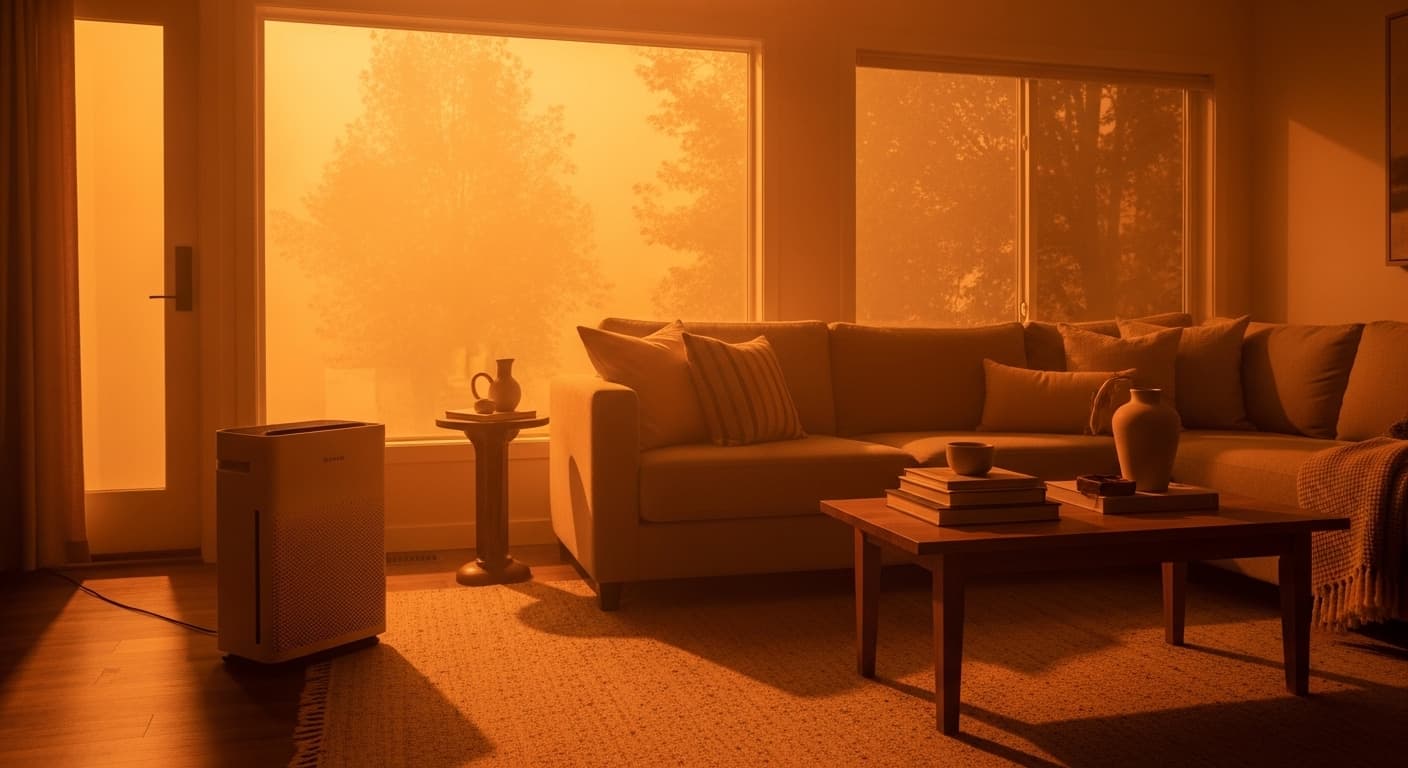
Wildfire Smoke Indoors: How to Protect Your Home When the AQI Spikes
Indoor PM2.5 can reach 50-70% of outdoor levels during wildfire smoke events without mitigation. Sealing your home, upgrading HVAC filters to MERV 13+, and running HEPA purifiers can reduce indoor smoke exposure by 60-80%. Here is the complete layered protection strategy.
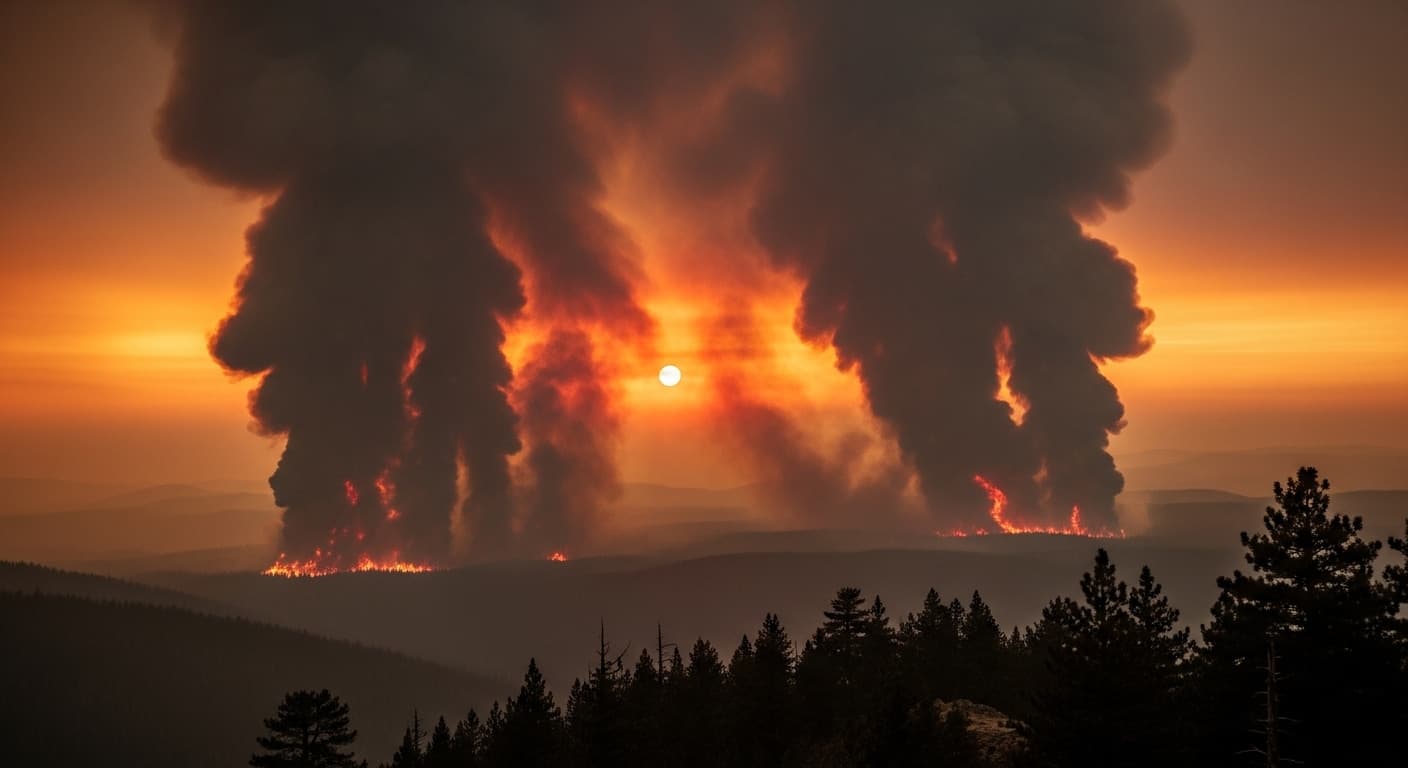
Wildfire Season 2026: Why Respiratory Protection Matters More Than Ever
With wildfire seasons growing longer and more intense, understanding PM2.5 protection has never been more important. Here's what you need to know.
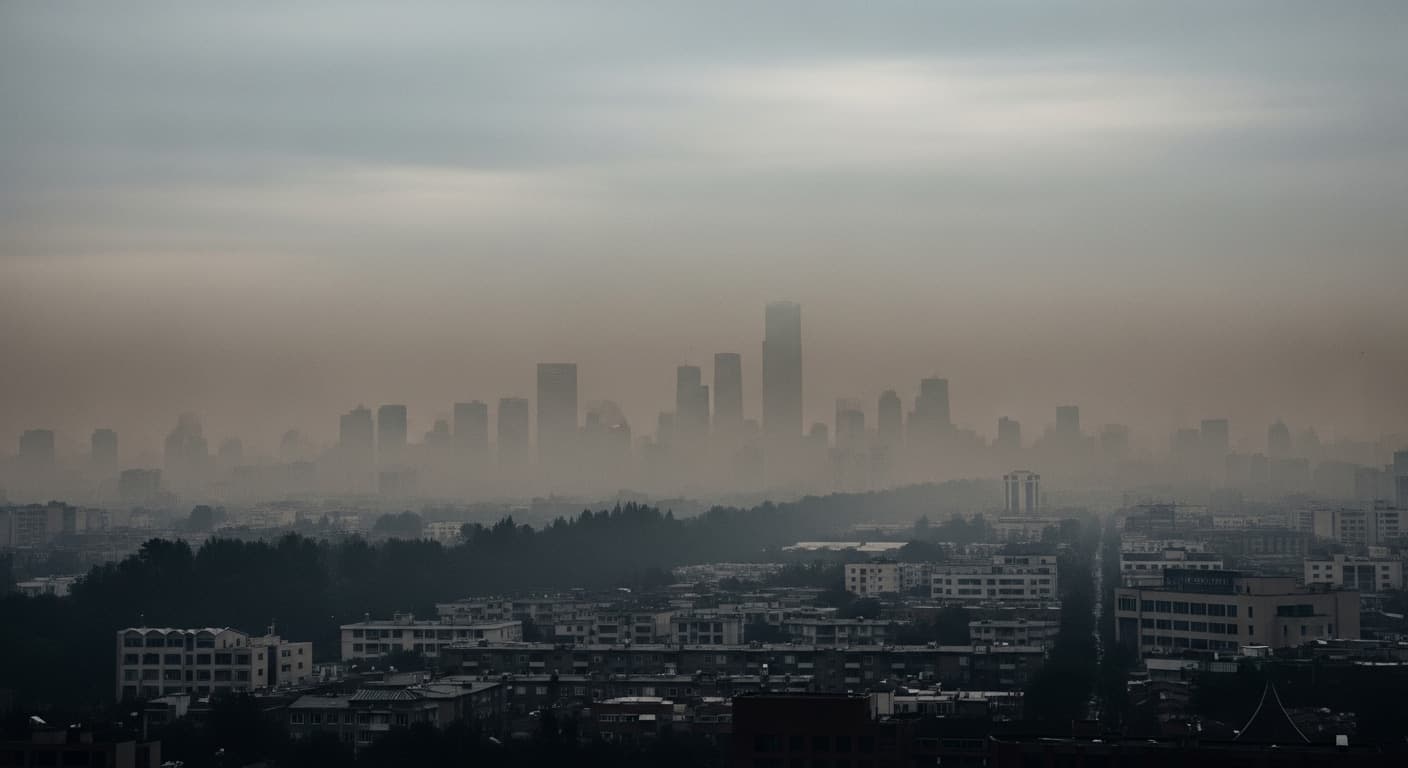
Understanding PM2.5: The Invisible Threat to Your Health
PM2.5 particles are too small to see, but their impact on your lungs, heart, and brain is anything but invisible. Learn what PM2.5 is, where it comes from, and how to protect yourself every day.