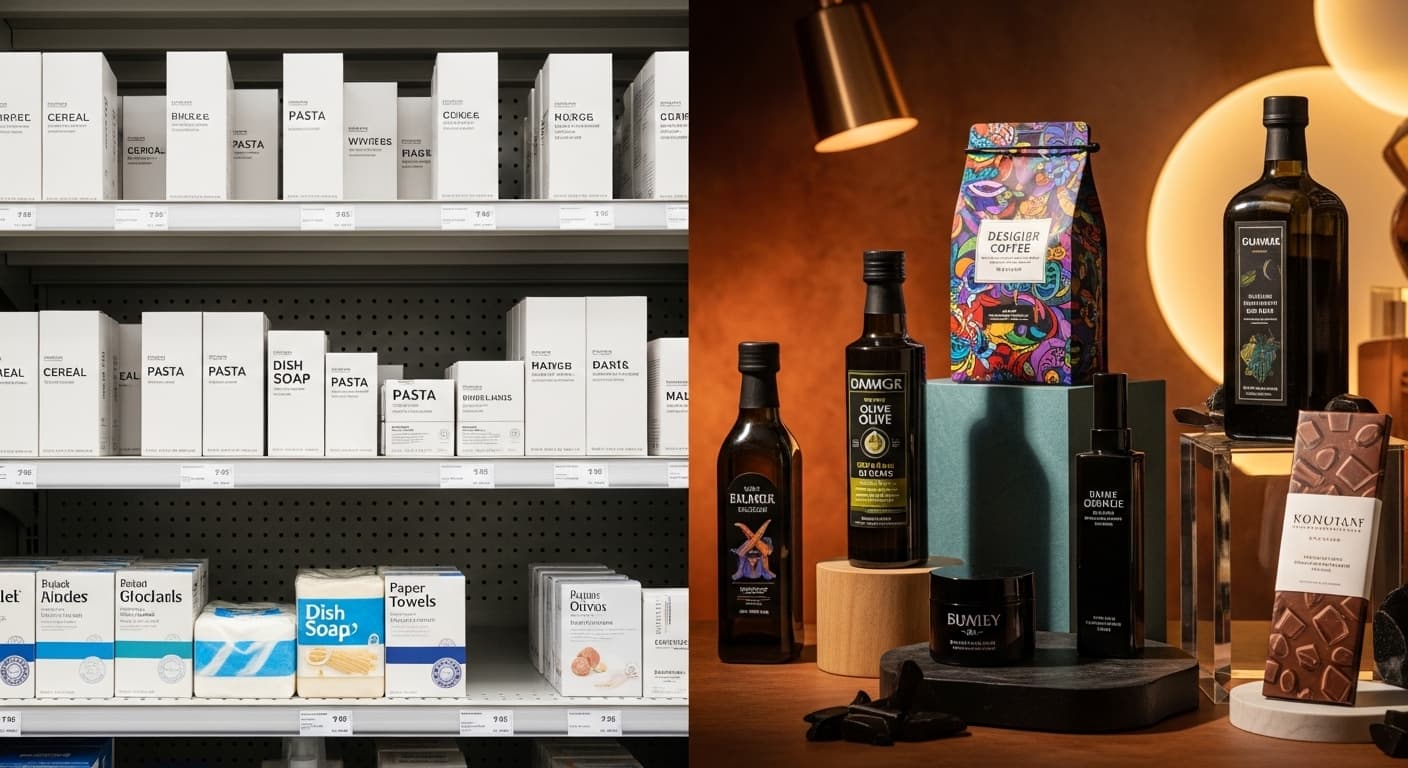
Private Label vs. Branded Masks: A Retailer's Decision Framework
A step-by-step framework for deciding where private label belongs in your respiratory protection assortment — Good-Better-Best tiering, the certification gap, and where retailer liability exposure makes branded the safer call.
The private label question is one of the first conversations every retailer and distributor has when evaluating the respiratory protection category. The logic seems compelling: why pay for someone else's brand when you can source directly, slap your own label on it, and capture the full margin? In categories like paper towels, batteries, and basic OTC medications, this strategy works brilliantly. In respiratory protection, it is a trap, and the data explains exactly why.
Why Does Private Label Fail in Respiratory Protection?
Private label succeeds in categories where the product is a known quantity, where consumers understand what they are getting and where quality variance between manufacturers is minimal. Respiratory protection fails both tests. Consumers cannot evaluate filtration performance at the shelf. They cannot feel the difference between 20% and 95% particle filtration. And quality variance between manufacturers is enormous: when the CDC tested KN95 masks, approximately 60% failed their stated filtration claims. In this environment, the brand is not a marketing overlay. It is a trust signal that substitutes for information the consumer cannot access independently.
The Return Rate Problem
The most immediate financial impact of private label respiratory protection is the return rate. Across the retailers we work with, private label and unbranded respiratory products experience return rates of 8-12% — compared to under 2% for branded premium products like AirPop. The reasons are consistent: poor fit, ear loop failures, perceived lack of filtration effectiveness, and general dissatisfaction with build quality. At scale, this difference is devastating. On a $500K category, the difference between 10% and 2% return rates represents $40K in lost margin before accounting for processing costs.
Each returned respiratory product costs $10-25 in processing (shipping, inspection, disposal — masks cannot be restocked). At 10% return rates on a $500K category, that is $50K-125K in annual processing costs alone, before accounting for the lost margin on returned inventory.
The Certification Gap
Building a genuinely certified respiratory protection product is expensive and slow. ASTM F3502-21 Workplace Performance Plus certification requires third-party lab testing, quality management systems, ongoing batch testing, and regulatory compliance across every market where the product is sold. Most private label contract manufacturers offer basic filtration testing at best. Very few can deliver the full certification stack that retailers increasingly require: ASTM F3502 WPP, NIOSH-benchmarked filtration, CE marking, and BSI Kitemark.
- ASTM F3502-21 WPP requires independent lab testing for filtration, breathing resistance, and source control. Most contract manufacturers cannot provide this
- NIOSH-benchmarked testing adds another layer of credibility that private label products rarely achieve
- CE marking and BSI Kitemark require ongoing quality management system audits, not just a one-time test
- FDA registration is mandatory for any medical protection claims — private label products often lack this
- Batch-to-batch consistency requires in-line quality controls that low-cost contract manufacturers typically do not maintain
Why Do Consumers Repurchase Branded 3.2x More Often?
The 3.2x repeat purchase multiplier for branded respiratory protection reflects a fundamental consumer behavior pattern: when you cannot verify product quality yourself, you rely on trust signals. A consumer who buys an AirPop mask, wears it during allergy season, and feels protected will buy the same product for wildfire season, flu season, and travel. A consumer who buys a private label mask has no such anchor. Even if the product performs adequately, there is no brand memory to drive the next purchase. They are equally likely to buy a different private label product, a branded competitor, or nothing at all.
“In respiratory protection, the brand is not a marketing expense. It is the only way consumers can verify quality at the point of purchase. You cannot feel filtration efficiency through the packaging.”
— Retail category management insight
The Margin Illusion
On paper, private label margins look superior. If a private label mask costs $2 to source and sells for $9.99, that is a 80% gross margin compared to perhaps 45-55% for a branded product at $19.99. But this analysis ignores the full cost picture. When you factor in returns (8-12% vs. under 2%), return processing costs ($10-25 per unit), lower sell-through velocity, higher markdown rates, and the absence of repeat purchase behavior, the net margin per linear foot of shelf space often favors branded premium products.
When Does Private Label Work in This Category?
Private label respiratory protection can work at the entry level of a Good-Better-Best assortment, specifically in the "Good" tier of basic surgical masks and simple cloth face coverings. These products have minimal quality variance between manufacturers, consumers have low performance expectations, and the price points are low enough that returns are not financially significant. But in the "Better" and "Best" tiers, where filtration performance, fit, and certifications matter — branded products consistently outperform private label on every financial metric that matters.
Use private label for the "Good" tier (basic surgical masks) where brand adds minimal value. Use branded premium for the "Better" and "Best" tiers where certifications, trust, and repeat purchase behavior drive category profitability. This captures the margin benefit of private label at the bottom while anchoring category value at the top.
The Liability Consideration
When a branded product fails, the liability falls primarily on the manufacturer. When a private label product fails, the liability falls on the retailer. This distinction matters enormously in respiratory protection, where product failures can have health consequences. The FTC's $1.1 million enforcement action against Razer for misleading N95 claims in 2023 demonstrated that regulators are actively monitoring this category. For private label products, the retailer bears the full regulatory risk of every claim on the packaging.
- Product liability insurance for private label respiratory products costs 3-5x more than for general merchandise private label
- FTC enforcement actions target the entity making the claim, for private label, that is the retailer
- State attorney general offices in CA, OR, and WA are actively investigating respiratory protection marketing claims
- A single product liability lawsuit in respiratory protection can cost $500K-2M in legal defense, regardless of outcome
AirPop carries $5M in product liability insurance, holds certifications across 6 international standards bodies, and provides retailers with full documentation packages for compliance and legal review. Contact hello@getairpop.com to discuss partnership.
Related Article
Wholesale Respiratory Protection Guide
Complete sourcing and evaluation guide for distributors entering the premium respiratory market.
Related Article
The Retail Playbook
Category strategy framework for building a profitable respiratory protection assortment.
Related Article
Private Label vs Branded: The Margin & Returns Data
The hard numbers behind this decision — repeat purchase rates, return rates, brand-trust premiums, and margin dollars per shelf foot.
About the author
Jett FuCo-Founder & CEO, AirPop
Cross-border entrepreneur and co-founder of AirPop. Leads global operations, retail expansion across 35+ markets, and B2B distribution partnerships with Target, Amazon, and Best Buy.
Partner With AirPop
Premium brand that drives category traffic and consumer trust.
Partner With AirPopRelated Articles
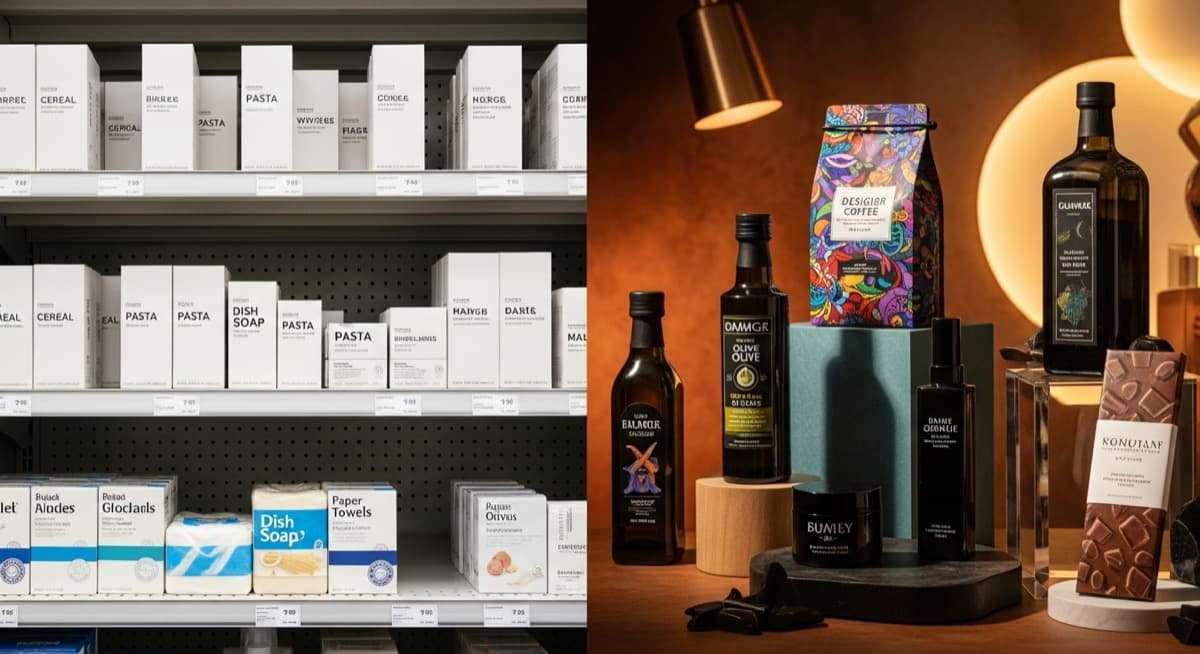
Private Label vs Branded Masks: The Margin & Returns Data
The numbers behind the private-label question: repeat purchase rates, return rates, brand-trust premiums, and margin dollars per shelf foot — drawn from NielsenIQ, Consumer Reports, Euromonitor, and McKinsey retail data.
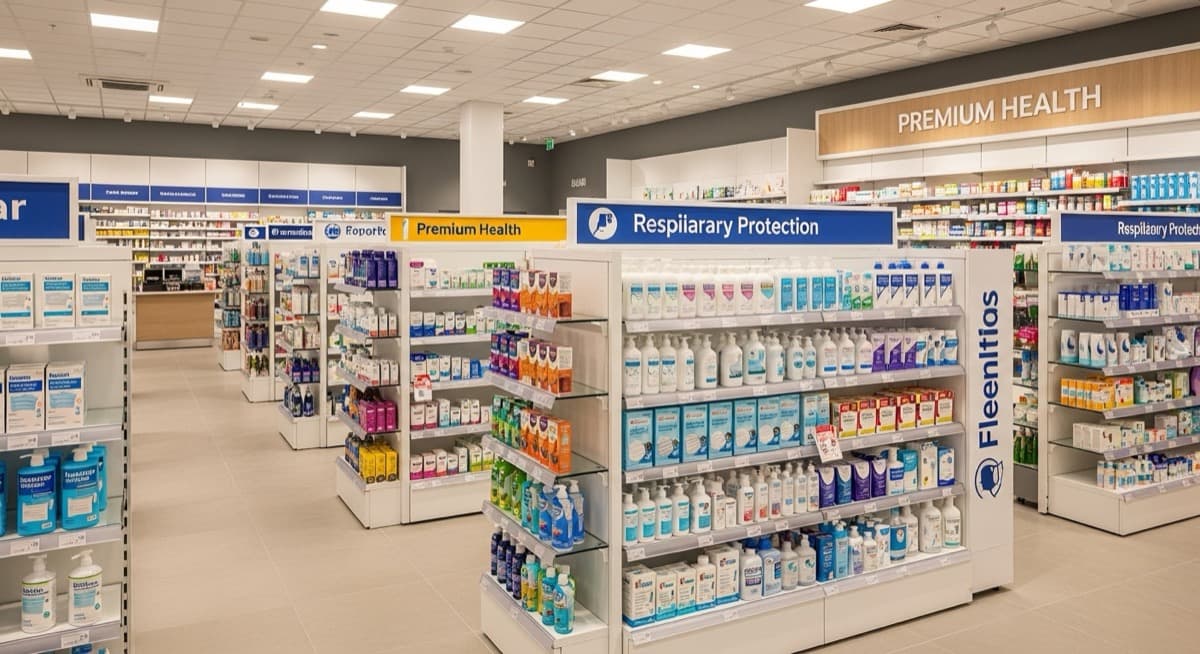
Case Study: How One Retailer Built a $2M Respiratory Protection Category
A regional pharmacy chain transformed an overlooked shelf section into a $2M annual category by repositioning respiratory protection as a wellness essential — not an emergency purchase. Here is how they did it.
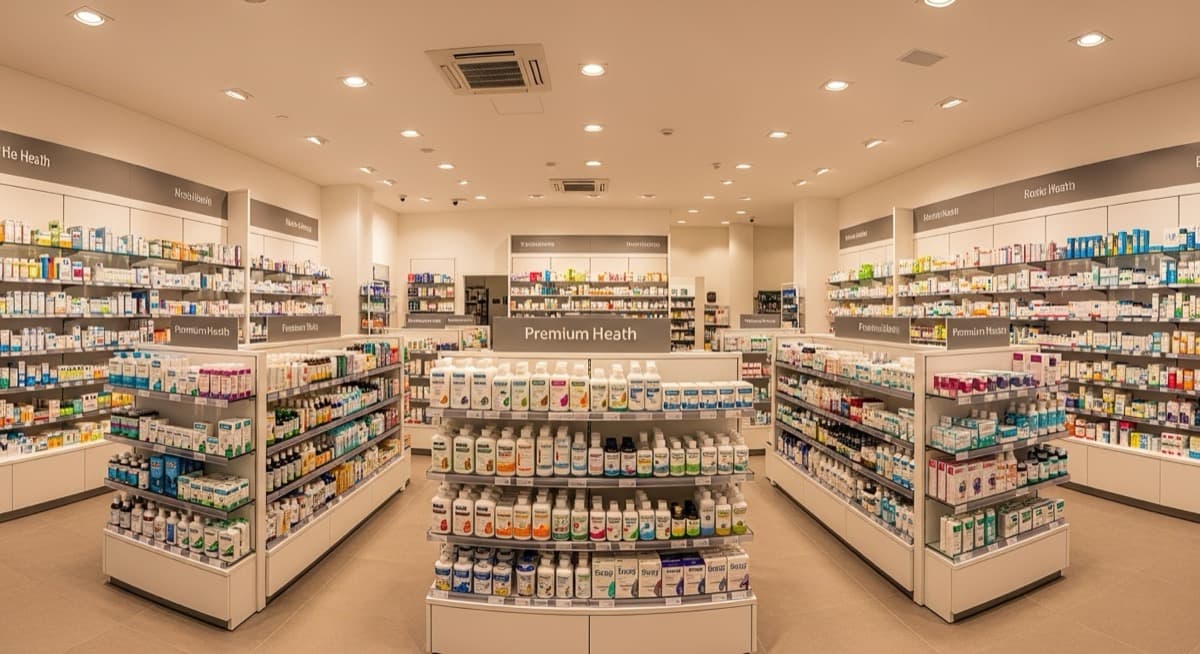
The Retail Playbook: How to Win in Respiratory Protection
From seasonal demand cycles to category positioning and certification requirements — everything retail buyers and category managers need to know about building a respiratory protection assortment that sells.