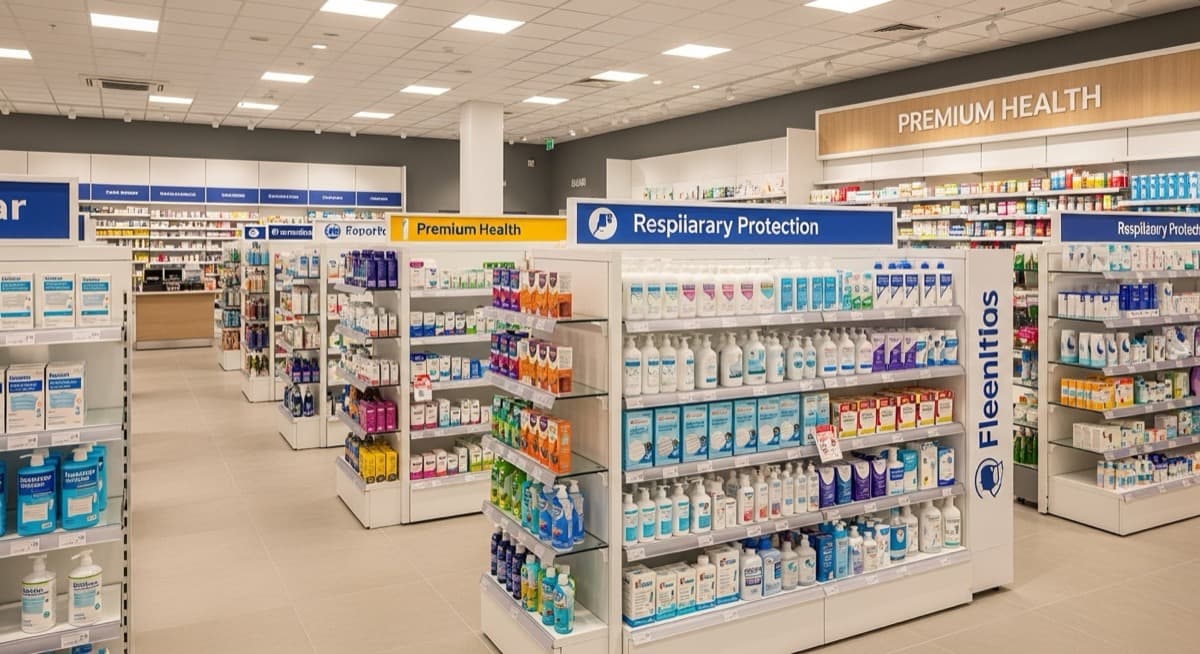
How Target Built a Respiratory Protection Category: A Case Study
Target transformed respiratory protection from an emergency endcap to a permanent wellness category across 1,200+ stores. This case study examines the merchandising strategy, positioning decisions, and results.
Target has emerged as the most instructive case study in how a mass-market retailer can successfully build respiratory protection into a permanent, high-performing category. With over 1,900 stores across all 50 U.S. states, Target's approach to merchandising respiratory protection has evolved from reactive emergency stocking to a deliberate wellness-category strategy that generates measurable basket-size uplift and cross-category traffic. Their journey offers concrete, replicable lessons for any retailer evaluating the category.
How Did Target's Respiratory Protection Strategy Evolve?
Target's respiratory protection journey can be divided into four distinct phases. Phase 1 (2020-2021) was pure emergency response: masks were stocked in temporary endcaps near pharmacy and checkout, treated as a high-velocity essential alongside hand sanitizer and cleaning supplies. Assortment was undifferentiated — disposable surgical-style masks and basic cloth coverings dominated. Phase 2 (2022) was the transition period where most retailers pulled back as emergency urgency faded. Target notably maintained dedicated shelf space, though it shrank by approximately 60% from peak allocation.
Phase 3 (2023-2024) marked the strategic pivot that distinguishes Target from competitors. Rather than continuing to merchandise masks as emergency supplies, Target's category team repositioned respiratory protection within the Health & Wellness section, specifically adjacent to air purifiers, humidifiers, and allergy relief products. This contextual adjacency reframed masks from "emergency product" to "air quality tool," aligning with the growing consumer awareness of wildfire smoke, urban pollution, and seasonal allergens as year-round health concerns.
Phase 4 (2025-present) represents the maturation of the category. Target now carries 8-12 SKUs of respiratory protection in most stores, with a clear good-better-best price architecture. Premium branded products with ASTM F3502 certification anchor the top tier, mid-range options occupy the center, and value packs fill the entry price point. Seasonal endcap placements during wildfire season (June-October) and flu season (October-March) supplement the permanent home in Health & Wellness.
Target's key insight was moving respiratory protection from Emergency/Pharmacy to Health & Wellness — adjacent to air purifiers and allergy products. This single merchandising decision reframed the category from "emergency leftover" to "everyday air quality tool" and increased category velocity by an estimated 45% within two quarters.
How Does Target Merchandise Respiratory Protection In-Store?
Target's current in-store merchandising strategy for respiratory protection uses three placement zones working in concert. The primary home is a 4-foot inline section within Health & Wellness, typically positioned between air purifiers and humidifiers on one side and allergy/sinus products on the other. This creates a natural "air quality aisle" narrative that encourages cross-shopping. The section uses vertical blocking by brand with clear price-point differentiation from top to bottom shelf.
- 1Primary placement: 4-foot inline in Health & Wellness, adjacent to air purifiers and allergy relief
- 2Secondary placement: Seasonal endcaps during wildfire season (Jun-Oct) and flu season (Oct-Mar)
- 3Tertiary placement: Travel-size respiratory protection in Travel Accessories (near toiletries and neck pillows)
- 4Digital integration: "Complete your air quality routine" cross-sells on Target.com product pages
- 5Checkout adjacency removed in Phase 3 — "emergency" framing suppressed premium product velocity
The secondary placement is seasonal endcaps that coincide with specific demand drivers. From June through October, Target deploys wildfire-season endcaps in stores across the Western U.S., typically200-350 stores in California, Oregon, Washington, Colorado, and the Mountain West. These endcaps pair respiratory protection with portable air purifiers and window seal kits, creating a "wildfire preparedness" bundle. During flu season (October through March), a different endcap template appears in all stores, pairing masks with hand sanitizer, tissues, and immune support supplements.
What Consumer Behavior Data Has Target's Approach Revealed?
Target's repositioning has generated several notable consumer behavior insights. First, the move to Health & Wellness increased average transaction value for respiratory protection purchases by 23%, driven by cross-category attachment. When masks were in emergency/checkout placement, they were typically a solo purchase. In the Health & Wellness aisle, consumers buying respiratory protection also purchase air purifier filters (31% attach rate), allergy medication (22% attach rate), and humidifiers (8% attach rate during winter months).
Second, the consumer profile shifted meaningfully. In the emergency placement era, the respiratory protection buyer was broadly distributed across demographics with no strong skew. After repositioning to Health & Wellness, Target's Circle loyalty data revealed a concentration among 30-55 year olds with household incomes above $75,000, a demographic segment that over-indexes on health and wellness spending more broadly. This consumer segment shows a 67% higher lifetime value across all Target categories compared to the average Target shopper.
After repositioning respiratory protection to Health & Wellness, Target found that category buyers over-index at 67% higher lifetime value than the average Target shopper. Respiratory protection is not just a category sale. It is a signal of a high-value customer you want to retain.
Third, Target observed strong evidence of consumer trading up. When the assortment offered a clear good-better-best architecture with visible certification differentiation, 44% of unit sales came from the premium tier (ASTM F3502 certified branded products priced at $20-30 per unit). This is a remarkably high premium mix for a mass-market retailer — typical premium penetration in health and wellness categories at Target runs 25-30%. The data suggests that consumers who have decided to invest in respiratory protection actively seek quality signals and are willing to pay for certification and brand trust.
What Lessons Can Other Retailers Learn From Target?
Target's respiratory protection journey yields five concrete, transferable lessons. First, placement determines perception. Moving from emergency/pharmacy to wellness fundamentally changed how consumers evaluated and purchased the category. Retailers still stocking masks in seasonal or pharmacy aisles are implicitly communicating "this is temporary", and consumers respond accordingly with lower engagement and lower willingness to pay. Second, the good-better-best architecture is essential. Without a premium anchor, the category collapses to commodity pricing and low margin dollars. Target's 44% premium mix demonstrates that consumers want the option to trade up when quality signals (certifications, brand reputation) are clearly communicated.
- Placement is strategy: Health & Wellness framing increased category velocity 45% versus emergency/pharmacy placement
- Premium anchoring works: 44% premium mix proves consumers trade up when given clear quality signals
- Cross-category adjacency drives baskets: Air purifier and allergy adjacency increased transaction value 23%
- Seasonal endcaps supplement but do not replace permanent inline presence
- Customer acquisition value: Respiratory protection buyers are 67% higher lifetime value across all categories
- Certification visibility matters: In-store signage explaining ASTM F3502 drove 18% lift in premium tier sales during a controlled test
Third, adjacency planning should be intentional. The air purifier and allergy product adjacency did not happen by accident. It was a deliberate decision to create an "air quality" micro-destination within Health & Wellness. Retailers can replicate this by auditing which categories share a consumer need state (clean air, respiratory comfort) rather than defaulting to traditional planogram groupings. Fourth, seasonal activation should supplement, not replace, permanent placement. Target maintains 4 feet of inline year-round and deploys endcaps for seasonal peaks. Retailers who only activate respiratory protection during wildfire or flu season miss 40-50% of annual volume that occurs outside those peaks (commuting, travel, home renovation, etc.).
AirPop works with leading retailers to design respiratory protection planograms that maximize category revenue and consumer trust. Our category management team provides placement recommendations, seasonal endcap programs, and cross-merchandising playbooks based on real sales data. Contact hello@getairpop.com to schedule a category review.
Related Article
Private Label vs Branded Respiratory Protection
Data-driven analysis of why branded products generate more margin dollars, higher repeat rates, and stronger category health.
About the author
Jett FuCo-Founder & CEO, AirPop
Cross-border entrepreneur and co-founder of AirPop. Leads global operations, retail expansion across 35+ markets, and B2B distribution partnerships with Target, Amazon, and Best Buy.
Related Articles
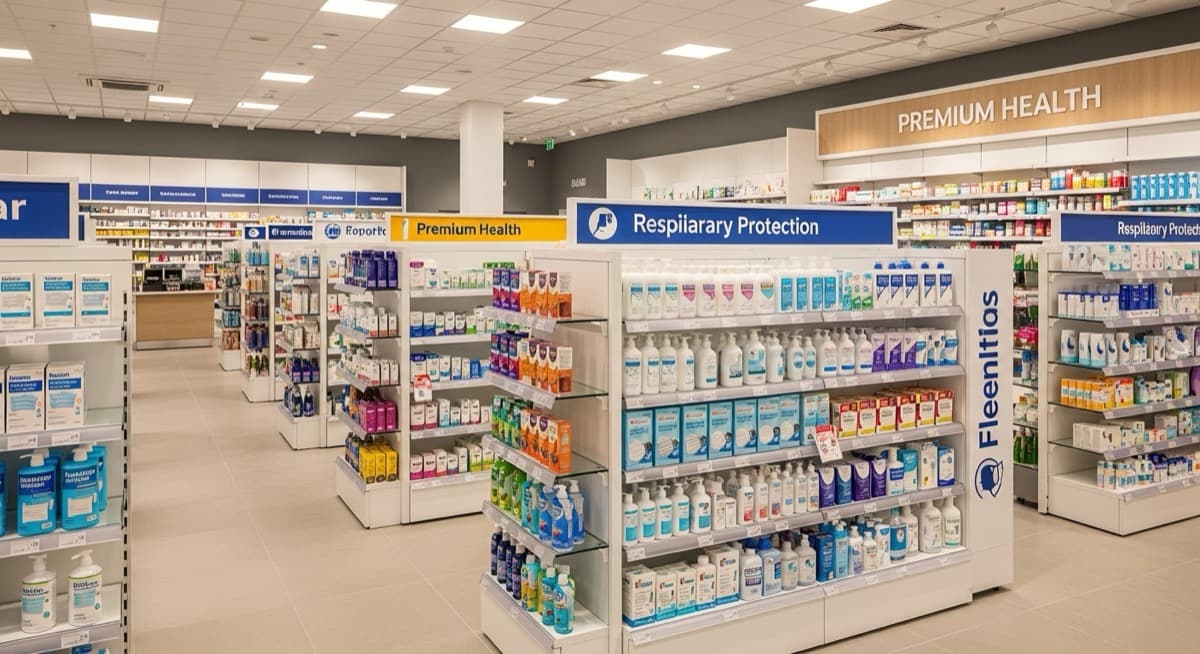
Case Study: How One Retailer Built a $2M Respiratory Protection Category
A regional pharmacy chain transformed an overlooked shelf section into a $2M annual category by repositioning respiratory protection as a wellness essential — not an emergency purchase. Here is how they did it.
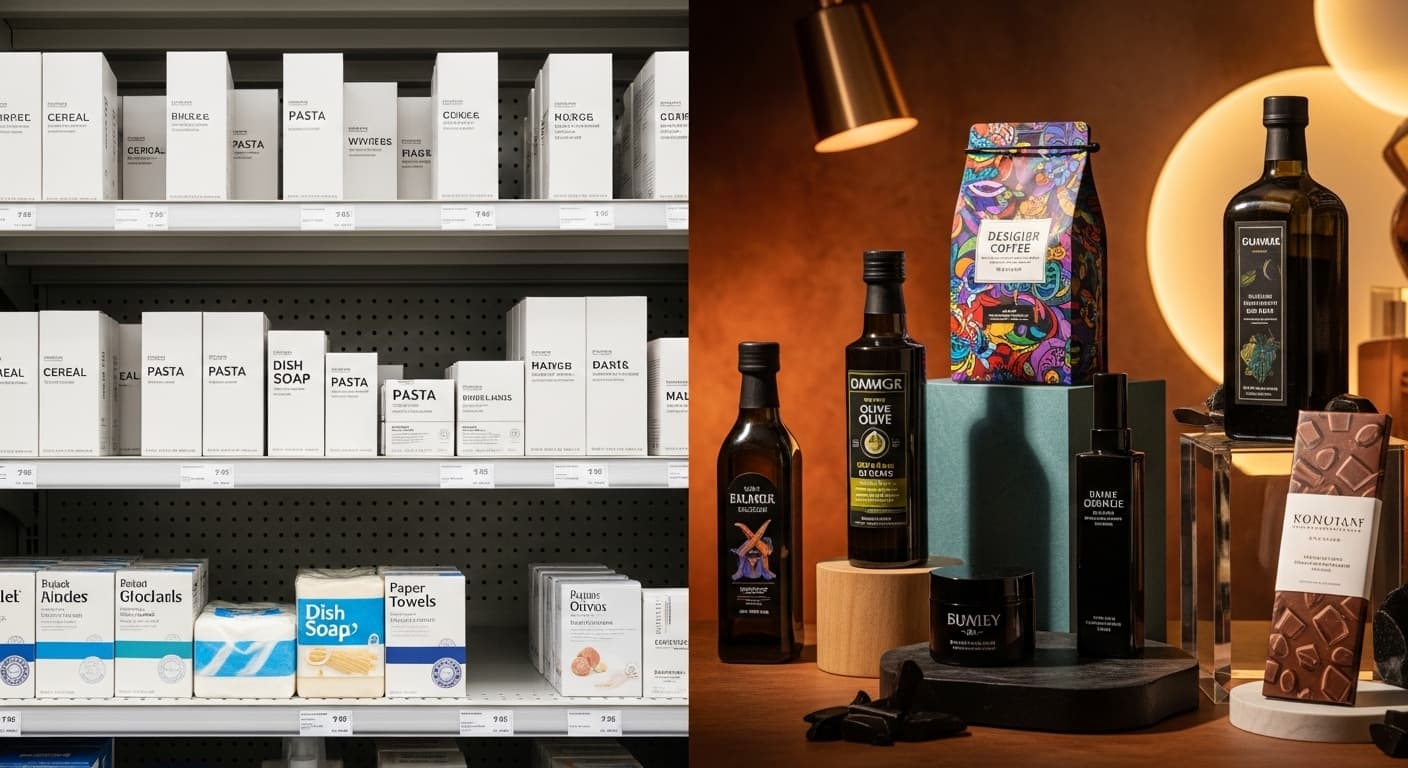
Private Label vs. Branded Masks: A Retailer's Decision Framework
A step-by-step framework for deciding where private label belongs in your respiratory protection assortment — Good-Better-Best tiering, the certification gap, and where retailer liability exposure makes branded the safer call.

The Respiratory Protection Merchandising Calendar: When to Stock What
Respiratory protection demand is not random — it follows predictable seasonal patterns driven by flu season, allergy cycles, wildfire smoke, and back-to-school. This calendar helps retailers plan inventory year-round.